Malt without smoke
Malt & Peat
In the malt house, the air smells of warm grain, not smoke. That is the rule in Speyside. On Islay, peat still fires the kiln to this day. Most distilleries around Dufftown and Rothes, by contrast, dry their malt with hot air fuelled by gas.
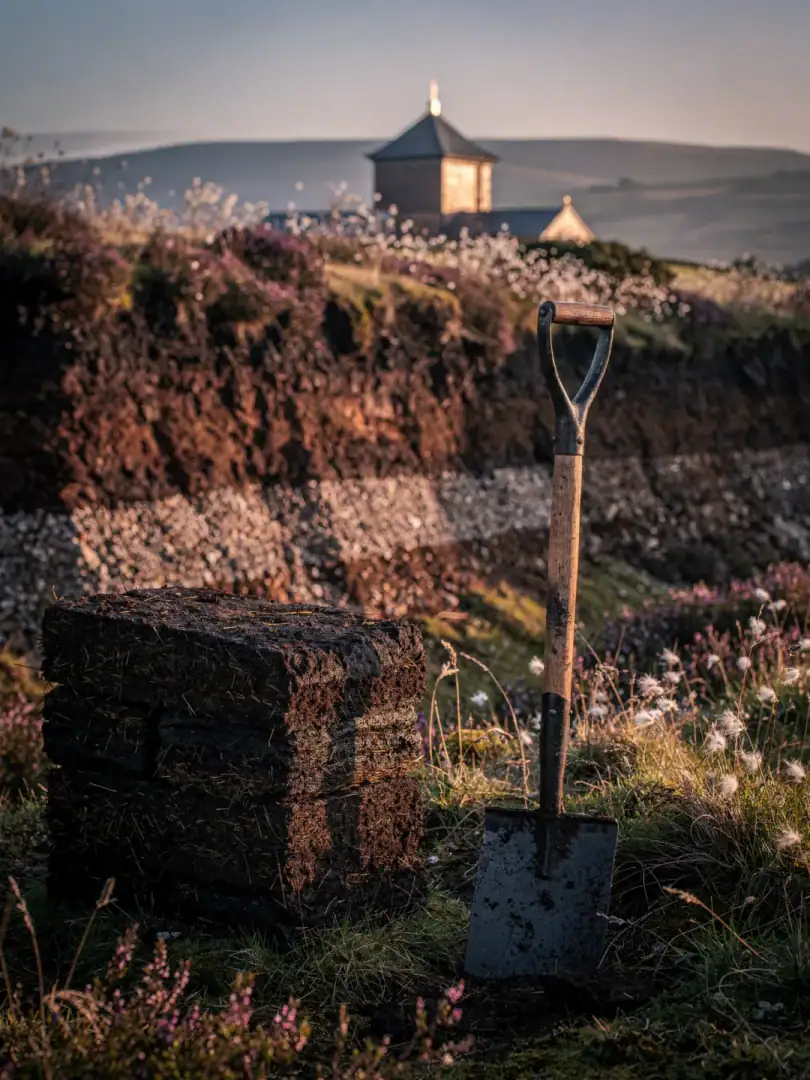
It wasn't always this way. Well into the twentieth century, farmers cut peat turves in the moors around Tomintoul and on the Cabrach uplands. They let them dry and burned them in the kiln, because coal was simply scarce up there. The smoke passed through the damp malt and once gave every Speyside whisky a touch of smoky flavour.
Coal, and later gas, pushed out peat as soon as the railway made them affordable. The mild, rather sweet style for which the region stands today took hold. Only the Balvenie distillery still holds to the old handcraft. On its own malting floor, it still malts about a tenth of the malt it needs, using barley from its own farm.
Even so, peat smoke hasn't vanished entirely. Alongside its mild main range, Benromach distils a peated bottling with a phenol level of around 67 ppm. For its Old Ballantruan, Tomintoul brings in heavily peated malt from the neighbouring Glenlivet valley for two weeks each year. BenRiach runs its own robustly peated line, Curiositas, alongside its untouched standard bottlings.
These exceptions show just how much peat once burned in Speyside, before kilns and pipelines changed the region. Anyone tasting a Speyside malt without an age statement today will therefore almost always smell honey and apple rather than smoke. A few kilometres away, though, some moors still quietly go on forming peat undisturbed.
Living turf of heather and sphagnum moss.
The root: No burning peat comes from here; the moor needs decades for every new centimetre.