Malty and Alpine
Tasting
Two or three sips are enough to taste the difference from many Scotch whiskies. Smoke is almost always absent, malt dominates. This comes from barley grown in the mountains, mostly fermented unpeated. It gives a sweet, grainy base note reminiscent of fresh bread or warm caramel, before the cask adds its own touch.
With Säntis Malt, the beer casks add a distinct maltiness. Sometimes a hint of hop bitterness appears in the finish. The "Dreifaltigkeit" edition was named European Whisky of the Year by Jim Murray in 2010. The "Alpstein" bottling won the first gold medal from the German-speaking world at the IWSC in 2013.
Anyone trying Whisky Castle instead will find a more straightforward cask character. Seven to eight years of maturation bring vanilla and a touch of wood spice, without the malty sweetness of the Appenzell casks. Both styles show just how differently Swiss whisky can turn out despite similar starting conditions.
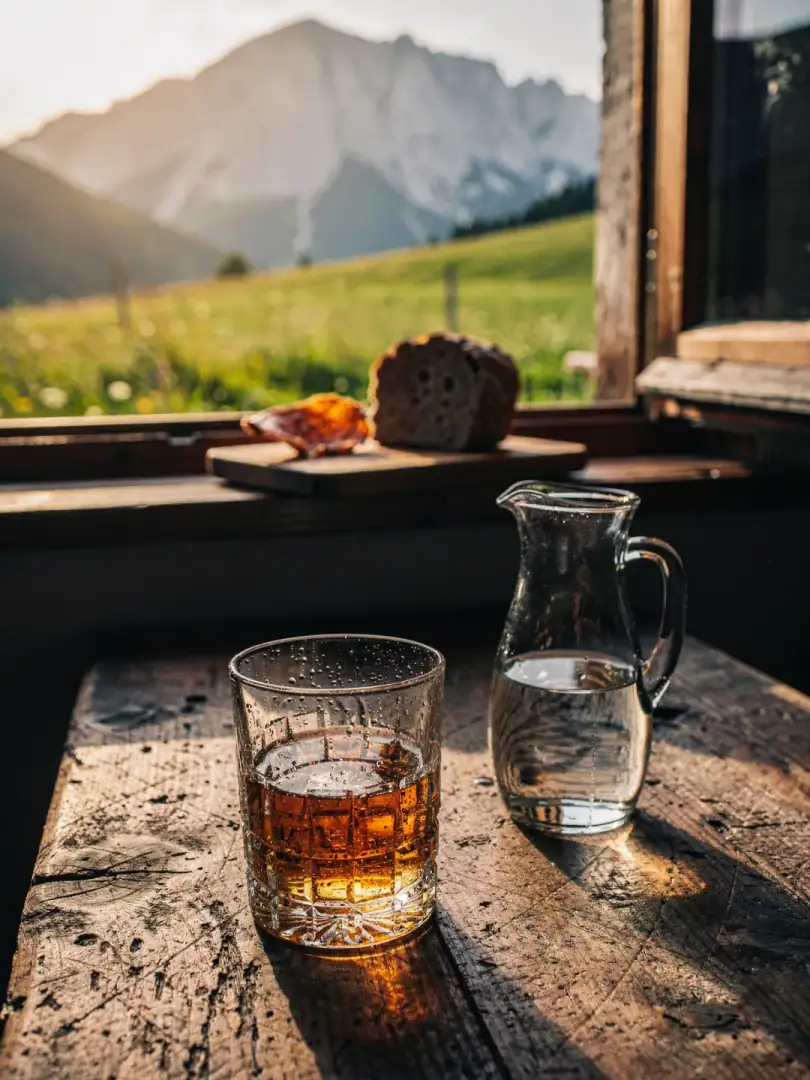
When tasting, a drop of still water in the glass is worthwhile. It opens up the nose without dulling the alcohol. This makes the fine malt notes easier to pick out. Anyone tasting Swiss whisky for the first time should start without ice. This cool Alpine spirit doesn't need extra cold in the glass.
Anyone tasting several Swiss whiskies in a row quickly recognizes the distillery's signature behind the cask. Appenzell beer casks, Valais wine casks, or classic Bourbon casks each shape a bottling differently. It's exactly this diversity that makes the still-young scene such an exciting field for discovery.