Beer Cask Becomes Whisky Cask
Cask & Maturation
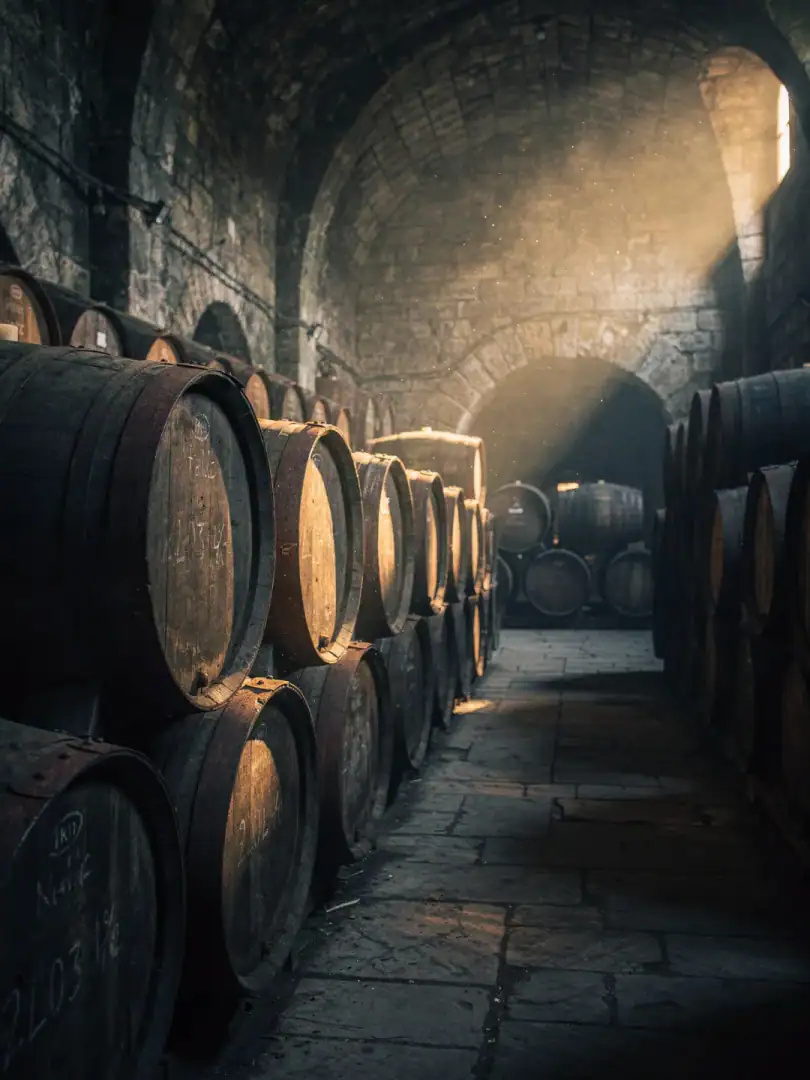
A cask that held beer for decades gets a second life in Appenzell. The Locher brewery matures its Säntis Malt in historic oak casks from its own beer production. Some of them are up to 130 years old. Since 2022, more than 4,000 of these beer casks have been in use.
The wood has absorbed beer over generations. It gives its new contents a malty depth quite different from sherry or Bourbon casks. Other distilleries rely on various wood types and prior seasoning with wine or Bourbon. Locher, by contrast, sticks to what its own brewery has produced for over 130 years.
In Elfingen, Whisky Castle matures its single malts for at least five years. Current bottlings reach seven to eight years in cask. That may seem short compared to some old Scotch. But the changeable climate of the Swiss midlands speeds up the interaction between wood and spirit, compared to very cool warehouses.
How much evaporates in the process, the so-called Angel's Share, depends heavily on the storage location. A calm, temperate climate without big temperature swings keeps cask staves in shape and slows the loss. A mountain cellar with balanced humidity behaves differently than a drafty warehouse in the lowlands.
Some smaller distilleries swap their casks more frequently to get fresher wood notes. Others deliberately opt for long maturation periods, accepting a calmer, maltier character in return. This variety of maturation strategies makes the still-young Swiss scene especially diverse.