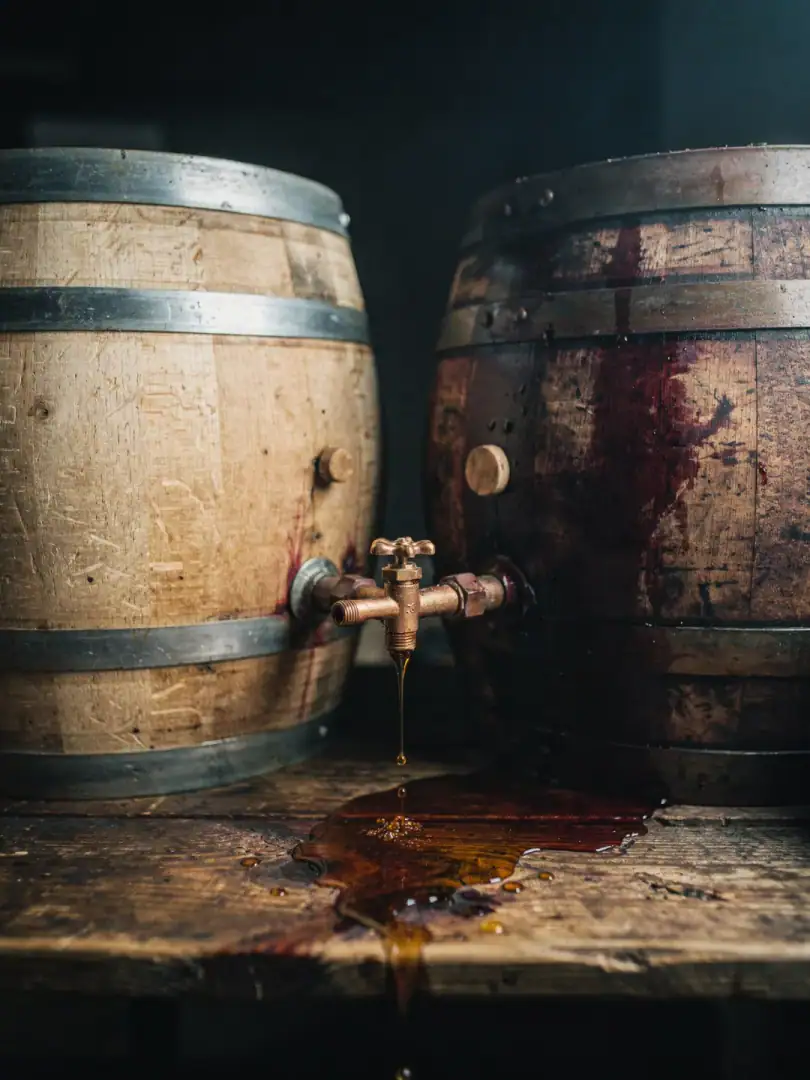
A Second Cask
What Does Finish Mean in Whisky?
After the primary maturation, some whisky moves for a few months into a second cask, often sherry, port, or rum, gaining one final, deliberate layer of flavor on top.
What Finishing Means
With a finish, also called secondary maturation, a whisky that has already largely completed its maturation moves for a limited period, usually a few months to a few years, into a second, different cask. Unlike primary maturation, the goal here isn't to shape the whisky from the ground up, but to add an extra layer of flavor.
In the end, the label usually reads something like "Sherry Cask Finish" or "Port Wood Finish," indicating exactly which second cask was used. For connoisseurs, this information provides a clear indication of what flavor direction to expect.
Typical finishing casks
Sherry casks are the most common choice, often used for just a few months to add extra fruit and spice notes. Port casks bring berry and toasted notes, red wine casks contribute tannin and dark fruit, and rum casks add sweetness and tropical notes.
Some distilleries also experiment with casks from beer production, such as stout or IPA casks, or with Madeira and Sauternes casks for sweet, wine-like notes. Each choice places a distinct, clearly recognizable accent on the whisky's base character.
Why not every whisky is finished
Finishing doesn't suit every whisky. A bold, complex malt usually handles a finish well, because its own character stays strong enough not to be swallowed by the new cask. A delicate, light whisky, on the other hand, can quickly be overwhelmed if the finishing cask is too active or used for too long.
That's why timing is crucial: just a few extra weeks in an active sherry or port cask can completely overshadow the original character. Experienced blenders taste regularly during finishing to avoid missing the right moment for bottling.
Finishing as a tool, not a trick
Among experts, finishing is regarded not as a trick but as a legitimate tool for shaping whisky more precisely, especially when there aren't enough rare sherry or wine casks available for a full main maturation. A short finish is often enough to still bring in that aroma.
This brings us full circle to the earlier stops on this journey: wood type, cask size, prior use, and warehouse location all work together during the main maturation, and the finish adds one last deliberate accent before the whisky is bottled.
Double and triple finishing: more than a second cask
Some whiskies pass through two or even three different finishing casks in succession instead of just one. Such bottlings are often labeled "Double Cask" or "Triple Cask Matured". After the main maturation, the whisky first moves into a second cask, then into a third. Each step adds its own, usually shorter, layer of flavor.
A typical example combines a bourbon cask for the main maturation with a sherry cask, followed by a port cask. Each stage contributes its own accent: first vanilla and coconut, then fruit and spice, and finally berries and toasted notes. The order of the casks influences the result just as strongly as the casks themselves. A port finish before the sherry cask would produce a noticeably different whisky.
The effort behind such multi-finishes is considerably greater than with a single finishing cask. Blenders must carefully taste every intermediate step before the whisky moves into the next cask. Too long in one of the casks, and the previously fine-tuned balance tips immediately. That's why such bottlings tend to remain pricier and rarer than classic single finishes.
Critics sometimes argue that a multi-finish heavily masks the original character of the new make spirit. This is especially true compared to the other methods on this journey. Supporters counter that this is exactly the point: a deliberately complex, layered flavor profile. For newcomers, such whiskies are often more approachable, since several sweet and fruity layers work simultaneously. Experienced tasters, on the other hand, sometimes prize the clarity of a single, unadulterated cask all the more.
On the label, a multi-finish is usually recognizable by the precise listing of all casks used, in the correct order. Reading that order lets you form an idea of the likely flavor even before the first sip. This final technique rounds off the journey through the cask. The last stop then shows how all of this is reflected in the age and strength stated on the label.