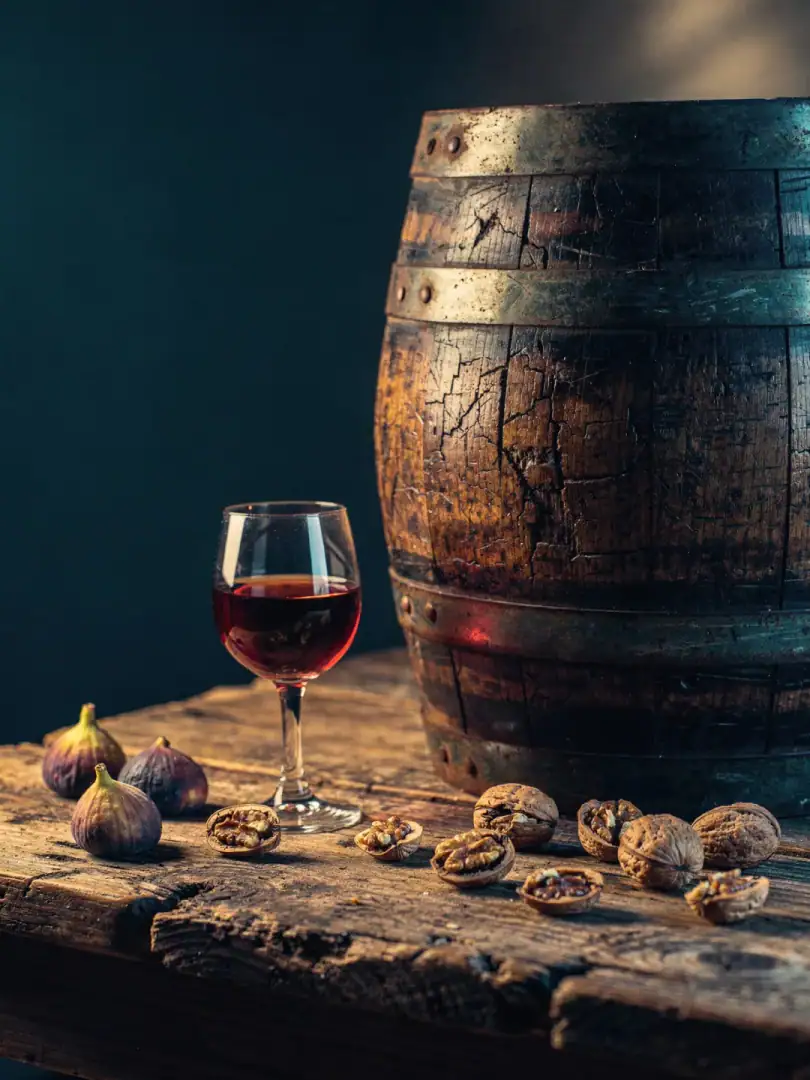
Sweetness from Southern Spain
What Is a Sherry Cask in Whisky?
Sherry casks bring notes of dried fruit, nut, and spice to whisky, but they're rarely genuine old wine casks. Most are built specifically for the whisky industry and only briefly seasoned with sherry.
What a Sherry Cask Really Is Today
Contrary to what the name suggests, a sherry cask today has usually not held years of commercial sherry. Most casks are built specifically for the whisky industry and are then "seasoned," meaning deliberately filled with sherry to harmonize the wood and the wine.
This seasoning fill often lasts only six months to two years, considerably shorter than a genuine, commercial sherry maturation in Jerez. The sherry itself is usually then repurposed for vinegar or other uses, since the actual product in the end is the finished cask.
Oloroso, Pedro Ximénez, and the Difference
Which type of sherry is used for seasoning noticeably changes the result. Oloroso sherry, robust and dry, aged oxidatively, gives the whisky notes of walnut, dried fruit, and leather. Pedro Ximénez, known as PX, a very sweet, almost syrupy sherry, brings raisin, date, and molasses aromas instead.
Some distilleries blend both, or additionally use lighter Fino or Amontillado sherry. The choice of sherry type thus deliberately steers which direction the resulting whisky leans towards, sweet and heavy, or rather dry and spicy.
Why Sherry Casks Are Expensive
Sherry casks are usually made from European oak, which is naturally more expensive than American oak. Added to that are the costs of construction, seasoning sherry, and transport from Spain, together often many times the price of a used bourbon barrel.
Because the whisky industry now demands far more sherry casks than actual sherry production can supply, some in the trade speak of casks that are essentially built for whisky rather than for wine. This scarcity drives the price up further, and for years demand has outstripped supply.
How to Recognize Sherry Maturation
Typical signs of sherry maturation include a darker, often reddish-brown to mahogany colour, achieved considerably faster than with bourbon casks, along with aromas of dried fruits, nuts, spices, and sometimes chocolate. A slightly sulphury note can also appear, deliberately sought by some and avoided by others.
Because sherry casks have a more intense effect than most bourbon casks, even a shorter period of contact is often enough for a noticeable effect. This is why they appear especially often not as the main maturation, but as a finish, a connection that a later stage of this journey will explain in more detail.
First-Fill and Refill: How Many Times a Sherry Cask Works
As with bourbon casks, a distinction is also made between first and later fills for sherry casks. A "first-fill sherry cask" is filled with whisky for the first time after seasoning. It releases its strong fruit and spice notes especially quickly and intensely. That's exactly why such casks often only need a shorter maturation period.
Because sherry casks are so expensive, many distilleries use them for considerably longer than a single bourbon barrel would last. A refill sherry cask has already matured whisky once or several times and is correspondingly milder in its effect. Some distilleries deliberately opt for multiply-used casks to let the new-make spirit retain more of its own character. Others deliberately buy only first-fill casks, even though it costs considerably more.
A third and fourth life for a cask is not unusual with sherry casks, unlike with bourbon barrels. With each further fill, the intensity noticeably decreases, and the wood then hardly imparts any more colour or aroma. Such old, tired casks often serve merely as a neutral maturation vessel by that point. The actual character then comes almost entirely from the new-make spirit itself.
For distilleries, the choice between first-fill and refill is always also a question of cost. A fresh sherry cask often costs many times more than a fourth or fifth refill. Those who need many casks therefore usually mix both categories in their own warehouse stock. This allows budget and desired intensity to be weighed against each other.
This distinction rarely appears directly on the label, unlike the age statement or cask strength. Those wanting to know more precisely how a whisky was matured usually find such details only in producer information or directly from the distillery. For the taste, however, the difference remains clearly noticeable, especially between a young first-fill and an old refill.