Used and in demand
Why are so many casks former bourbon casks?
Because US law only allows bourbon casks to be used once, millions of used but aroma-rich oak casks travel out of Kentucky to the entire world every year, becoming the affordable standard vessel for Scotch and many other whiskies.
Why bourbon only gets one cask life
US law under 27 CFR Part 5 requires that "Straight Bourbon Whiskey" may only mature in new, internally charred oak casks. Once bottled, the same cask may not be used a second time for bourbon, every new fill needs a fresh cask.
For the bourbon industry, this means: after every maturation cycle, huge quantities of used casks remain, having been used only once, yet still full of wood aroma. In the US itself they're rarely reused, so the bulk of them go to export.
How the cask makes its way to Scotland
Scottish, Irish and many other distilleries buy up these ex-bourbon casks cheaply. They're often disassembled and shipped as bundles of individual staves, saving space during transport across the Atlantic, and are only reassembled by a cooper at their destination.
This trade is so vast that most Scotch casks worldwide were originally American bourbon casks. Without the US rule requiring each cask to be used only once, there would be far fewer affordable, already broken-in oak casks available worldwide for other whisky styles.
What the bourbon cask brings with it
An ex-bourbon cask is already charred on the inside and soaked with traces of caramel, vanilla and light coconut notes from the bourbon. A "first-fill bourbon cask", meaning a cask filled for the first time after bourbon with another whisky, passes on these aromas especially strongly.
With every further fill, called second-fill or refill, the wood's impact fades, because much of the easily soluble aroma compounds were already extracted in the first round. Refill casks give the new make spirit's own character more room, since the wood behaves more restrained.
The bourbon cask as a global standard
A classic bourbon cask, also called an American Standard Barrel or ASB for short, holds around two hundred litres. This size has long become the worldwide standard for a great many Scotch and other whiskies, simply because such enormous quantities are constantly available.
This availability has shaped the entire whisky landscape. Without the steady supply of affordable, already broken-in American casks, the price and style of Scotch, Irish and many other whiskies would look very different today.
How to spot a used bourbon cask
A used bourbon barrel usually looks quite different from a sherry butt. It's smaller, measuring around two hundred litres inside, and its staves are often lighter and drier. Many casks still bear the branded name of the original bourbon distillery on the barrel head. This branding often remains legible for decades, even after several further fillings.
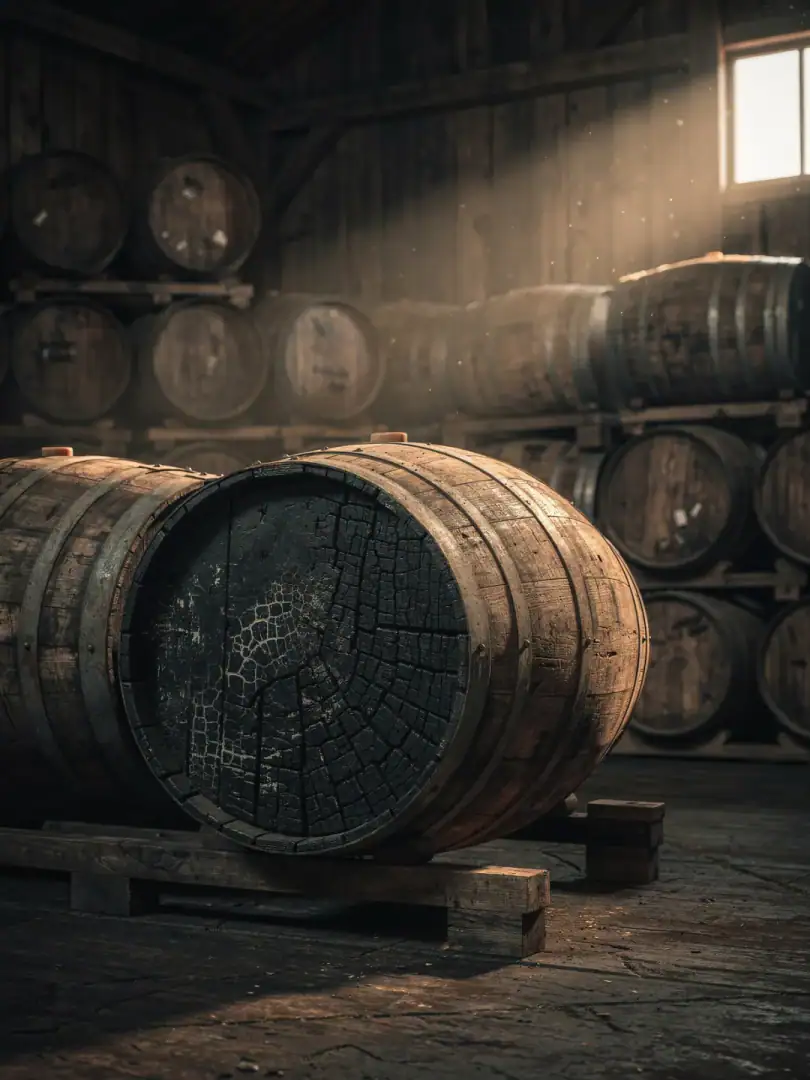
Inside, you'll also see the typical black char layer from the burning process in Kentucky. This layer clearly distinguishes a bourbon barrel visually from a wine cask that has only been toasted. Connoisseurs can often still detect faint traces of vanilla and caramel, even in empty casks that have just arrived. For coopers, this is an initial, quick clue to the origin, even before they examine the wood more closely.
During transport across the ocean, such features help sort large cask shipments. Customs documents and delivery notes provide additional information about the distillery, year of construction, and previous use. Some bottlers specifically buy casks from a particular bourbon brand because they especially value its flavour profile. Others deliberately blend casks of different origins for a more balanced result.
Weight also reveals something: an empty, well-preserved cask weighs noticeably more than a dried-out, brittle one. Before refilling, coopers check every stave individually for cracks and leaks. A leaking cask is immediately set aside or elaborately repaired before any new whisky is allowed to flow into it. In the end, only wood that reliably fulfils its purpose stays in circulation.
For collectors and brands, a cask's origin sometimes even becomes a selling point in itself. Some bottlings explicitly state which bourbon distillery the cask came from, almost like a second certificate of provenance. Other brands deliberately avoid doing so, because they consider their own distillery character more important than the cask. In the end, a cask's origin remains a small but visible detail of the long journey this chapter describes.