Heads, hearts, tails
The middle cut
Not every drop from the spirit still is fit for whisky. The distiller has to decide where the usable heart begins and where it ends, a decision with noticeable consequences in the glass.
Why cutting happens at all
During the second distillation run, the composition of the vapor keeps changing. This progression is predictable, because different compounds vaporize at different temperatures. Right at the start, volatile, sometimes toxic substances emerge, such as methanol and acetone. Then comes the clean core with ethanol and the desired flavor compounds, and finally heavy, oily compounds arrive that taste bitter and unpleasant.
Only the middle section is collected as new make, known as the heart or the middle cut. The heads and tails are collected separately, because both still contain usable alcohol. It's fed back in during the next distillation run rather than simply being wasted.
At many Scottish malt distilleries, the middle cut begins once the alcohol content has dropped to about 72 to 75 percent. It ends once the alcohol content falls below roughly 60 to 65 percent. These figures vary from distillery to distillery, since each house pursues its own target character.
Heads: short, sharp, undrinkable
The first vapor to emerge is called the heads or foreshots. It smells sharply of solvent, since alongside methanol it also contains volatile esters in unbalanced concentration. This phase usually lasts only a few minutes and is consistently discarded, since no distiller would want this fraction in the finished whisky.
Traditionally, the stillman checks when the heads end by mixing some distillate with water and watching whether the mixture turns cloudy. If it clears quickly again, the usable heart is beginning. This so-called louche test is still used in many distilleries today, even though modern measuring instruments have long been available.
The spirit safe watches over the cut
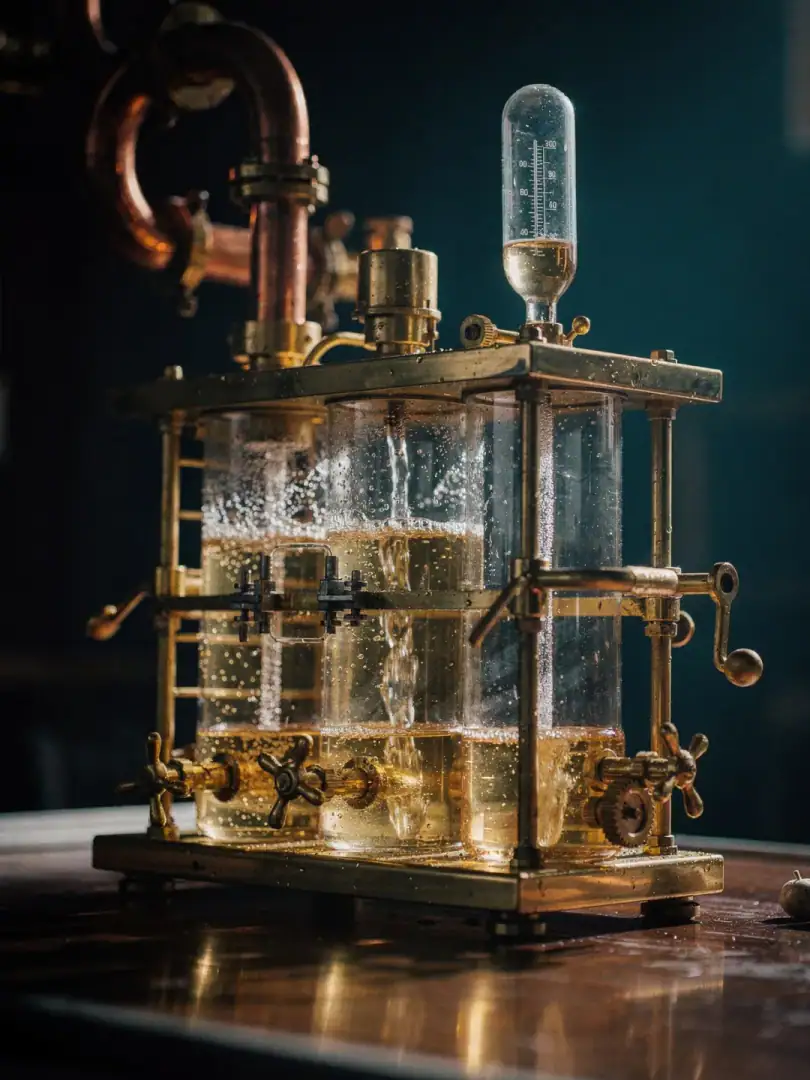
In Scotland, the entire distillate stream passes through the spirit safe, a locked brass-and-glass box. Historically, only customs officers were allowed to open it, since the British tax authority wanted to keep an eye on every drop of alcohol before duty was paid. The stillman can only redirect the flow from outside using levers. He judges clarity, density via a hydrometer, and smell, without ever touching the distillate directly.
This construction originally served tax control, so that alcohol couldn't be secretly siphoned off before it was taxed. Today it's mainly a tool for precision, allowing the cut point to be hit exactly and repeatably, year after year.
Tails: heavy, oily, necessary
Toward the end of the run, the alcohol content drops while heavy, fatty compounds increase at the same time, the so-called feints or tails. This fraction isn't discarded either. It's reused in the next distillation run together with fresh low wines, so its aromas are reincorporated in the right proportion instead of directly burdening the new make.
Exactly where the cut between heart and tails is set has a major impact on a distillery's style. An early cut produces a lighter, cleaner new make. A later cut, by contrast, allows for more weight and fullness, though at the expense of purity. This trade-off between yield and purity plays out anew with every single distillation run.
How experienced distillers set the cut
Over generations, stillmen develop a fine instinct for the right moment, one that's hard to capture in numbers, even though modern alcohol meters can display exact percentages. They also rely on smell, color, and the way the distillate flows in the spirit safe's glass. These impressions often reveal more than a single measurement. A complete run through the spirit still often takes four to six hours, depending on the size of the still and the type of heating.
Because a distillery's cut point barely changes over decades, the character of the new make remains remarkably consistent. This holds true even as staff, barley, or weather conditions shift over time. It's exactly this consistency that blenders and bottlers expect from any distillery they work with long-term.