Other woods
Smoke without peat
Smoke in whisky doesn't have to come from peat. Some distilleries smoke their malt with beechwood, mesquite, or oak, achieving a smoky character that has little in common with Islay but comes across as just as distinctive.
Beechwood Smoke: The German Approach
Beechwood smoke smells distinctly different from peat smoke: milder, sweeter, more reminiscent of a smokehouse for fish or meat than of moorland and ash. German distilleries frequently turn to beechwood, partly out of tradition rooted in local smoking techniques, partly because peat is scarcely available in the country.
Some American craft distilleries also use beechwood smoke for smoky whiskeys outside the classic Bourbon rules, often as a deliberate departure from the Scottish peated style.
Mesquite: A Taste Off the Grill
Mesquite wood, a hard, resinous shrub wood from the American Southwest and Mexico, delivers an intense, slightly sweet smoke reminiscent of American barbecue. A handful of Texan craft distilleries smoke their malt with it, producing a whiskey with a distinctly American rather than Scottish smoke character.
The flavor often comes across as spicier and more resinous than peat smoke, with less of that iodine-like or medicinal edge, but more roasted character.
Oak Smoke and Other Variations
Oak, which already shapes nearly every whisky through cask maturation, can also be used directly as a smoking wood for malt, yielding a dry, subtly vanilla-tinged, woody smoke. Some distilleries further combine this oak smoke character with maturation in freshly toasted oak casks, amplifying the effect.
Other regional variations range from cherry wood to dried heather without any peat content. Together, they show that smoke in whisky is a technique, not a natural law bound to Scotland or to peat.
Why Some Distillers Skip Peat Altogether
Some producers avoid peat not for lack of access, but as a deliberate choice, aiming to set themselves stylistically apart from Scotland and develop their own regionally rooted smoke character. Alternative woods often allow for more precise control over intensity and flavor direction than peat, whose composition naturally varies.
For drinkers, this means smoke on a label is always worth a second look to check what's actually behind it. The difference between peat, beechwood, and mesquite smoke is often greater than the difference between two different ppm values.
Smoking Wood for Home Use
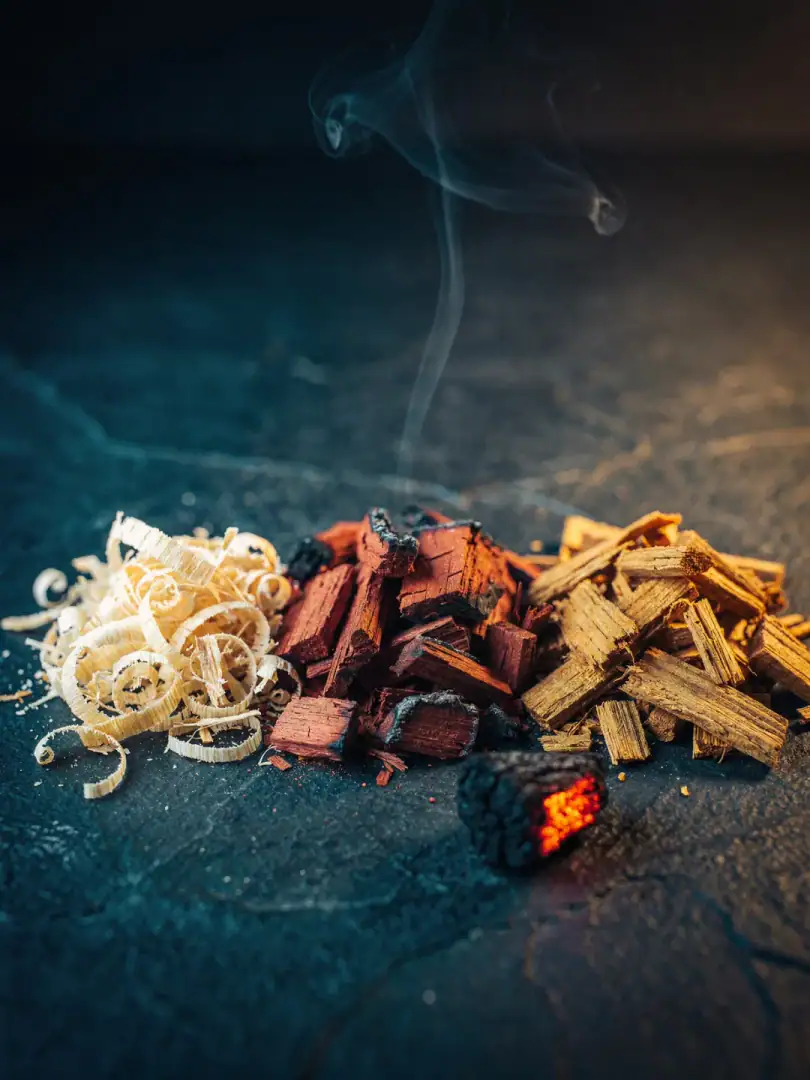
Anyone wanting to understand smoky flavor beyond whisky at home will find a good approximation of the principle behind beechwood, mesquite, or oak smoke in wood chips for grilling. The effect is the same as in a malt kiln, just on a smaller scale: smoke settles onto food and changes its aroma and flavor without burning it. Anyone who smells beechwood chips and mesquite chips side by side often recognizes the difference between the two smoke types faster than words alone could convey.
Some small distilleries outside Scotland now specifically invite visitors to smell various smoking woods themselves before tasting, so the contrast with familiar peat smoke becomes immediately clear. This hands-on experience often explains more about a distillery's own style than any description on the label.
Peat is just one of several smoke sources. Beech smells mild and familiar. Mesquite smells spicy and bold, almost like it came off the grill. Oak smells dry and faintly sweet with vanilla notes. Each wood tells its own story in the glass, long before the first sip.
Once you've consciously tasted these differences, it becomes easier to place any new smoky whisky. The question shifts: less about how strong the smoke is, more about what source lies behind it. In the end, what matters less is which wood was involved, and more whether the smoke suits the rest of the whisky. Well-integrated smoke feels like part of the whole, regardless of its source.