Nose, water, order
Tasting smoky whisky
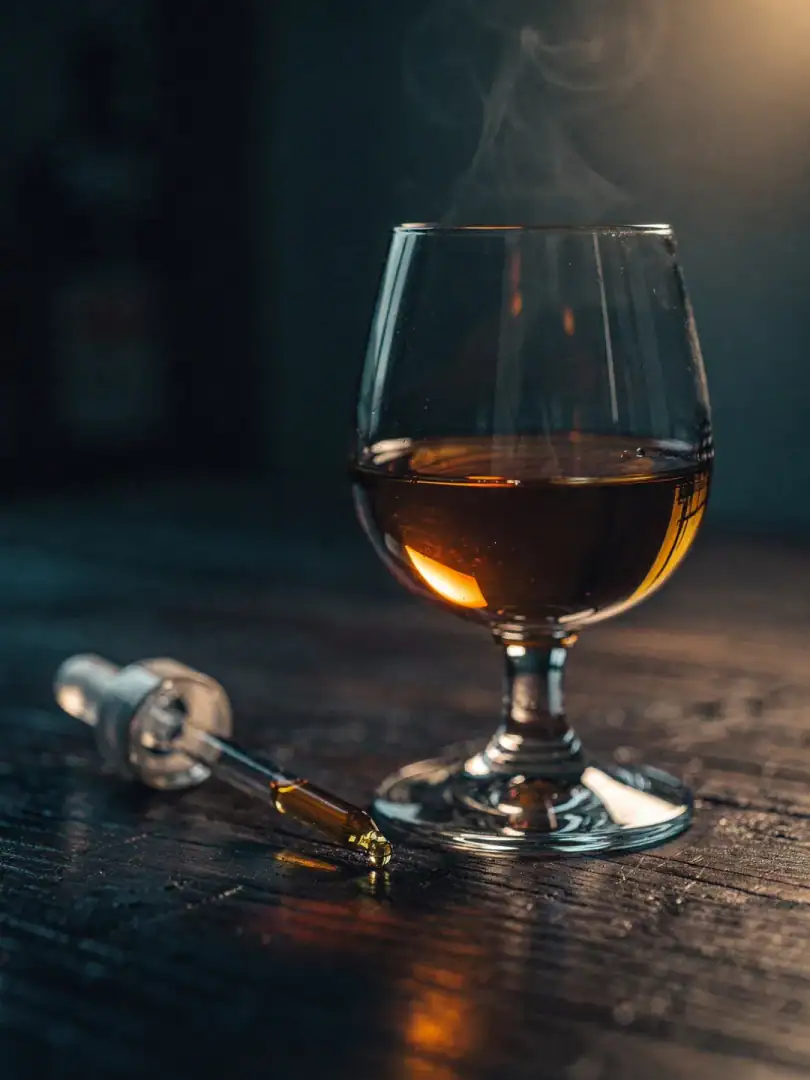
Smoky whisky often overwhelms on the first sip if you drink it like any other whisky. A little water, the right order, and a deliberate first contact through the nose make getting started noticeably easier.
Why the nose decides first
Smoke aromas often feel more intense through the nose than on the palate. A short, careful first sniff at the glass, with your mouth slightly open, accustoms the nose to the sharpness before the first sip follows. Anyone who inhales deeply right away often finds the alcohol and smoke overwhelming.
A second, longer sniff after a brief pause usually already reveals noticeably more nuance than the first, because the nose has adjusted to the intensity.
Water as a tool, not dilution
A few drops of still water often change smoky whisky more than mild varieties, because they round off the sharp smoke peaks and reveal underlying fruit or malt notes. Anyone starting with pure cask-strength whisky should almost always dilute it, otherwise alcohol alone dominates.
It's best to proceed in small steps: a few drops, wait briefly, taste again. This makes it possible to find the point where smoke and other aromas are in balance, rather than adding too much in one go.
Order and environment
Smoky whisky almost always overwhelms lighter aromas, which is why it belongs at the end of a tasting with several whiskies, never at the beginning. Anyone who tries a heavily peated whisky first will barely taste the subtle tones of a mild malt afterward.
Strong smells in the environment, such as perfume or food, distort the impression further. A neutral room and a nosing glass with a shape that tapers upward help concentrate the aromas rather than lose them.
Avoiding typical beginner mistakes
A common mistake is choosing the most expensive or strongest cask-strength example right away as your first smoky whisky. Getting started is easier with medium-strength bottlings around 30 to 40 ppm, before moving on to the more extreme examples in the category.
A second mistake is rushing: smoky whisky needs more time in the glass than mild varieties, so that alcohol sharpness and smoke can separate. Anyone who drinks too fast tastes mostly alcohol and mistakenly interprets that as pure smoke intensity.
Pairing smoky whisky with food
Smoky whisky pairs well with robust, often salty or fatty dishes, because these provide a counterweight to the smoke's intensity instead of being overwhelmed by it. Smoked fish, aged cheese, or dark chocolate are considered classic companions among connoisseurs, because their own intensity can keep pace with the whisky without canceling each other out. Mild, delicate dishes, on the other hand, often get lost when paired with strong smoke, because their subtle aromas have little chance against the sharpness.
Anyone planning a small tasting at home can put this contrast to good use: a piece of mature cheddar or a bit of dark chocolate alongside the glass often helps more in understanding the whisky than another neat sip. This makes it easier to work out what flavors are hiding in the smoke, without the tongue tiring after the third sip.
A few names keep coming up when you're starting out with smoky whisky. Laphroaig represents the medicinal side, Ardbeg stands for uncompromising intensity, and Talisker offers a spicy, maritime take. Tasting all three back to back quickly gives you a feel for the range within the category. A comparison set of small sample bottles is often more worthwhile than a single large bottle. This way, you can find out which style of smoke truly convinces you before spending a lot of money on a bottle that turns out not to be the right fit after all. Notes help with learning more than memory alone: a short line on each whisky tasted makes comparing them easier later on.