Diluting with intention
Water & Ice
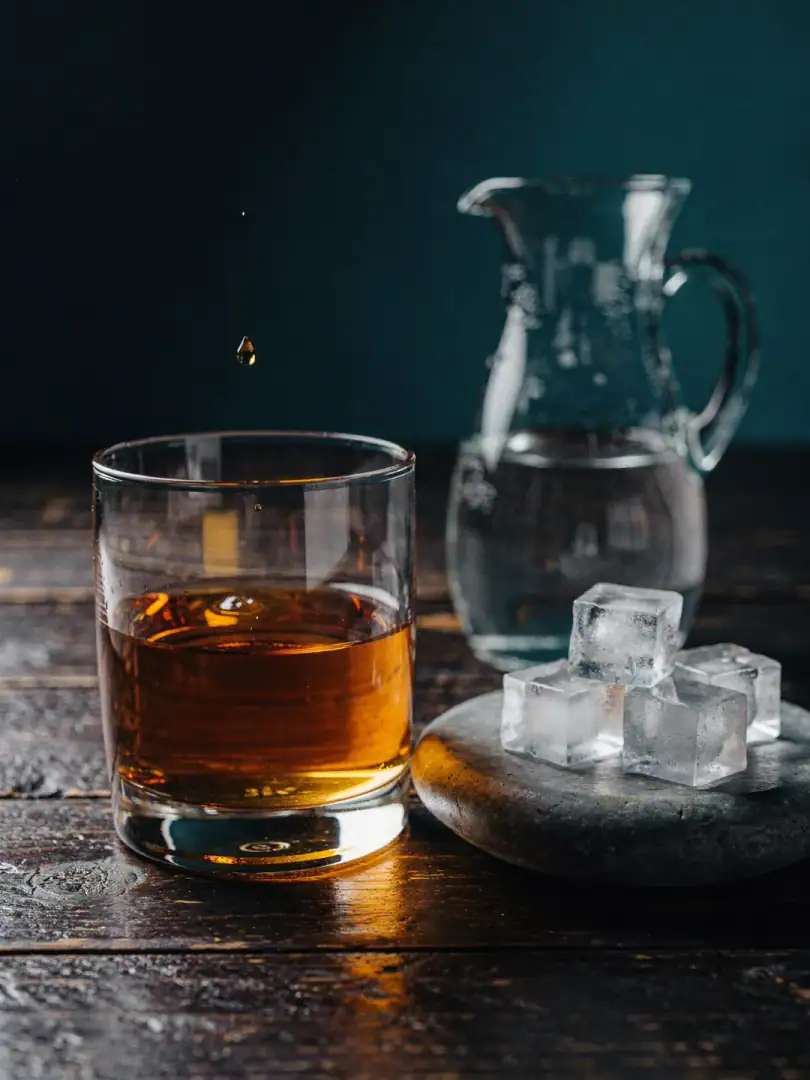
Adding water to whisky is seen by some as a sin and by others as a must. Neither view quite holds up: a few drops can release more aroma, while ice mainly does one thing, namely cool.
Why a drop of water opens up aromas
At its core, whisky consists of water, alcohol, and hundreds of aroma compounds that dissolve to varying degrees in the alcohol. When you add a little water, the alcohol content drops, and some of these aroma compounds migrate from the liquid to the surface, where you can smell them more easily. With very high-proof whisky, such as cask strength, the sharp scent of alcohol often masks finer notes until a bit of water makes room for them.
The amount makes the difference. A few drops from a small pipette are often enough to noticeably release more aroma without watering the whisky down. Too much water, on the other hand, eventually weakens the flavor itself, not just the alcohol.
How to add water the right way
Use still water with as neutral a taste as possible, at room temperature, no sparkling water and no strongly mineral water that brings its own flavor along. Add it drop by drop, stir briefly or swirl the glass gently, and smell again after every drop before continuing. This way you'll find the point where more aroma emerges without the whisky turning flat.
There's no fixed rule for how many drops are right, since this differs from whisky to whisky and from nose to nose. The most sensible approach is to smell and taste neat first, hold that impression in mind, and then compare it with water added.
Ice: cool, but not neutral
Ice essentially does two things: it cools the whisky down, and it gradually dilutes it as it melts. Cold noticeably dampens the nose, since many volatile aromas simply become less volatile at low temperatures and therefore harder to smell. A very cold whisky often comes across as smoother and less distinctive than the same whisky at room temperature, but also quieter.
Unlike with a controlled drop of water, you have little control over dilution with ice, it just keeps going as long as the ice sits in the glass. That's less than ideal for a focused tasting, but exactly right for a relaxed summer evening.
Cultural habit rather than right or wrong
In Japan, a distinct drinking culture has developed around the mizuwari, in which whisky is deliberately diluted with plenty of water and ice into a long, light drink, often served with food. This isn't a compromise, it's a standalone, respected way of drinking, with its own rules for the ratio of whisky, water, and ice.
For tasting purposes, the same principle still applies: try it neat first, then with a little water, and only then decide for yourself whether and how much ice suits it. That way you won't miss out on either side, neither the concentrated original nor the lighter, extended pleasure.
A small exercise with three glasses
Pour yourself the same whisky three times: once neat, once with a few drops of water, once with an ice cube. Smell and taste all three in quick succession, ideally in exactly this order, and note down what changes with each one, both on the nose and on the palate.
This exercise shows faster than any explanation how much water and ice can change the very same whisky, even though the bottle stays the same. Many tasters discover for the first time that they actually prefer a whisky with a little water over neat, or the other way around.
Feel free to repeat this exercise with different whiskies, especially with one mild one and one very robust one. Over time you'll notice which style of whisky particularly benefits from water and which you'd rather keep neat.