Bond & Prohibition
Region & History
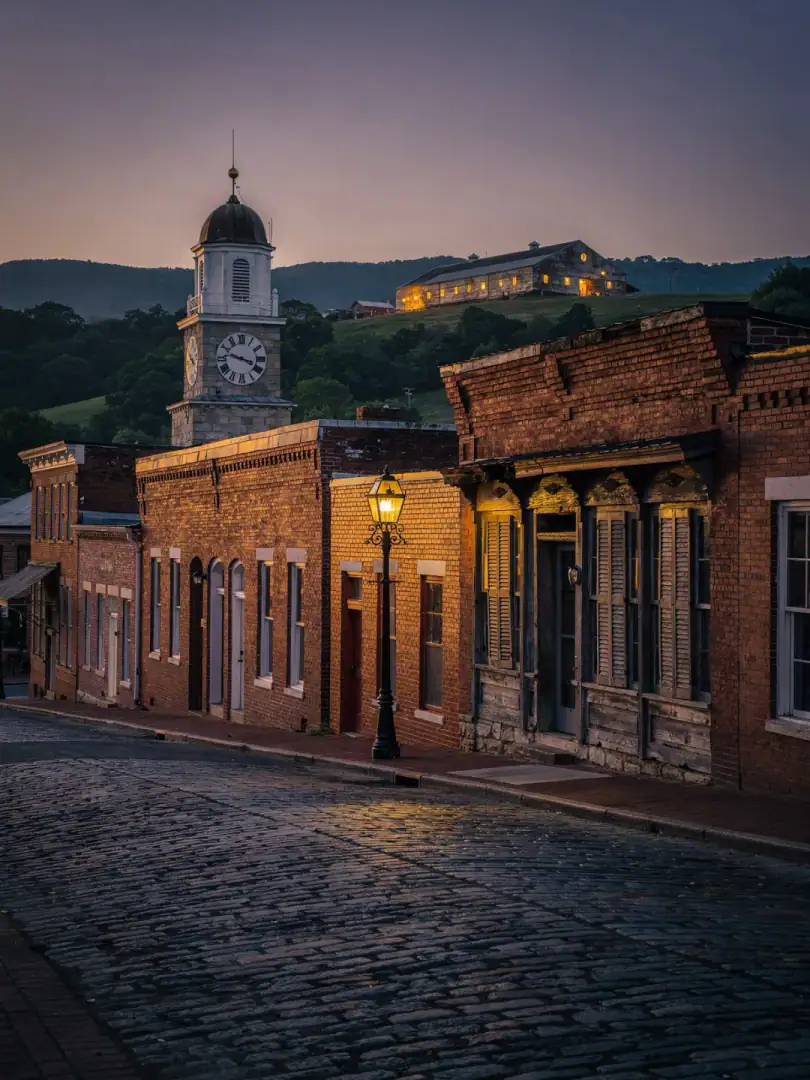
Anyone driving through Bardstown today sees more barrel logos than traffic lights. The small town in Nelson County was founded in 1780. For decades it has been known as the Bourbon Capital of the World. That so much whiskey came to be made here has everything to do with the soil. Corn grew abundantly in the Bluegrass region, and surplus grain was easier to store and sell as whiskey than as loose kernels.
The young American government taxed alcohol early on. Many distillers in the hills of Kentucky avoided the tax and distilled in secret. During the Civil War, the Union levied a tax on every gallon of whiskey in 1862 to help fund the war. Ever since, tax inspectors and moonshiners have been part of the region's history.
In the late nineteenth century, unscrupulous merchants sold colored industrial alcohol as whiskey. Kentucky's distillers therefore headed to Washington, led by Colonel Edmund Haynes Taylor of Frankfort. In 1897 they achieved the Bottled-in-Bond Act. The law required a single vintage and a single distillery per bottle, plus at least four years of aging in a federally bonded warehouse and a minimum of 50 percent alcohol. It's considered the country's first consumer protection law.
From January 1920, Prohibition halted nearly every distillery between Bardstown, Louisville, Frankfort, and Lawrenceburg. Only a few were allowed to keep operating with medical permits. After Prohibition's repeal in 1933, the business returned—slowly at first, then with growing tourism. Today, dozens of distilleries line up along the four towns, and Bardstown officially carries its old title in its own name. The title even appears on the town's road signs.