Corn & Mashbill
Grain
American law makes one ingredient mandatory for bourbon. At least 51 percent corn must be in the mash bill. Most distilleries between Frankfort and Lawrenceburg go well beyond that, using 70 to 78 percent corn. It ferments sweet and grows well in Kentucky's warm climate.
The rest of the mash bill determines the character. Rye brings spice and pepper, while wheat makes the whiskey softer and rounder. Some distilleries swap out the rye entirely for wheat and call the result Wheated Bourbon. Malted barley supplies the enzymes that break down starch into fermentable sugar—without it, the mash would barely work properly. Angel's Envy in Louisville, for instance, uses roughly 72 percent corn, 18 percent rye, and 10 percent malt.
How different the results can be despite the same basic rule is shown by Four Roses in Lawrenceburg. The distillery works with two different grain mixtures and five yeast strains. This produces ten base whiskeys that are later blended together.
If the corn content drops below 51 percent and the rye content rises above half, the result is no longer called bourbon but rye whiskey. This too is set out in American law, 27 CFR 5. Both grains often grow in the same fields of the Bluegrass region—only the mix in the silo decides the later label. In Kentucky, both types of barrels often sit side by side in the same warehouse, differing only in label.
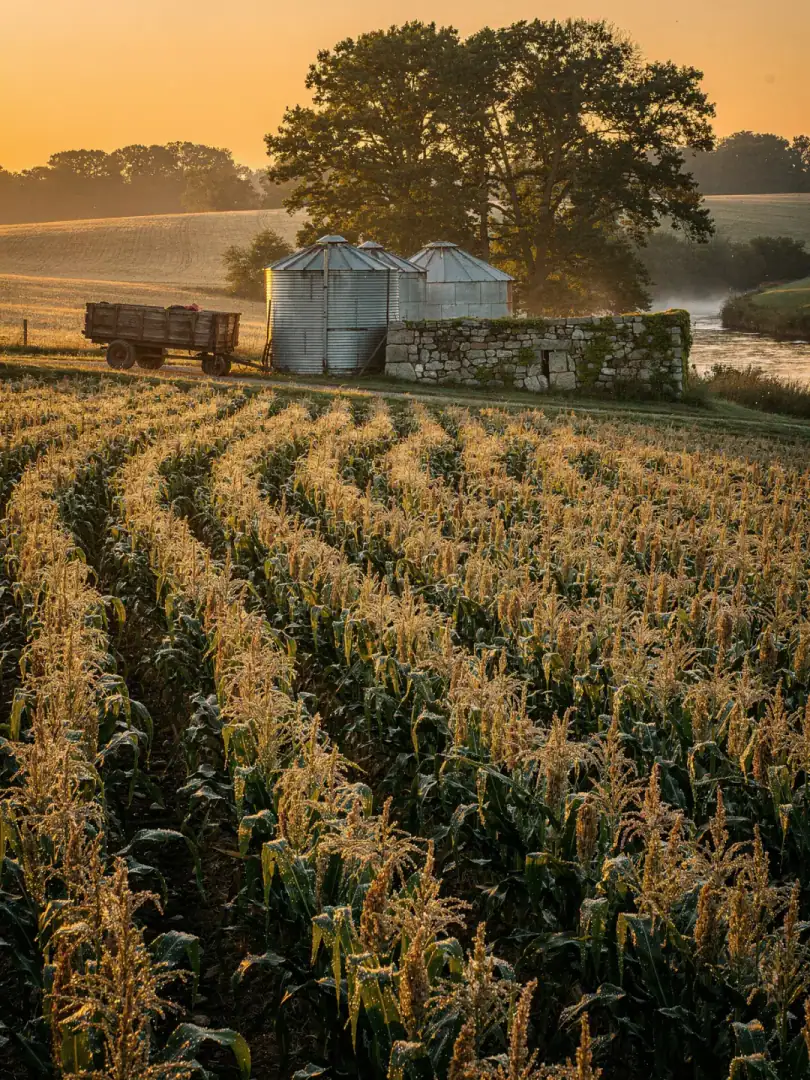
Many distilleries in the Bluegrass region still buy their corn from nearby farms today. Short distances keep the corn fresh before it's milled and moved into the distillery's mash tubs.