Always New Wood
Cask & Maturation
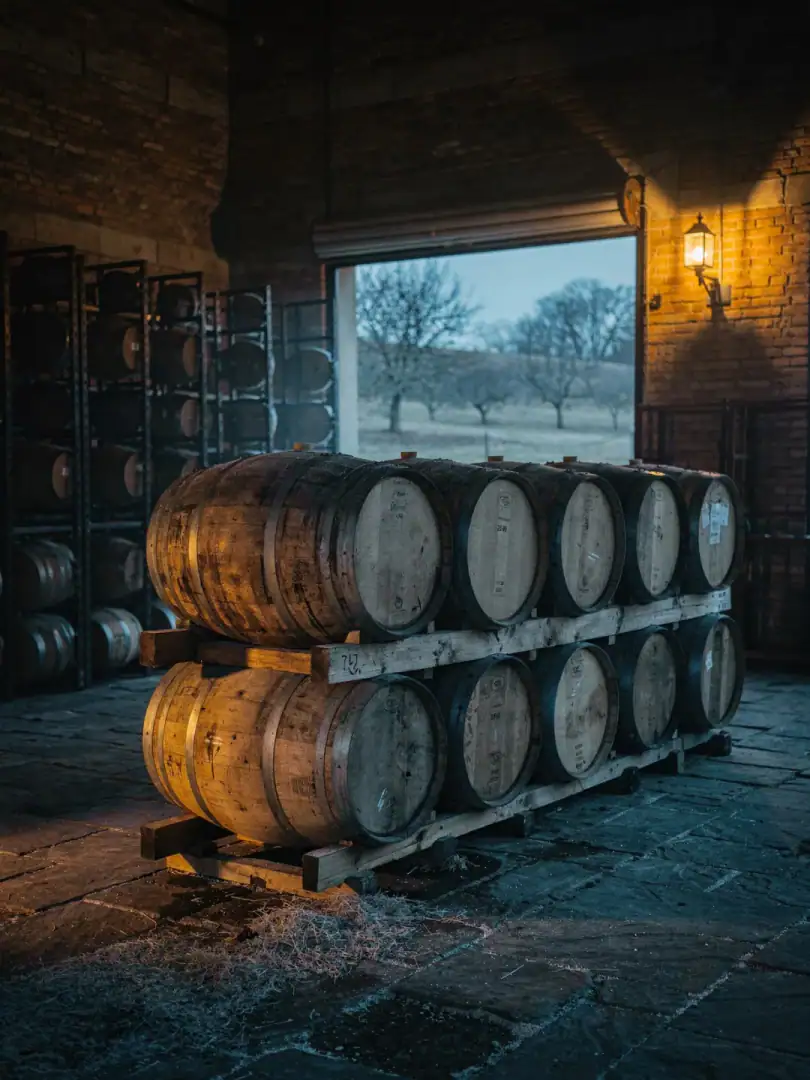
American law recognizes no used barrels for whiskey. Rye Whiskey matures exclusively in new, charred oak. For the designation "Straight," at least two years must pass. A barrel here is therefore used exactly once. Afterward, it often moves on to Scotland or Ireland, where it gets a second life as a used cask.
In the Hudson Valley, Empire Rye law additionally requires entering the barrel at a maximum of 115 proof. That's well below the nationally permitted 125 proof. This leaves more water and less alcohol in the barrel. The idea is to prevent the young whiskey from being overpowered by raw alcohol before the wood has even had a chance to work.
The warehouses themselves are usually modest compared to the massive rackhouses in Kentucky. Often it's just a single, multi-story building right next to the distillery. What they lack in size, they make up for through climate. True, cold winters and sultry summers let the barrel breathe with the rhythm of the year, expanding in summer, contracting in winter. That held true for the great warehouses of the 19th century just as much as it does for the small new builds of today.
This breathing costs whiskey. Distillers fondly call the loss the "angel's share": a portion evaporates through the wood every year. In the Northeast's milder climate, less evaporates overall than in Kentucky's heat. But what remains changes more slowly, and over more yearly cycles, summer after summer, winter after winter.