Column or Pot
Distilling
In Lawrenceburg, Indiana, stands the still that produces more American rye whiskey than any other. It's a multi-story column at MGP Ingredients, through which mash flows continuously. The law allows distilling up to a maximum of 160 proof, meaning 80 percent alcohol by volume. The column pushes right up to that limit.
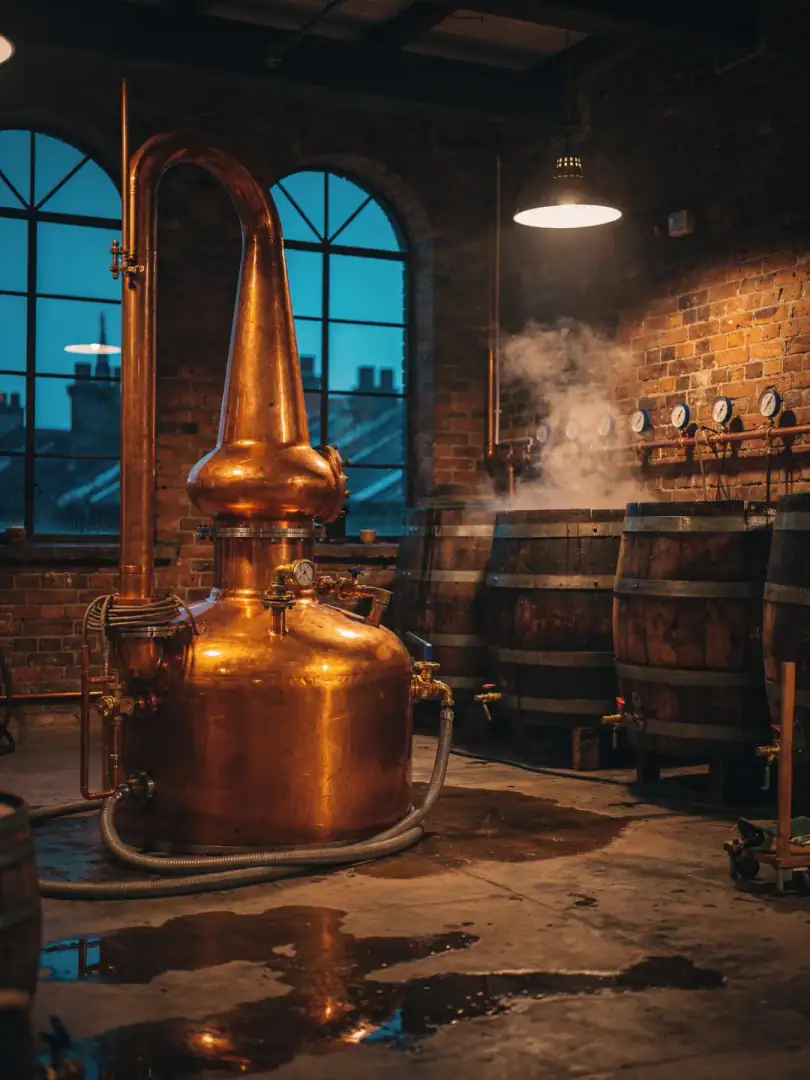
In Pennsylvania, Maryland, and the Hudson Valley, the distilling setup looks quite different. Wigle Whiskey in Pittsburgh and Dad's Hat in Bucks County work with copper pot stills. They often distill twice: once roughly for the low wine, a second time more finely. In the process, they separate the heads and tails from the heart, the portion that's later allowed into the barrel.
The cut determines the character more than almost any other step. Cut too early, the whiskey remains harsh and unfinished. Cut too late, it turns dull and oily. Small distilleries in the Northeast often taste the run by hand, sip by sip, rather than relying solely on measuring equipment.
MGP and the craft distilleries supply each other in turn. Many small houses in the Northeast initially bought in low wine from Lawrenceburg. They aged and bottled it themselves while building up their own stills in the background. Today, some labels read "distilled in Indiana," while others now carry only their own name. Both paths are considered honest in the region, as long as the origin is stated openly on the label. Anyone who looks closely can tell right away from the fine print which path a distillery has taken.