No Smoke
Malt & Peat
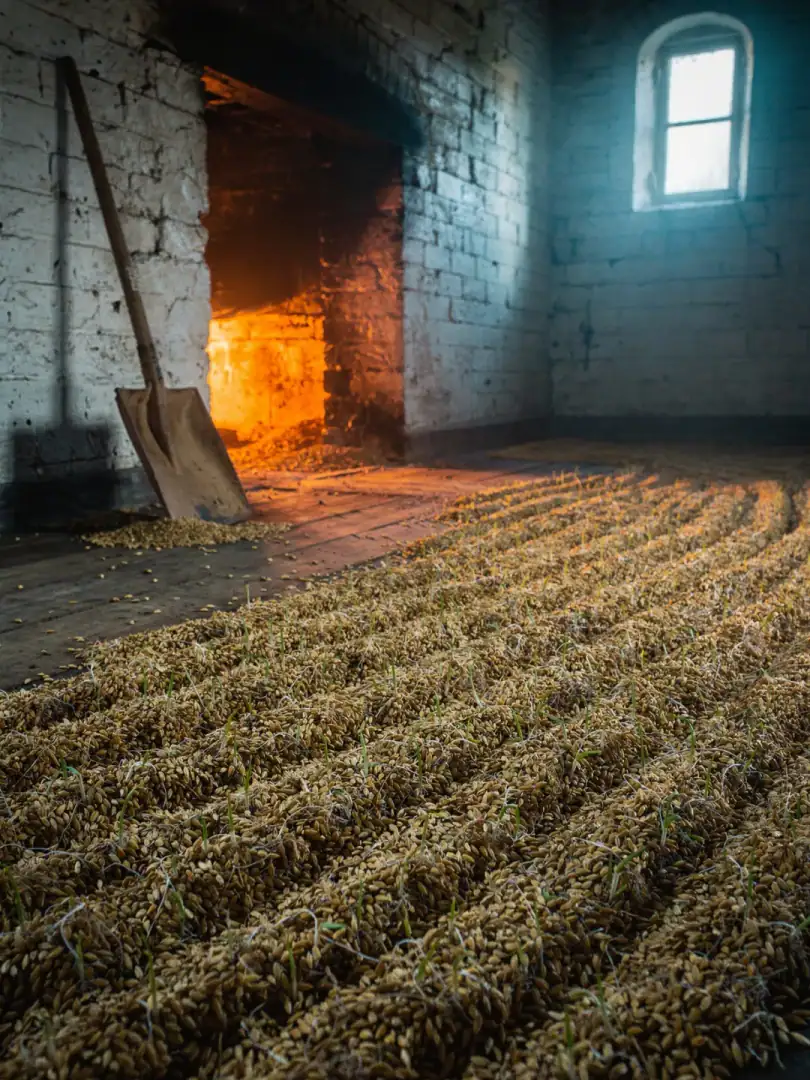
Peat is virtually nonexistent in the Northeastern US, and where it does occur, no one uses it to smoke malt here. What peat smoke is to Islay, rye itself is to this stretch of land: a spice that comes not from the kiln, but straight from the grain.
For rye to become whiskey at all, the mash needs enzymes that convert starch into fermentable sugar. Malt supplies these, usually from barley, sometimes from rye itself. The law sets no minimum amount for this, only the overall 51 percent rye requirement. How much malt a distillery adds is entirely its own decision, and it shapes the flavor accordingly.
Dad's Hat from Pennsylvania uses a portion of malted barley in its standard rye, lending the whiskey caramel and a touch of sweetness alongside the rye's spice. Coppersea in the Hudson Valley even calls its whiskey "Malt Rye": one hundred percent rye, part of it malted, with no barley grain added at all.
No distillery here lists peat ppm levels on the label, as is common on Islay. What matters is the ratio of rye to malt in the mash, and at every serious rye distillery in the Northeast, that's stated as openly as almost nowhere else in the US.
Today, the malt is typically dried with clean, indirect heat, with no smoke contact at all. That wasn't always the case. The first distillers in Pennsylvania fired their kilns with wood, which the forest right outside provided in abundance. They would have had to import peat, and in the 18th century there was no reason to, as long as their own forests kept burning.
Dark, humus-rich earth in which rye roots draw the scarce nutrients of the short summer.
The root: Only an undemanding grain like rye can manage with so little substance.