Four True Seasons
Water & Climate
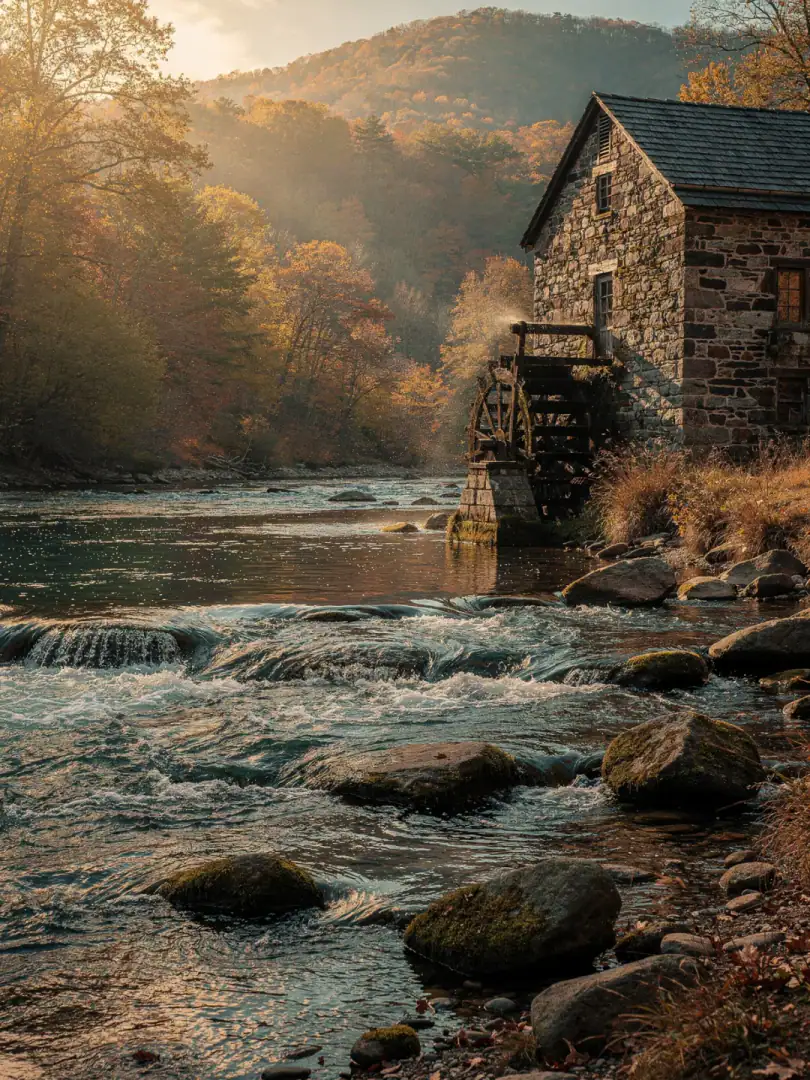
The Monongahela River gave the old rye school its name. In the 19th century, most of the region's distilleries stood along its banks. But more important than the river itself was what it powered: water mills that ground the rye into meal before it went into the mash tubs. Without flowing water, there was no ground grain. Without grain, there was no whiskey.
In the Hudson Valley, the Hudson River fills the same role. It's the second core area of this region, with its own climate and soil. The river irrigates the fields where distilleries like Coppersea and Hudson Whiskey grow their own rye. It also keeps the valley more humid and milder than the hills further west in Pennsylvania.
What sets the Northeast apart from Kentucky is above all the weather itself. Here, there's a true winter, with frost and sometimes snow well into April. Summer, by contrast, turns humid and sultry, heating up the warehouses considerably. This shift pushes the whiskey deep into the wood during summer. In winter it retreats again, just more gradually than in the hotter South.
For the first settlers, the climate was initially a problem, not an advantage. Barley and corn suffered from short growing seasons. The barren, stony soil didn't help either grain. Rye, on the other hand, copes well with frost, drought, and poor ground. That's exactly what made it the most reliable crop across much of Pennsylvania and Maryland in the 18th century.