The barrel breathes faster
Barrel & Maturation
American law requires new, charred oak barrels for bourbon, never used a second time. That applies in Waco just as much as in Hye. What makes the difference isn't the barrel itself, but the warehouse around it. At Garrison Brothers in Hye, the warehouse reaches temperatures of up to 135°F in summer.
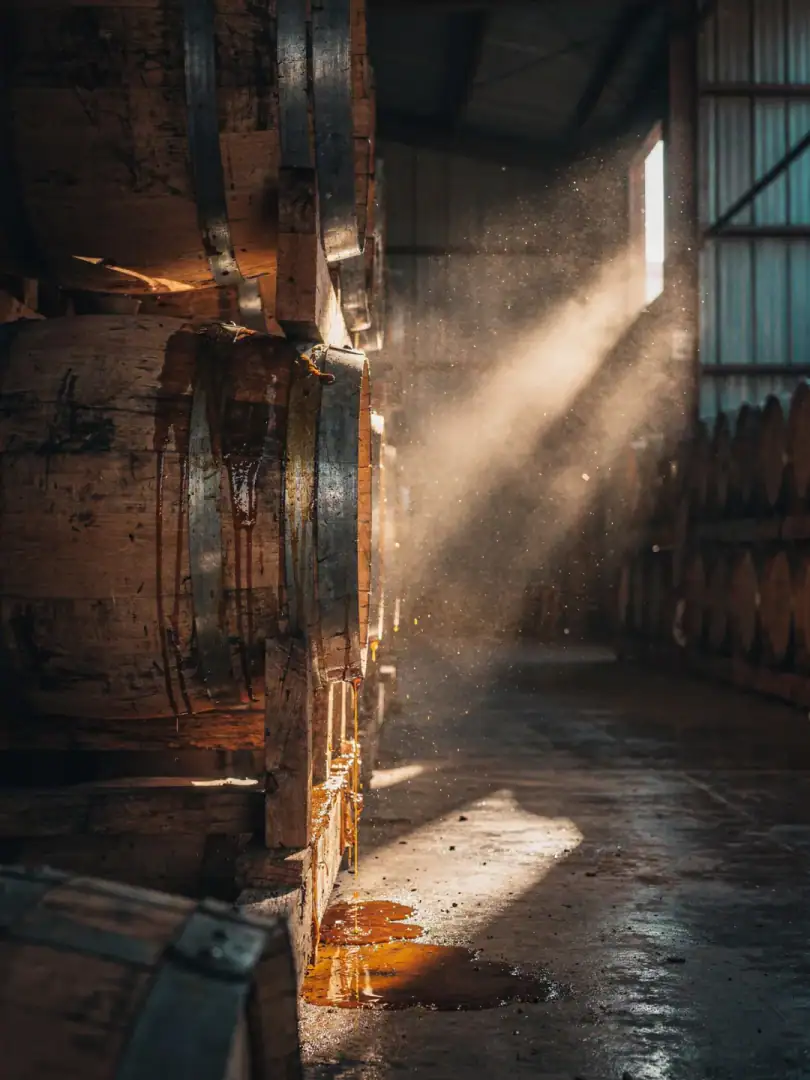
This heat practically presses the whiskey into the wood. As the barrels expand, the liquid is driven deep into the wood fibers; when it cools again at night or in winter, it's pushed back out. This breathing repeats constantly, extracting in a short time what Scottish barrels need decades to achieve.
Texas pays a steep price for this: the angel's share, the portion that escapes as vapor through the wood. In Kentucky, that's 2 to 4 percent a year. Garrison Brothers regularly loses 10 to 15 percent, with individual barrels documented at over 30 percent, partly because the constant wind on the hill in Hye drives evaporation even further.
The heat has a downside too. In prolonged dry spells, the whiskey can absorb too much wood and turn bitter, almost astringent. Some barrels expand so much that they leak or split open, a risk Scottish distilleries practically never encounter.
Garrison Brothers doesn't see this as a flaw but as their own style: a dense, powerful bourbon that, according to the distillery, sits closer to a Cognac than to a classic Kentucky bourbon.