Charcoal, Not Myth
Filtration
After the column, the alcohol is already very pure, but a residue of fusel oils and flavor compounds remains. Filtration is meant to bind exactly these last traces without adding anything to the vodka. It doesn't change the flavor, then, but rather removes the final rough edges.
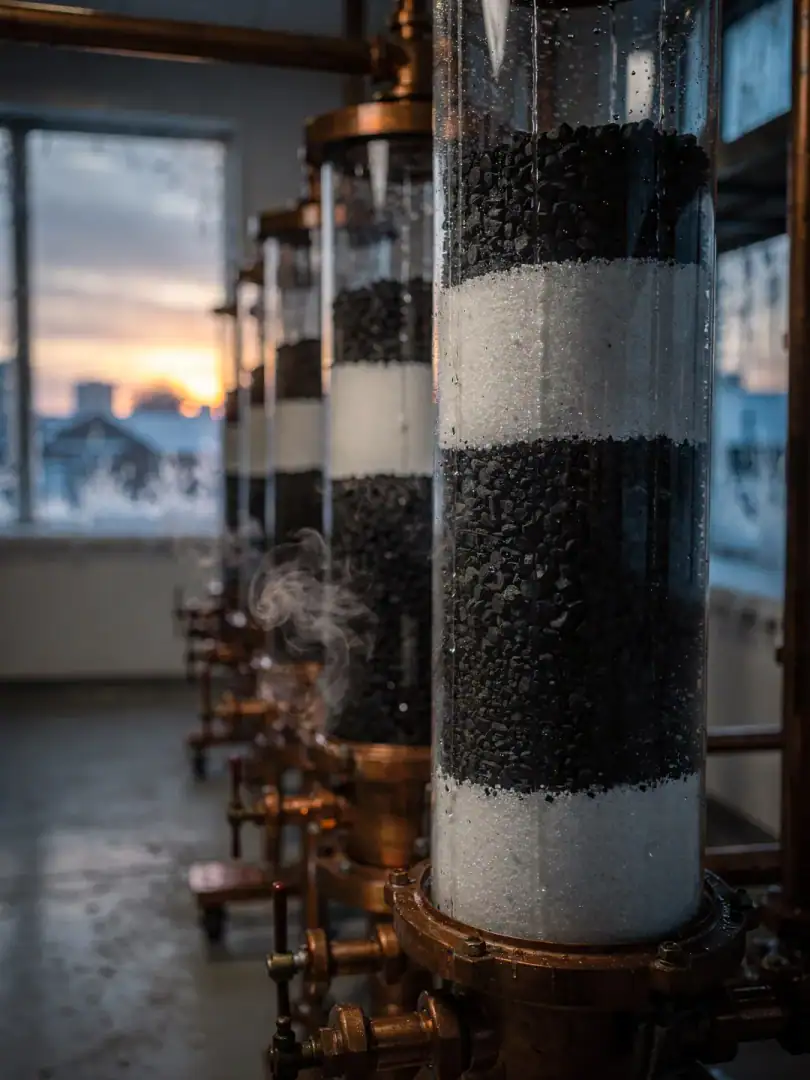
The most common medium is activated charcoal: porous carbon whose enormous inner surface soaks up unwanted molecules like a sponge. Some distilleries also use quartz sand to filter out the finest haze particles. Both methods are old, simple, and work on purely physical principles, without adding any chemicals.
Three Sixty calls its process diamond filtration, according to the manufacturer, and advertises exceptional purity. Exactly what's behind it, the brand doesn't reveal in detail. It's presumably a particularly fine filter layer, not actual diamond dust. Either way, a catchy name doesn't change the underlying chemistry.
More important than the name is how often and how finely the filtration is done, since every pass costs some volume. Over-filtration can also thin out the alcohol's flavor and strip away the last hint of grain character. Most German producers therefore seek a middle ground between purity and character. You can hardly tell from the label - only the tongue reveals it.
In the end, filtration remains a craft of patience, not magic. It explains why an industrially purified vodka from Berlin or Steinhagen glides so smoothly across the tongue, while a simple Korn spirit still shows some rough edges. Anyone who tries both side by side tastes the difference immediately.