Rye & Sandy Soil
Raw Material
German vodka doesn't begin in the factory, but in sandy fields. Traditionally, rye takes center stage, the toughest grain for poor, nutrient-scarce soils. Where wheat barely takes root, rye grows reliably - and exactly such soils shape large stretches of land across northern and eastern Germany.
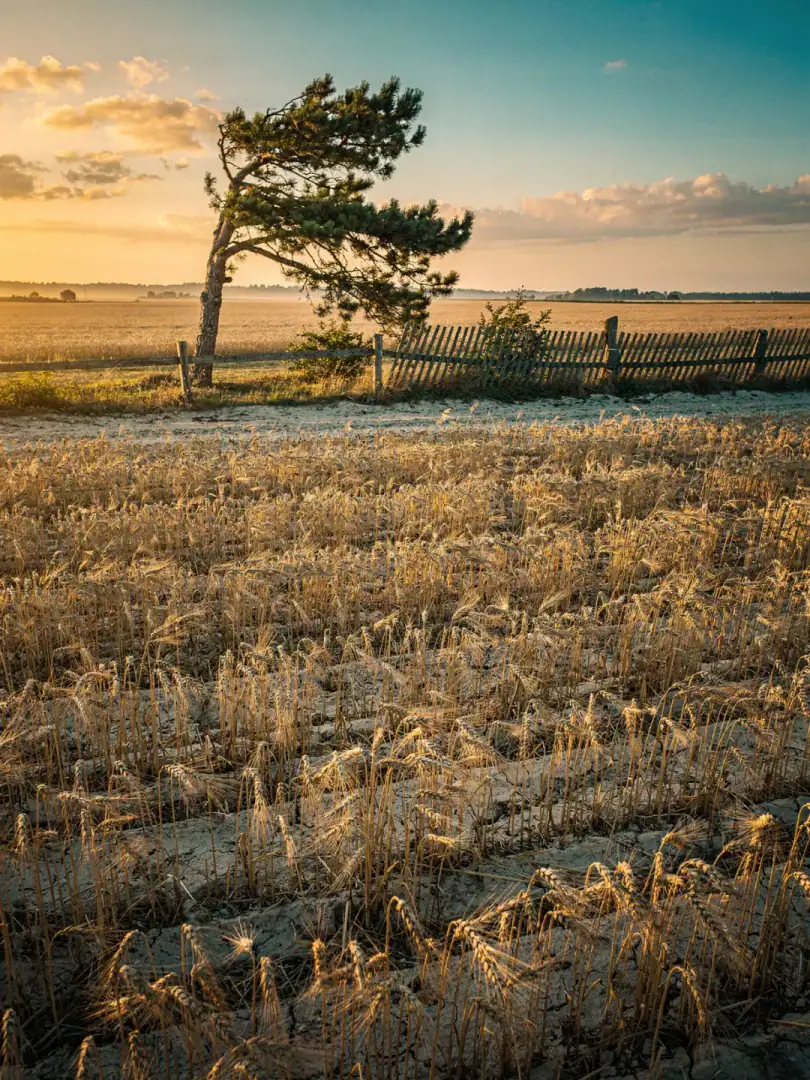
Around Berlin lies precisely such a stretch: ice-age sand, left behind by glaciers from the last cold period, poor in clay and humus. Farmers once mockingly called the area the sand box, because hardly anything grew there besides rye and potatoes. For the capital's distilleries, the raw material was thus practically on their doorstep.
In the eighteenth century, rye grain came under pressure. Alcohol from potatoes was cheaper, and in some places it nearly displaced the grain entirely. A purity rule from 1789 pushed back, requiring genuine Korn to contain at least two-thirds rye, with the rest allowed to be barley or wheat. This preserved the grain's character even as demand for cheap spirits grew.
In the nineteenth century, large Korn distilleries emerged, particularly in the Ruhr Valley, where coal and water power drove industry. The recipe stayed simple: fermented grain mash, distilled multiple times until a neutral base remained. This very base later became the foundation for vodka, with rye supplying the starch from which yeast drew the alcohol.
Today's producers often turn to wheat, since it's more affordable and provides a milder base note than rye. For traditional Korn spirit, however, the 1789 rule still applies, and many small distilleries in eastern Germany hold on to it. You can taste the difference: rye brings a faintly spicy note that pure wheat alcohol lacks.
Loose, humus-poor sand from ice-age deposits.
The root: Rye forms a dense network of fine roots here, absorbing the scarce nutrients immediately.