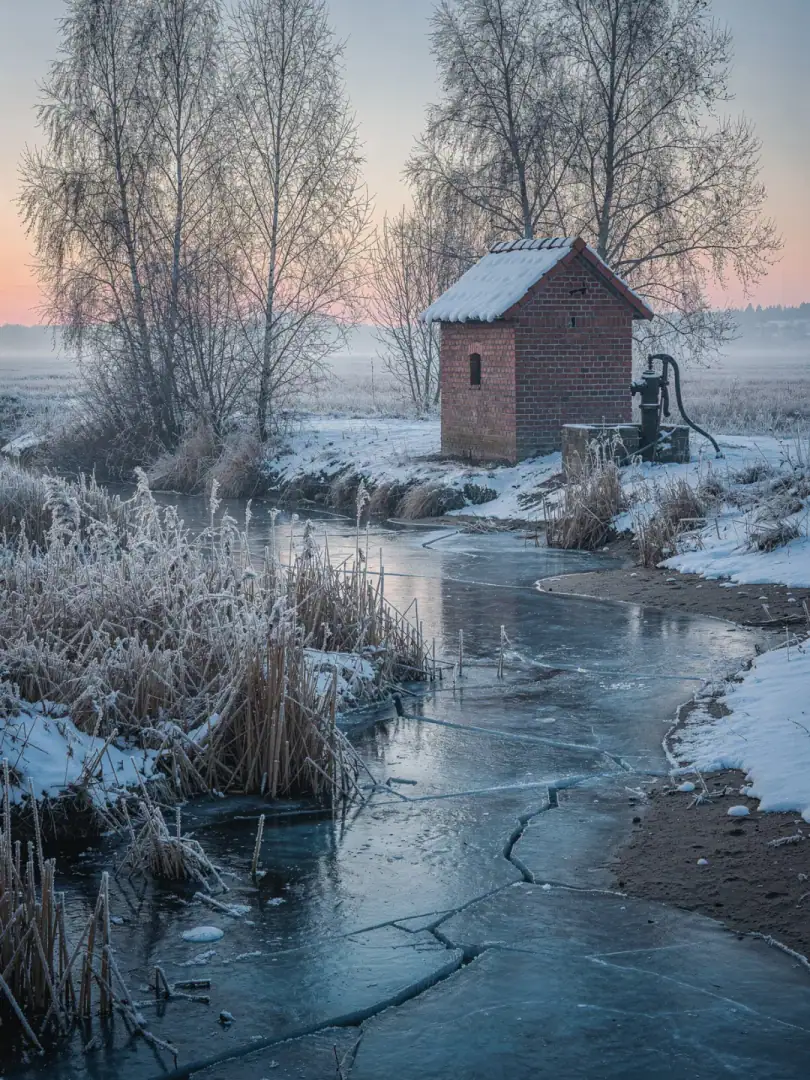
Sand & the Spree
Water & Climate
Beneath Berlin lies a vast water reservoir left behind by the ice age. Layers of sand and gravel, in places up to a hundred meters thick, hold rain and meltwater like a sponge. The city's distilleries never had to dig far to reach clean groundwater.
When Leo Gorbatschow built his factory in Schöneberg, he used exactly this water for his mash. It's soft, low in lime and iron, having seeped through fine sand rather than limestone. This is an advantage for fermentation, since too many minerals interfere with the yeast.
The climate of the North German Plain suits the grain: cool but rarely harsh winters, a temperate summer, and rain fairly evenly spread throughout the year. Rye needs no irrigation, as long as enough moisture seeps into the sandy soil in spring. Major heat waves, however, take a toll on the region's shallow roots.
Cold winters have a second effect: they make the ice-cold vodka shot a natural tradition. Anyone out and about in the frost was happy to reach for something strong at the pub to warm up quickly. This connection between harsh climate and clear spirit still runs through northern Germany's drinking culture today.
The Spree and Havel rivers also shaped the city's distilleries - less as a source of drinking water, more as a transport route for grain and coal. Rye arrived in the city from the Mark Brandenburg by barge, and the finished vodka left the same way. Water thus served a double purpose: as raw material and as roadway.