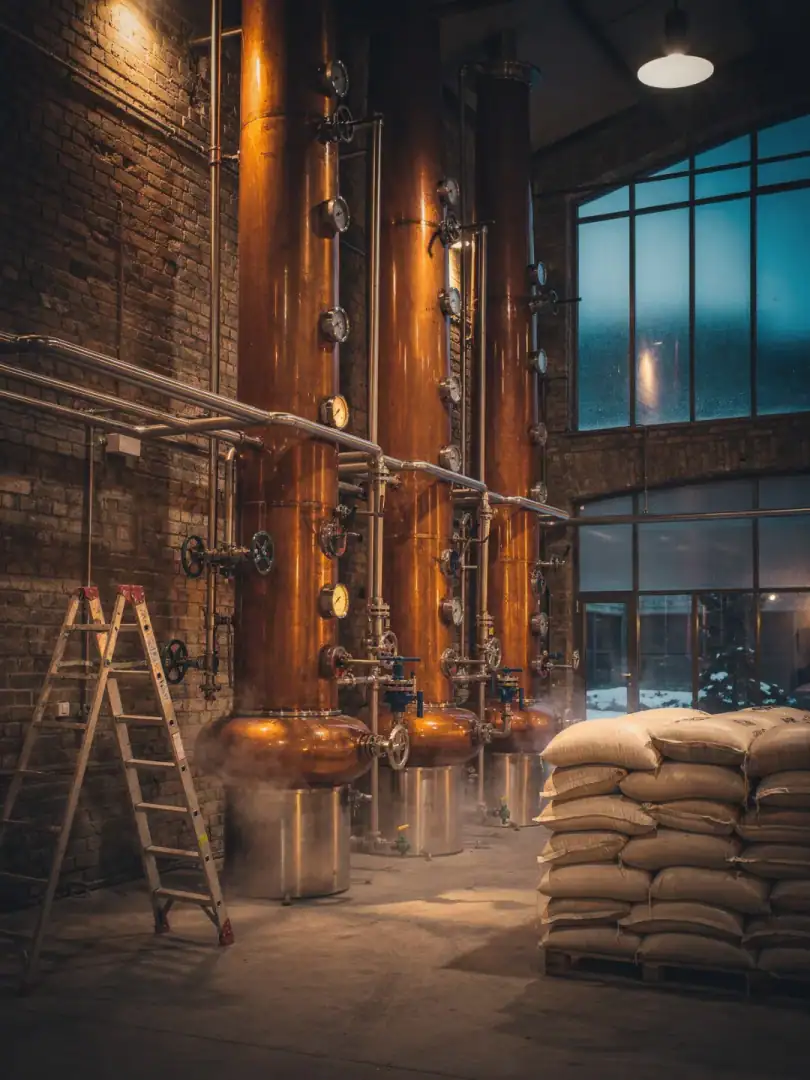
Column Instead of Pot
Distillation & Rectification
It all starts with mash. Milled grain, usually rye, is mixed with water from the limestone ground and combined with yeast. Over the following days, the yeast ferments the sugar it contains into alcohol. What remains afterward is a cloudy, slightly sour liquid with just eight to ten percent ABV.
Turning this into vodka takes more than a simple pot still. Modern Estonian distilleries like Liviko in Tallinn work with tall rectification columns made of copper and stainless steel. Inside, the alcohol evaporates and condenses again and again in a continuous process until it reaches a purity well above 96% ABV, far more than any single distillation run could ever achieve.
This process is called rectification. It systematically separates drinking alcohol from fusel oils and other fermentation byproducts that give raw spirit its rough character. Unlike simple pot-still distillation, what's left in the end is an almost flavor-neutral alcohol, the starting material for every vodka, no matter which grain it comes from.
Only afterward is it diluted to drinking strength using limestone-filtered water from the region. EU spirits regulations require a minimum of 37.5% ABV for vodka. In practice, most brands sit considerably higher, often at 40% ABV.
In the end, what's left of the rye field is a drink that barely tastes of its origin anymore, unless the distillery wants it to. Filtration decides what last trace of character survives at all.