Birch Charcoal and Sand
Filtration
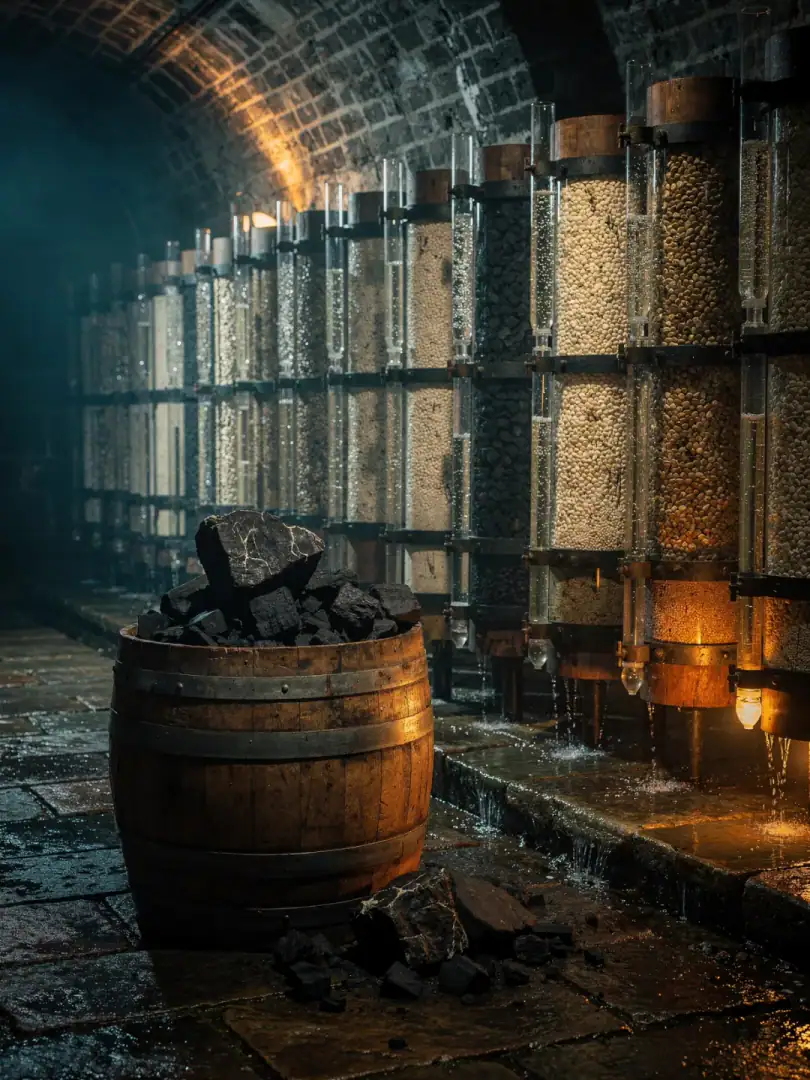
After rectification, the alcohol is technically already clean. Still, that's not enough for distilleries like Liviko in Tallinn to call it finished vodka. They filter it further, usually through columns of birch charcoal or quartz sand, which the diluted alcohol passes through once more before bottling.
Birch charcoal is made from the wood of birch trees, which grow everywhere across the country. It's charred at high temperature with little oxygen, similar to activated charcoal. Its porous surface binds even the finest traces of fusel oils and sulfur compounds that even the best rectification column can't fully remove. This makes the flavor rounder and a touch softer on the palate.
Quartz sand works more mechanically. It traps tiny particles and produces a clear, glossy liquid, but barely changes the flavor itself, unlike birch charcoal. Some distilleries also chill the vodka further before this so-called cold filtration, since more cloudy particles settle out and filter more easily at low temperatures.
What filtration can't do is turn a mediocre raw spirit into a great vodka. It only smooths and polishes whatever quality is already there from the mash and rectification, nothing more. Marketing copy still likes to talk about miraculous effects that are hard to prove under sober scrutiny. That's exactly why the choice of raw material and column remains more important than any claim about charcoal or sand.
Anyone tasting two otherwise identical vodkas side by side, one cold-filtered and one not, will usually notice a subtle difference at most, not a dramatic one.