Spring Water and State Monopoly
Region & History
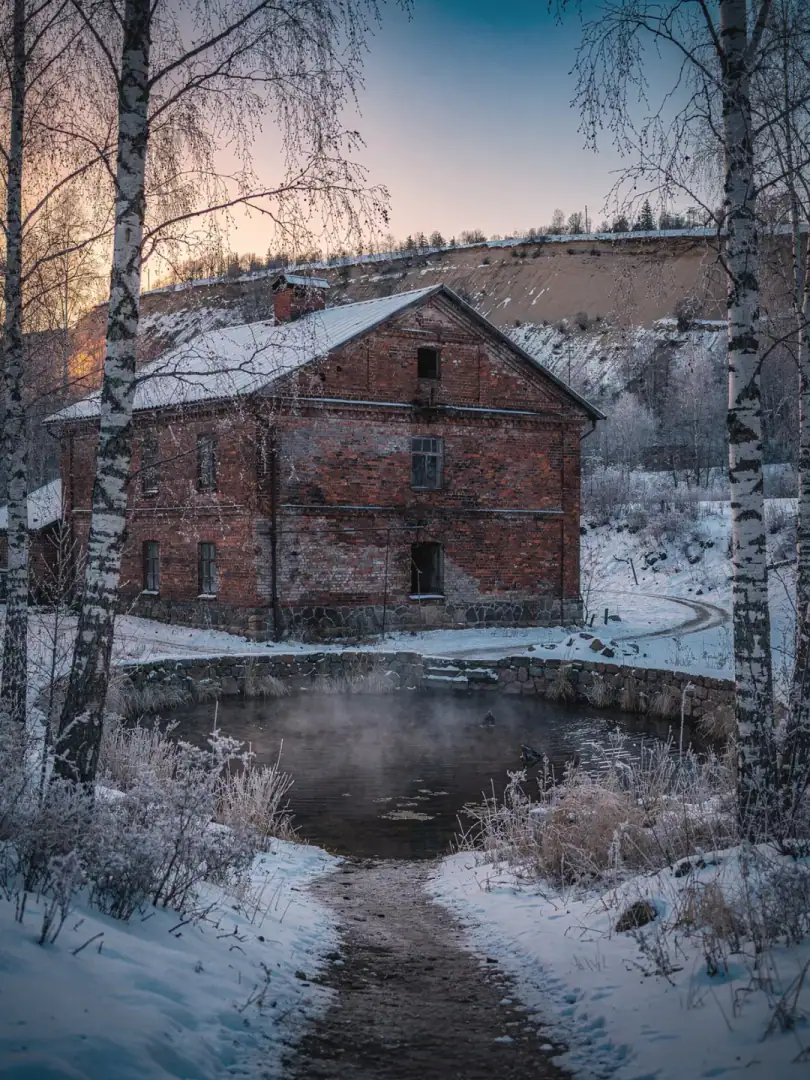
In 1888, physician Wilhelm Juslin built a small distillery beside a spring in the southern Finnish village of Rajamäki. The water came from an esker, a long ridge of sand deposited by the last ice age over ten thousand years ago. Even then, it was prized for its exceptional purity.
Thirty years later, everything changed. On June 1, 1919, Finland's Kieltolaki, the prohibition on strong alcohol, took effect. The young nation, having only recently gained independence, hoped prohibition would solve a pressing social problem. In 1920, the state bought Juslin's distillery in Rajamäki to keep pharmacies supplied with alcohol for medicinal purposes.
Prohibition did little to stop Finns from drinking. Illicit stills and smugglers kept the country supplied, and confiscated volumes rose from roughly 296,000 liters in 1920 to over a million liters by 1930. In a 1932 referendum, about seventy percent of Finns voted to end the ban. On May 5, 1932, the first state-run alcohol shops opened their doors.
The new state enterprise was initially named Oy Alkoholiliike Ab, later shortened to Alko. It controlled both production and sales, and production in Rajamäki continued uninterrupted. In 1970, Alko launched the Finlandia brand there, distilled from Finnish barley and the local spring water.
When Finland joined the EU in 1995, the state was forced to give up its production monopoly. In 1999, production was spun off into a separate company called Altia, while retail sales remained with Alko. An attempt to fully privatize Altia as well failed in 2001 due to parliamentary opposition. In 2021, Altia merged with the Norwegian Arcus Group to form Anora, today's owner of both Finlandia and Koskenkorva.