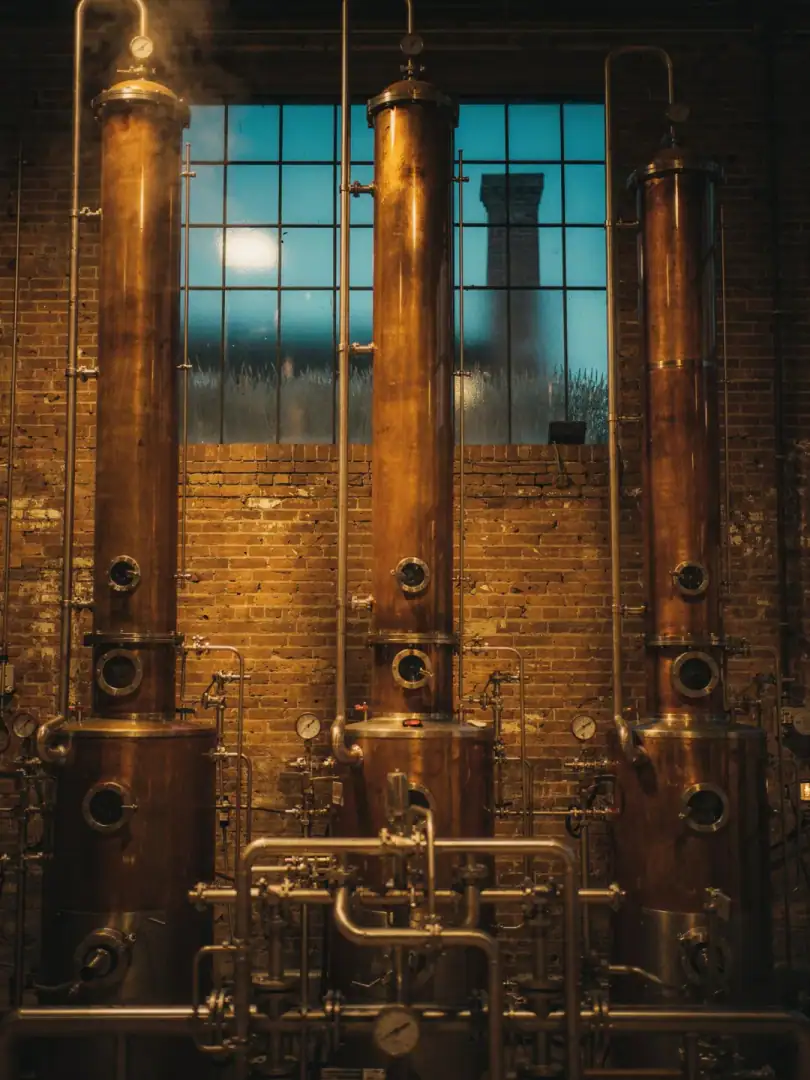
Steel, Copper, Discrepancy
Distillation & Rectification
Before any distillation can happen, the wheat from Picardy first has to become mash: milled, mixed with water, and inoculated with yeast, which ferments the sugar into alcohol over several days. The result is a weak, cloudy liquid still far removed from vodka.
This is where a small discrepancy in the sources begins. Grey Goose's own brand materials today describe a single distillation in steel and copper columns. Older, independent accounts, such as the one in the "Oxford Companion to Spirits and Cocktails," instead describe a purpose-built, multi-stage column system in Picardy that rectifies the mash several times over. Both claims are documented; they simply disagree on the number.
Rectification means the same thing either way: vapor rises through the column, cools, drips back down, and rises again, stage by stage. With each pass, the alcohol becomes purer, and the compounds carried over from grain and fermentation diminish. What emerges at the top of the column is an almost flavor-neutral spirit at well over ninety percent alcohol. Only then is it diluted to drinking strength with the spring water from Gensac-la-Pallue.
It's bottled at 40% ABV, well above the EU's minimum threshold of 37.5% ABV for vodka. Cîroc takes an additional step: the grape base is distilled four times in columns. A fifth pass runs through a traditional copper pot still at Maison Villevert in Salles-d'Angles, under the direction of Jean-Sébastien Robicquet. This final pot-still distillation is a technique more typically associated with Cognac itself than with vodka.