Wheat Instead of Rye
Raw Material
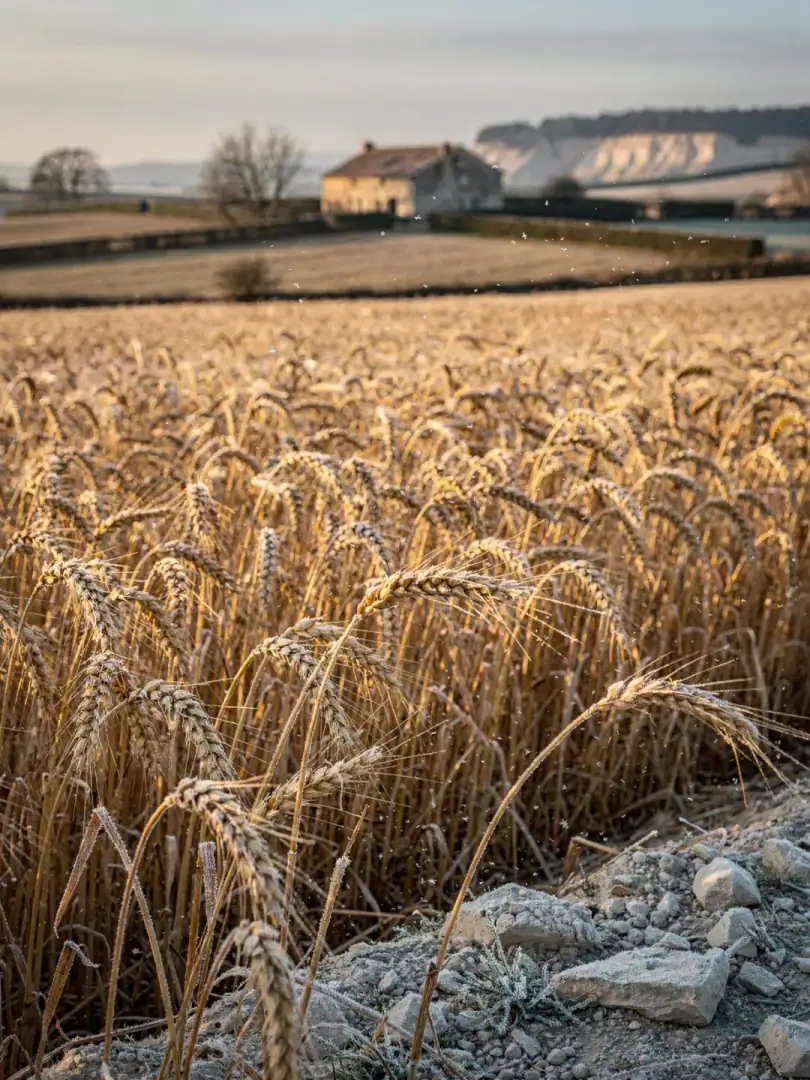
The wheat that ends up in Grey Goose doesn't grow just anywhere in France. It grows on a specific soil type in Picardy: fine, wind-blown loess over a layer of chalk. This combination has been considered one of the best farmland types in Europe for centuries. Farmers here mainly grow soft wheat, along with large areas of sugar beet.
Only soft winter wheat is used for the vodka. This mild grain variety is sown in autumn and rests in the ground over winter. According to the brand, the grain comes from three producer cooperatives. It's grown without genetic modification, and its origin can be traced back to the individual field. Such traceability is by no means standard in the drinks industry.
Compared to rye, soft wheat yields a milder, slightly rounder result. The reason lies in the absence of the oily, spicy outer layers that rye grain typically brings. Grey Goose itself describes this restrained profile as the core of its brand identity: vodka with character, not just odorless alcohol.
Cîroc takes a different path and forgoes grain entirely. Its base is grapes, mainly Ugni Blanc and Mauzac Blanc, from the area around Gaillac, considered France's highest-altitude wine region. Ugni Blanc, of all grapes, is also the variety used to distill classic Cognac. Here, though, it doesn't become brandy, but vodka. Under EU Spirit Drinks Regulation 2019/787, vodka made from a raw material other than potato or grain must be labeled as such, which is why this note appears on the Cîroc label.
Dark, humus-rich loess, plowed annually and enriched with organic matter.
The root: This is where winter wheat germinates in autumn and forms its first roots before the frost sets in.