The Column and the Formula
Distillation & Rectification
A mash of wheat and rye is the starting point for every batch. The milled grain is mixed with water and enzymes to convert its starches into sugar. Yeast is then added, fermenting it within a few days into a weak alcohol, barely stronger than beer. Only after this does the real work at the column begin.
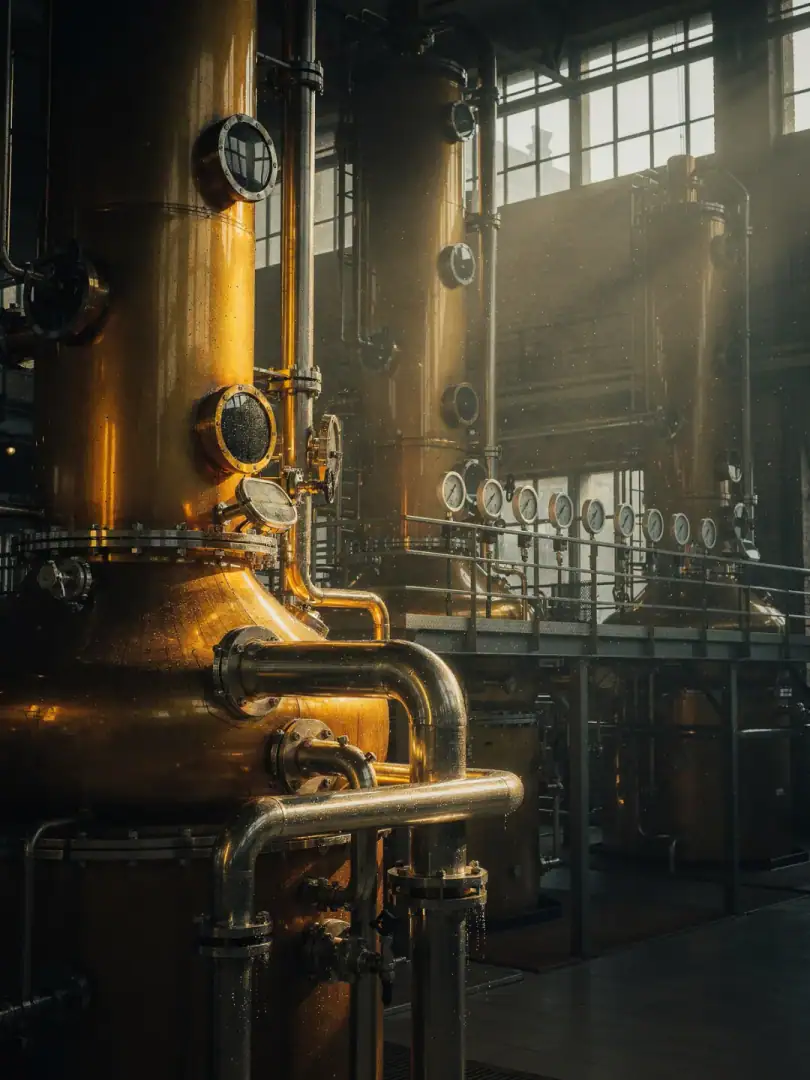
From this mash, the alcohol isn't boiled out in individual pots. Instead, it runs through tall, continuous columns where it's rectified. Steam rises through many plates, separating water, fusel oils, and aroma compounds from the ethanol itself. What remains at the top is an almost flavor-neutral raw spirit. It's precisely this neutrality that distinguishes vodka from whisky or Cognac, which deliberately retain aroma compounds from distillation. The cleaner the column runs, the less rework the raw spirit needs later on.
The Soviet Union set strict GOST standards for Stolichnaya. They specified how often and how finely the spirit had to be rectified to qualify as premium vodka. Such state standards were the rule rather than the exception throughout Soviet beverage production. Latvijas Balzams still distills the brand today according to this inherited formula, even though the Soviet Union itself has long since vanished.
In the end, water dilutes the high-proof raw spirit down to drinking strength. EU Spirits Regulation 2019/787 sets the minimum for vodka at 37.5 percent ABV. Most bottles from Riga come in well above that, at forty percent. That's the classic strength at which Stolichnaya has been sold for decades.