River and Gulf
Water & Climate
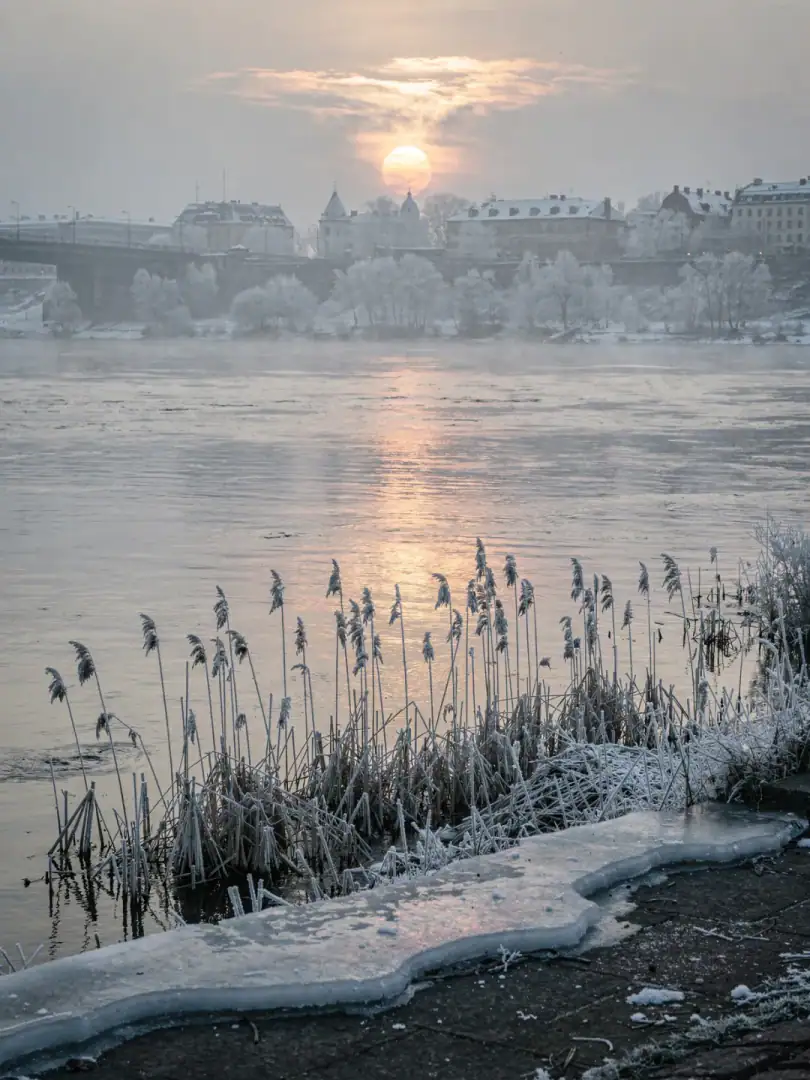
The Daugava can grow to six hundred meters wide in Riga, and in places seven meters deep. Overall, it ranks among the largest rivers in the Baltic region. It rises far to the east, in Russia's Valdai Hills, and first crosses Russia, then Belarus. Only in its final 352 of a total of 1,020 kilometers does it reach Latvian soil. There, it finally flows into the Gulf of Riga.
About thirty kilometers above the river mouth stands the Riga Hydroelectric Power Station. It regulates the outflow and shapes the water level in the city more than the seasons alone. Further upstream, the Daugava has carved deep into Ice Age glacial valleys. Between Pļaviņas and Ķegums, for instance, glaciers traced out the channel long before today's landscape took shape.
The climate on the Gulf of Riga is harsh and temperate. Winters bring cold and often heavy snow, while summers stay short and mild. In recent years, storms have increasingly pushed water from the gulf back into the river. Researchers see this as a sign of climate change, since the number of floods in the city has been rising for years.
For a distillery on this river, what matters most is a reliable volume of water year-round. Its origin matters too: the catchment area above the power station carries little industry and little agriculture. Anyone making vodka in Riga is drawing on one of the Baltic's most abundant and cleanest water sources. Part of the river has long since been channeled and regulated.