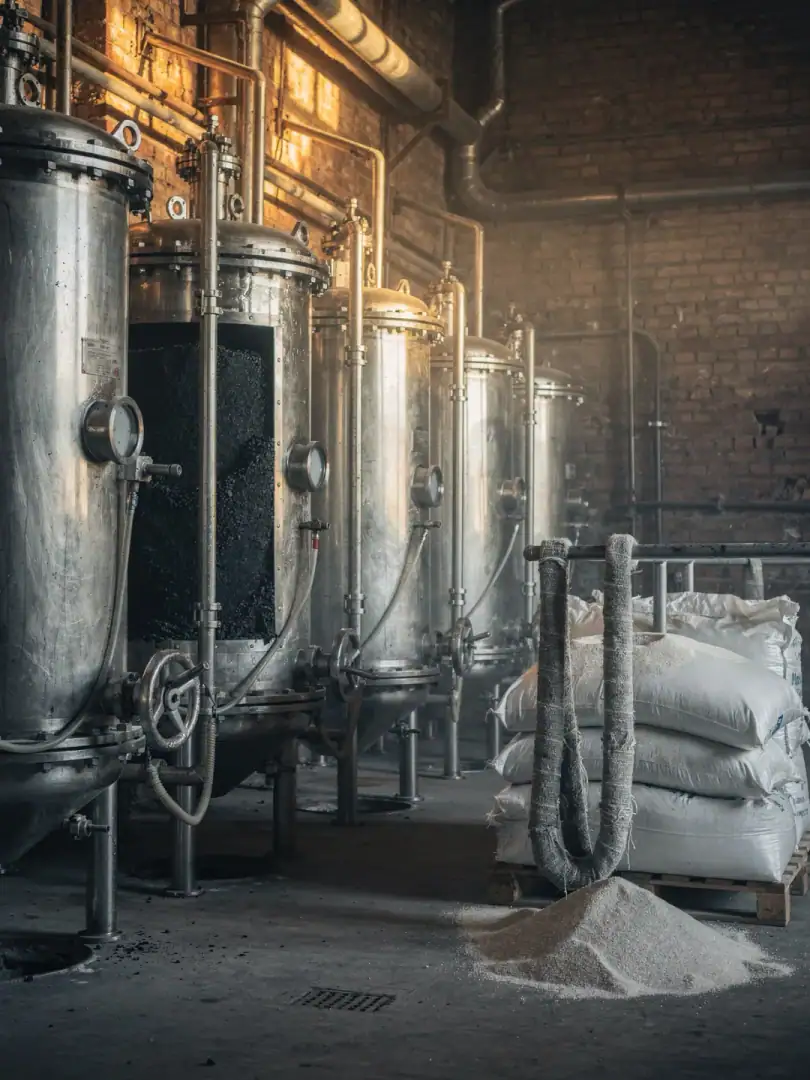
Charcoal and Sand
Filtration
Charcoal filtering doesn't turn cheap spirit into fine vodka. That's the first sobering fact for anyone who reads labels closely. Activated charcoal is often made from birch wood. It mainly removes residual fusel oils and sulfur compounds that remain in the distillate even after rectification. Anyone who judges a vodka solely by the word 'charcoal' on the label learns little from it.
GOST vodka like Stolichnaya traditionally passes through several filtration stages. First come charcoal columns, then fine quartz sand, and finally a cloth filter that catches any last traces of haze. Each stage removes a little more from the distillate. But more filtration doesn't automatically mean more quality. At some point the alcohol simply becomes neutral, and there's nothing left to remove.
Cold filtration chills the vodka before filtering and is often marketed as a sign of special care. In fact, cold does cause some fusel oils to flocculate, making them easier to filter out. Technically, that's about all there is to it. Silver filters, as some brands advertise, have essentially no proven effect on flavor. Such additions work mainly on the label, hardly in the glass.
What matters in the end is the starting material. A cleanly fermented wheat-rye distillate needs fewer filtration stages than a roughly distilled raw spirit. The elaborate filtration used by old Soviet factories like Latvijas Balzams was originally a response to inconsistent raw material quality. It wasn't an end in itself or a marketing gimmick, just craft. It remains part of the recipe to this day, even though modern facilities now operate far more consistently.