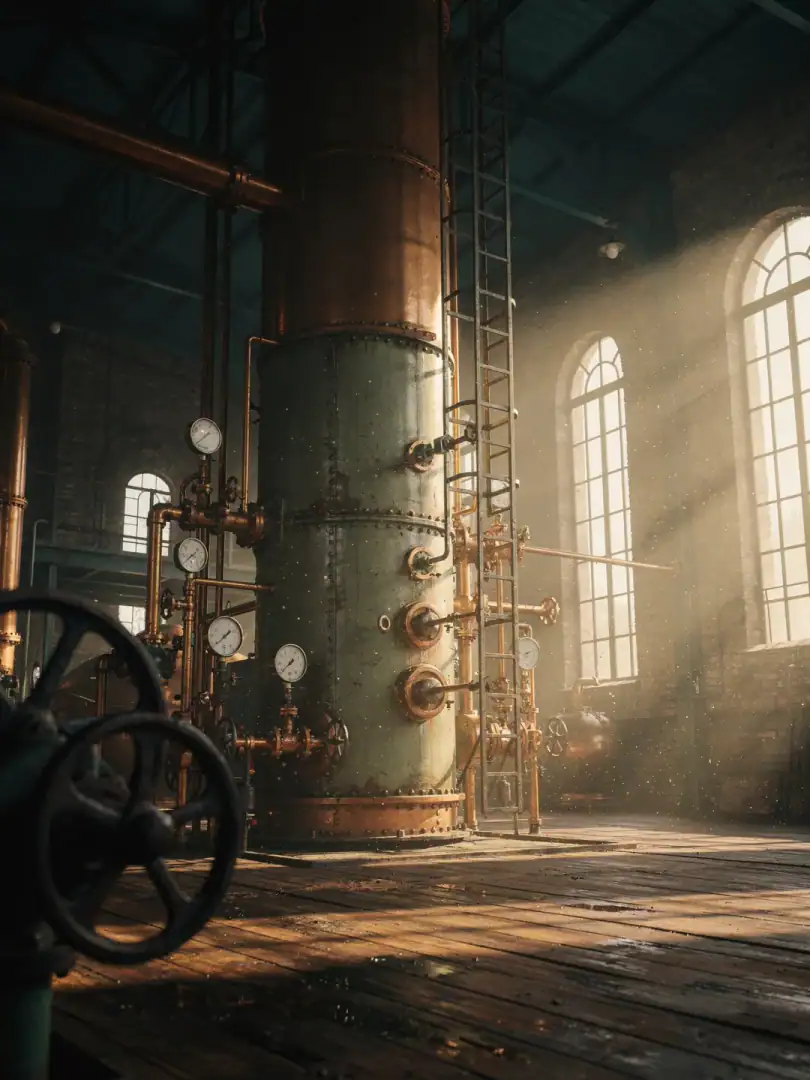
Column & Rectification
Distillation & Rectification
Milled rye, warm water, and enzymes form the mash that starts everything in Kaunas. The enzymes break down the grain's starch into fermentable sugar. Over the following days, yeast then transforms this sugar into a thin, slightly sour wash, barely stronger than strong beer.
This wash then passes through a rectification column, a tall steel tower with many plates stacked on top of each other. With each pass, the alcohol separates further from water and from fusel oils that would otherwise give the raw spirit a grainy or yeasty flavor. The more often the wash passes through the column, the more neutral the result becomes.
The end result is an almost neutral fine spirit at well over 90 percent alcohol, which is then brought down to drinking strength with water. EU Spirit Drinks Regulation 2019/787 requires a minimum of 37.5 percent alcohol for vodka. In practice, most brands in the region, including those from Kaunas, bottle at 40 percent, the standard value common in Eastern Europe.
Stumbras advertises that its recipes trace back to the classic methods of 1906. However, the equipment itself has been completely modernized since privatization in 2003. Here, "modern" mainly means more control over temperature and pressure in the column, not a different fundamental principle of distillation.
Not every drop from the column is bottled immediately. Some instead goes into oak casks, together with linden and apple leaves, and matures there over years into Starka, the region's aged rye spirit.
This is how two completely different spirits emerge from the same rye mash: the clear vodka and the amber-colored Starka.