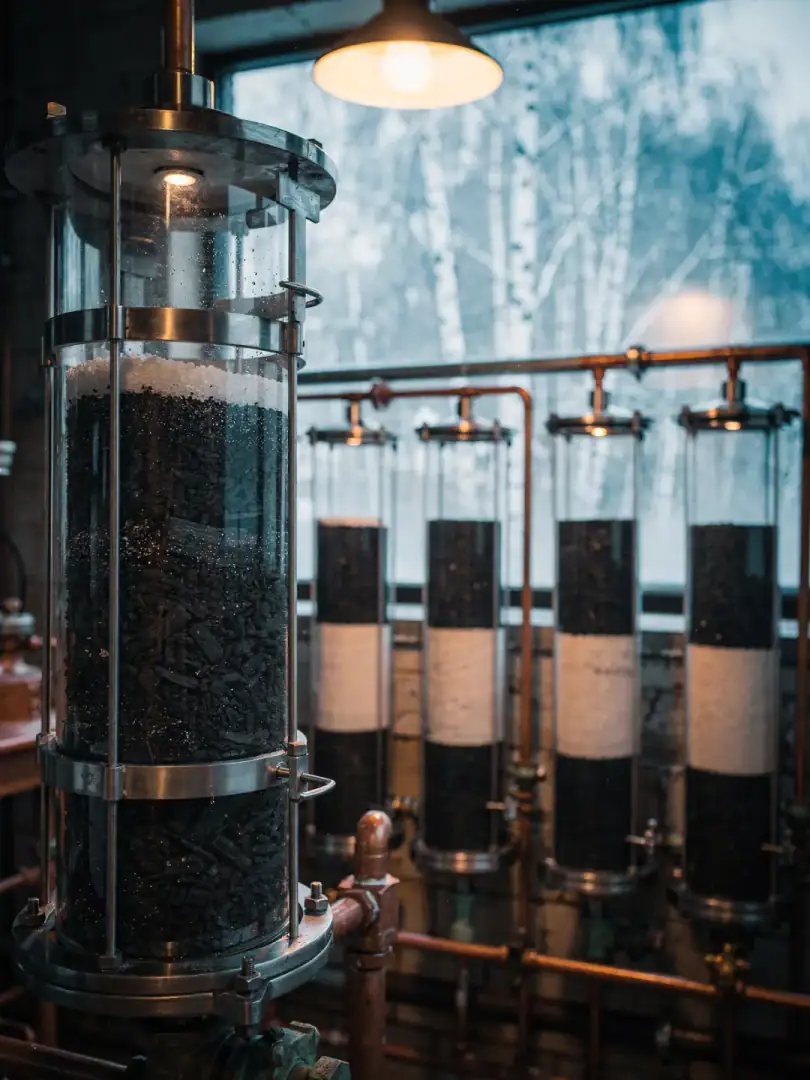
Birch Charcoal & Sand
Filtration
Vodka from Kaunas usually still passes through a filter before bottling. In the Baltics, this traditionally means birch charcoal. Birches grow especially fast here on sandy and cleared land, and for centuries supplied farmers and distilleries alike with abundant, inexpensive wood.
The charcoal binds some of the last fusel oils and fine cloudiness that remain in the spirit even after rectification. This makes the vodka noticeably smoother in taste. A layer of quartz sand or a fine cellulose filter often follows, catching the last suspended particles so the liquid stays clear.
How long the spirit runs through the charcoal, how many stages there are, and how often it's filtered—distilleries rarely reveal exact details. This counts as a trade secret throughout the industry. Marketing copy, meanwhile, likes to work with figures such as especially many filtration stages or a silver content.
Such claims are best read with a skeptical eye. According to manufacturers, more filtration stages make vodka smoother, though this is rarely proven in individual cases. A cleanly run rectification process already removes most unwanted substances beforehand; filtration afterward only tidies up.
The herbal bitter Trejos Devynerios takes the opposite path. Its 27 herbs and spices remain in the spirit for days, until color and aroma have fully transferred. Only afterward is it strained, not clarified through charcoal, since here the herbs are meant to stay in the glass.
What matters in the end is the interplay of rye, water, column, and only very last, birch charcoal. No single step defines Kaunas vodka—rather, it's the sequence of all four.