Nemunas & Neris
Water & Climate
Two rivers give Kaunas its location. The Nemunas is by far Lithuania's longest river, and the smaller Neris flows into it here. Even in tsarist times, the Nemunas was navigable for cargo ships.
Downstream, a hydroelectric plant dams the Nemunas into the Kaunas Seas, an elongated reservoir. But for agriculture in the surrounding area, groundwater matters more than the river itself. It seeps through the sandy and gravelly layers of the Ice Age moraine plain and is naturally filtered in the process.
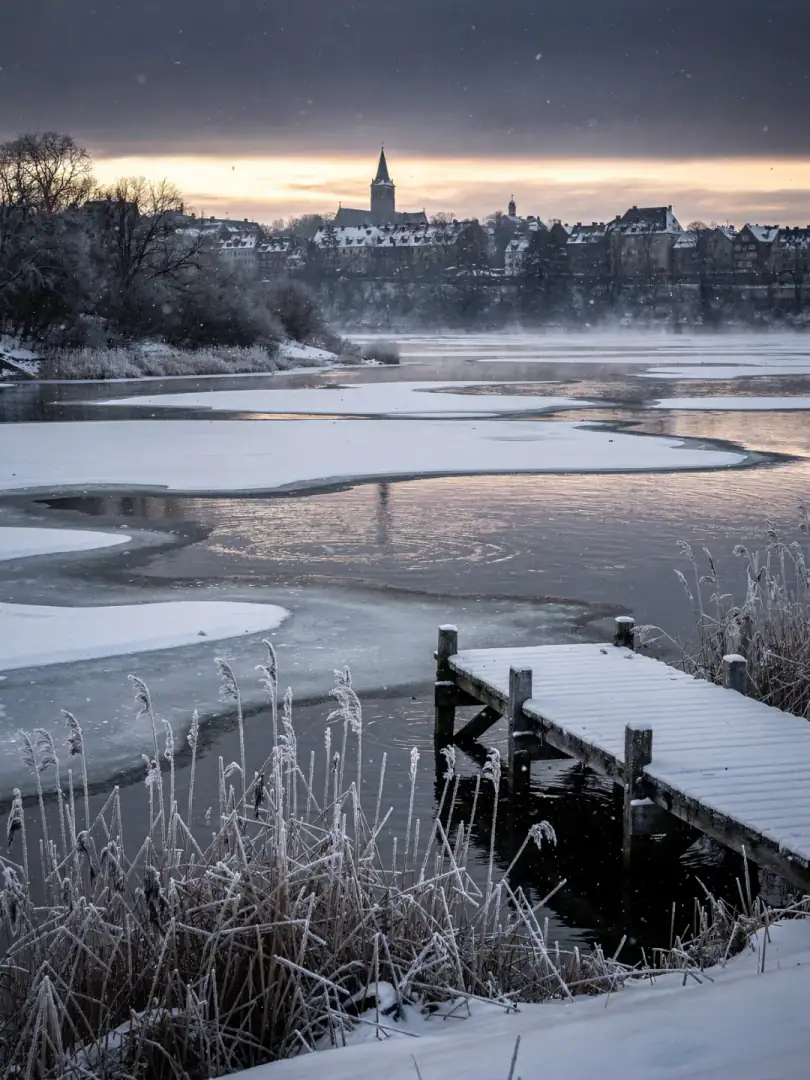
Cold winters with frequent snow and often bitter subzero temperatures shape the climate around Kaunas. It's temperate-continental, with mild to warm summers around 18 to 20 degrees Celsius. Rainfall is spread throughout the year, with a peak in summer, when the rye fills its grains in the fields.
For the distillery, this rhythm dictates fixed dates. Harvest comes in late summer, and mashing begins in early autumn. The long, cold winter then naturally slows any fermentation process that would otherwise run too quickly.
Some of the rye is sown in autumn as a winter crop. It survives the cold months under a blanket of snow, which acts like an insulating layer, and only continues growing in spring.
Anyone walking through Kaunas in January, feeling the wind off the half-frozen reservoir, quickly understands why ice-cold vodka feels more fitting here than warm draft beer. The water for it comes from exactly this landscape, chilled by the same winter that keeps the fields resting outside.