Genever Capital of the World
Region & History
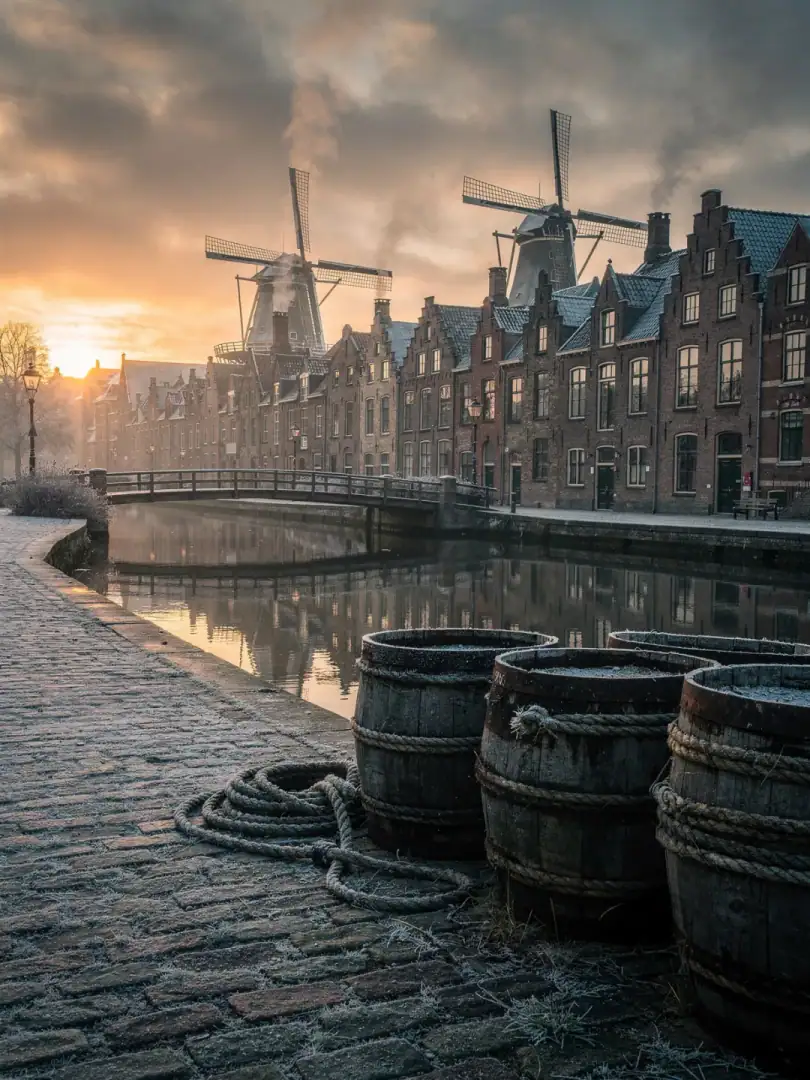
Anyone sailing up the Schie to Schiedam in the 18th century smelled the city before they saw it. Smoke from hundreds of distillery chimneys hung over the rooftops, while the sails of the world's tallest windmills turned among them. At that time, Schiedam was the genever capital of the world, a city that lived almost entirely off distilling.
The rise didn't begin with a plan, but with hardship. When herring fishing collapsed in the 17th century, Schiedam merchants sought a new business and found it in distilling grain spirit. The city was well positioned on the water, grain arrived by ship from the hinterland, and finished genever traveled the same route back out into the world.
In the 18th and 19th centuries, this grew into an entire industry. Malthouses, grain mills, and distilleries defined the cityscape, reaching a peak between 1850 and 1890. The windmill De Noord, standing 33.3 meters tall to the roof and the tallest traditional working windmill in the world, ground grain for the distilleries just like its neighbors. The mills had to be built this tall because surrounding houses and warehouses would otherwise have blocked their wind.
Right in the middle of it all, the Nolet family had been distilling since 1691, founded by Joannes Nolet, and the business remains in the same family to this day, now in its eleventh generation. In 1983, Carolus Nolet introduced a wheat vodka there and named it after the distillery's oldest coal-fired copper kettle, the "Distilleerketel 1": Ketel One. In 2008, the Diageo group entered into a $900 million agreement, taking a half stake in the marketing and distribution of the brand, while the distillery in Schiedam remained in the hands of the Nolet family.
Of the once-numerous distilleries, only a few remain today, along with a Jenevermuseum that preserves the city's history. Genever and vodka have stood side by side in the same city ever since, distilled by families who have passed down the craft for centuries.