Kettle, Grain, Contrasts
Raw Material
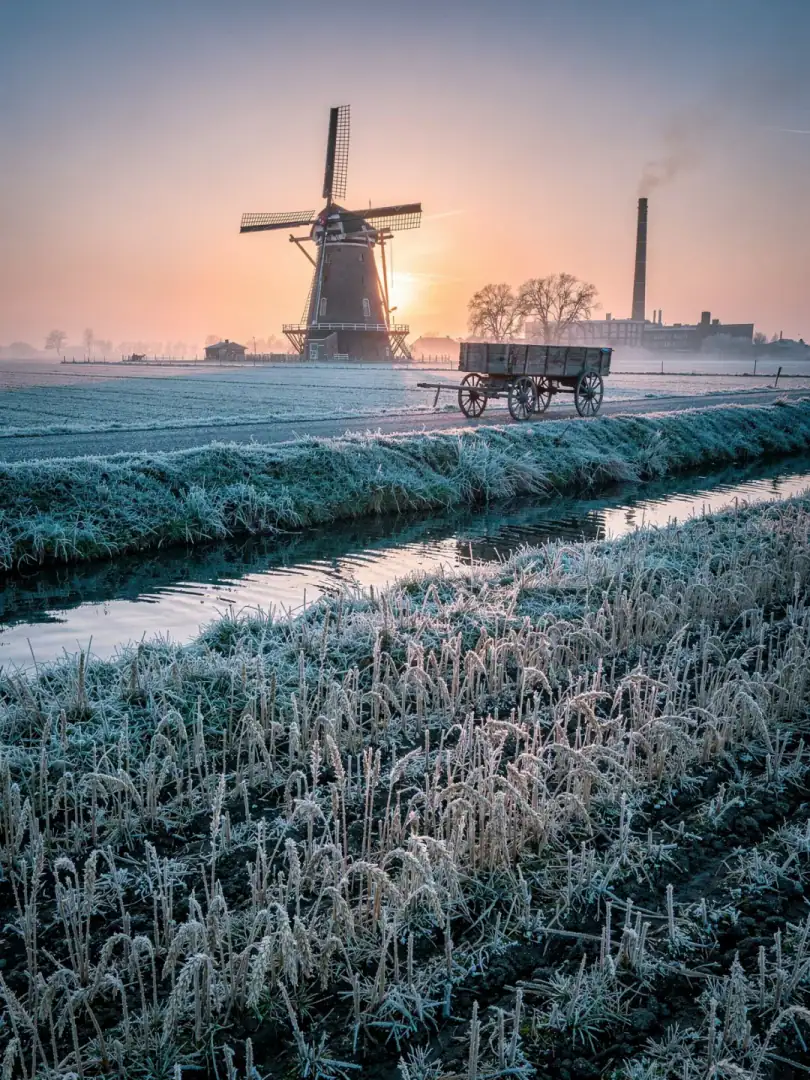
Around Schiedam today, there's hardly any trace of the grain fields that once supplied the city. Most grain now arrives by ship, yet grain still determines what ends up in the kettle. Only two very different varieties matter here.
For classic Schiedam genever, a fixed rule still applies. Malt wine (moutwijn) is made from rye and malted barley, ground in one of the city's historic distillery mills. The grain is distilled three times. This gives the malt wine a full, slightly malty aroma, quite unlike the neutral alcohol found in most vodkas.
At Nolet, a second grain story unfolds alongside it. For Ketel One, the distillery uses only wheat. It's distilled in columns into a very pure raw spirit, part of which is further refined in copper pot stills. Wheat carries less inherent flavor than rye, which is exactly what makes it suitable for a smooth vodka.
The soil beneath the region's fields explains why rye was the preferred grain here for so long. Beneath the cultivated clay layer lies heavy marine clay, and below that, peat soil that causes the land to subside. Rye copes better with such wet, shifting ground than more sensitive wheat. Modern drainage has since loosened this old rule somewhat.
Between the rye field and the wheat silo lies the full range of Schiedam's kettles. Genever and vodka both come from grain that was never harvested far from the Schie.
Dark, humus-rich river clay, cultivated for centuries.
The root: Gives wheat and rye a firm hold and stores moisture evenly.