Zalewajka & Flaki
Vodka & Food
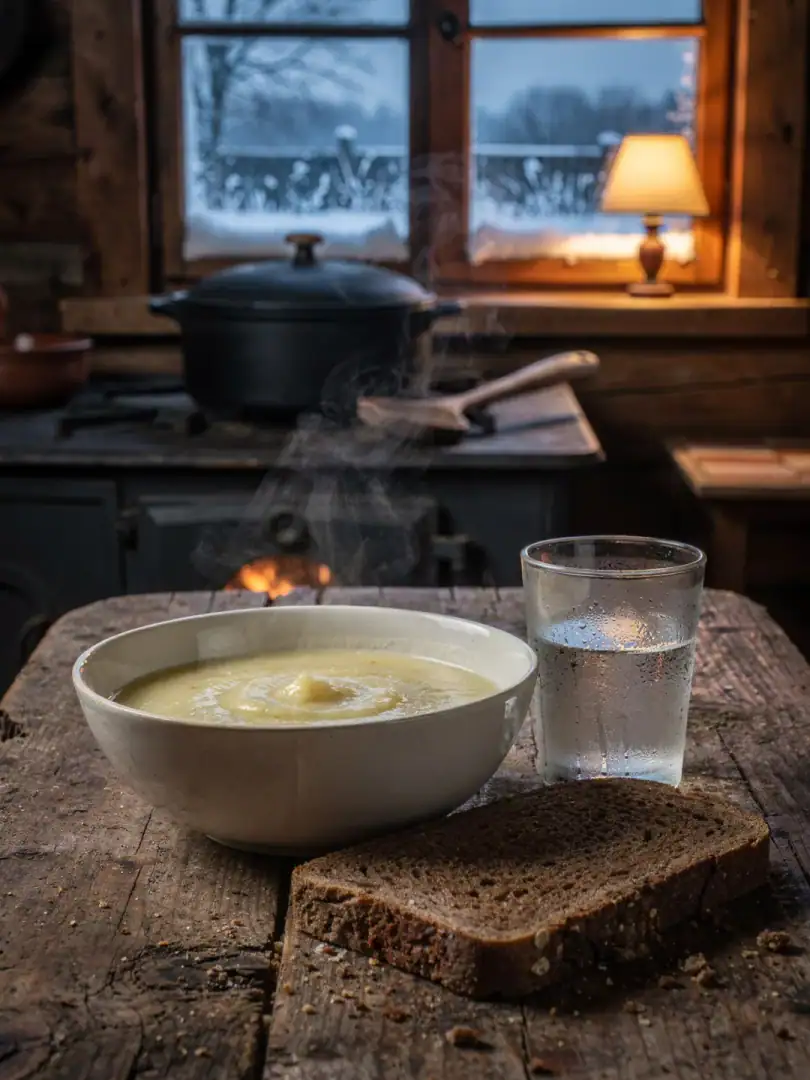
In Masovia, rustic cooking has always centered on stews and soups, not expensive ingredients. Zalewajka, a sour soup made from potatoes and fermented rye water (żur), comes with onion and sometimes bacon or mushrooms. It still appears regularly on many family tables today, especially in the colder months.
A small, very cold wódka suits it better than any beer. The soup's acidity and the clear spirit cancel each other out rather than compounding, so the stomach isn't left with a heavy load despite the soup's tang.
Kiszka ziemniaczana, a hearty bake of grated potatoes, spices, and bacon, is considerably richer. It calls for the opposite approach: a wódka that stays dry enough won't amplify the fat further in the mouth. A rye spirit like Belvedere suits it better than a sweeter potato distillate.
In Warsaw itself, the Jewish community brought Karp po żydowsku into the mix, carp in a sweet-and-sour sauce with raisins and almonds, traditionally served on holidays. The sauce's sweetness calls for a fairly neutral, cool wódka that won't mask the fish's flavor.
Flaki warszawskie, a robustly spiced tripe soup, is another Warsaw classic. Traditionally it's finished with a small glass of wódka afterward, not sipped alongside the soup. That way, the bite of nutmeg and pepper in the broth fades more cleanly.
One thing unites all these dishes: wódka never stands alone at the table. It accompanies soup, meat, or fish, never replaces a meal. Drinking without eating breaks one of the oldest rules of Masovian cuisine.