The Column & the Myth
Distillation & Rectification
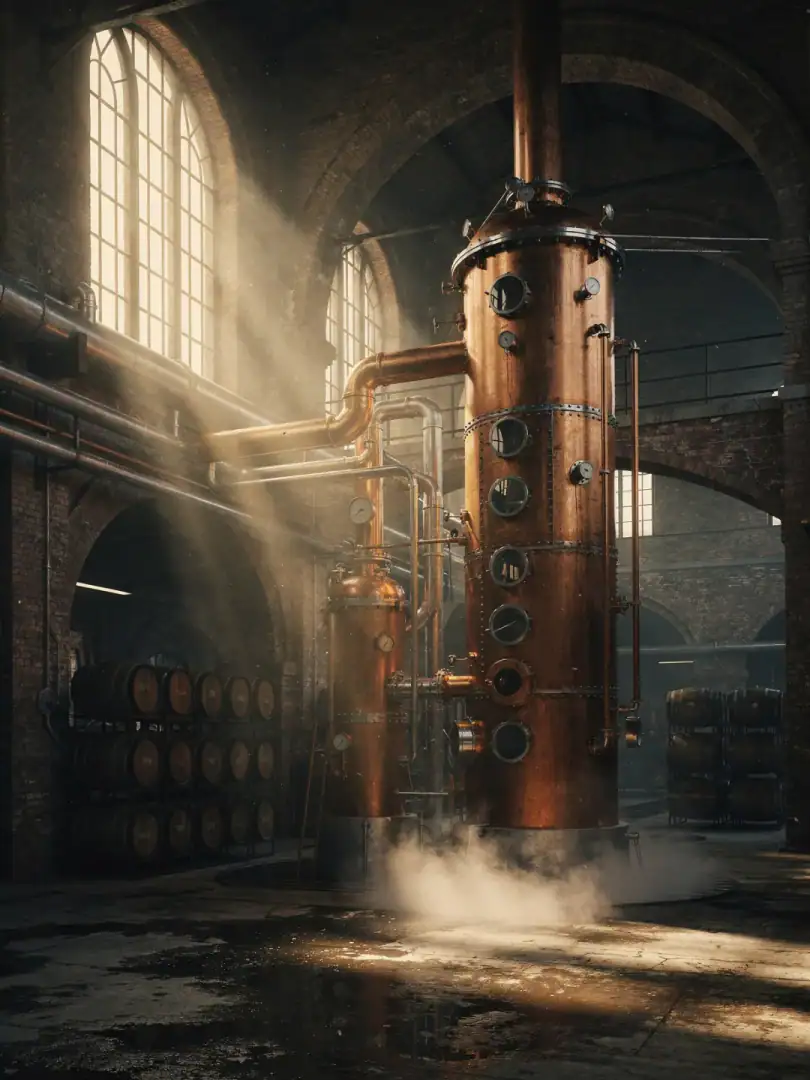
Almost all vodka from Moscow starts as a rectified spirit rather than a simply distilled raw spirit. The fermented mash made from rye or wheat runs through a tall column with many plates. There, alcohol and water separate further with each pass until, at the end, nearly pure alcohol at over 96% ABV emerges.
This is exactly where the name Dmitri Mendeleev comes up. He is still credited today with inventing the 40% rule. The myth is persistent but false: Mendeleev's 1865 doctoral thesis dealt with mixtures well above 70% alcohol and never mentioned vodka at all. The 40% requirement for drinking spirits already existed in 1843, when Mendeleev was nine years old.
In reality, decades later Mendeleev sat on a government commission tasked with working out a fair alcohol tax. In that role, he studied rectification scientifically, that is, the purification of alcohol through repeated separation. From this tax-related work grew the later legend of the chemist who invented the perfect vodka, which does no justice to his actual research.
After the column, a high-proof rectified spirit is ready. It's diluted with water down to drinking strength, traditionally at least 40% ABV in Russia. Column technology itself took hold in state distilleries like Kristall in the late 19th century. It delivered more consistent quality than old pot stills and was easier for the state to control.
How many times a mash passes through the column depends on the desired level of purity. Higher-grade styles in the Soviet era were considered multiply rectified, including Stolichnaya from the Kristall plant. In the end, what still determines classification as vodka in Russia today comes down mainly to a figure set out in the GOST standards: the minimum alcohol content and the permitted level of impurities in the finished rectified spirit.