The Moskva & the Canal
Water & Climate
Moscow sits on a rather modest river. In places, the Moskva is so narrow that, without outside help, it could barely have supplied a city of millions and its industry. For distilleries like Kristall on the Yauza, one of its tributaries, this was already a problem back in the 19th century whenever the water level dropped in summer. Historical accounts describe the Moskva more as a working river than a majestic one.
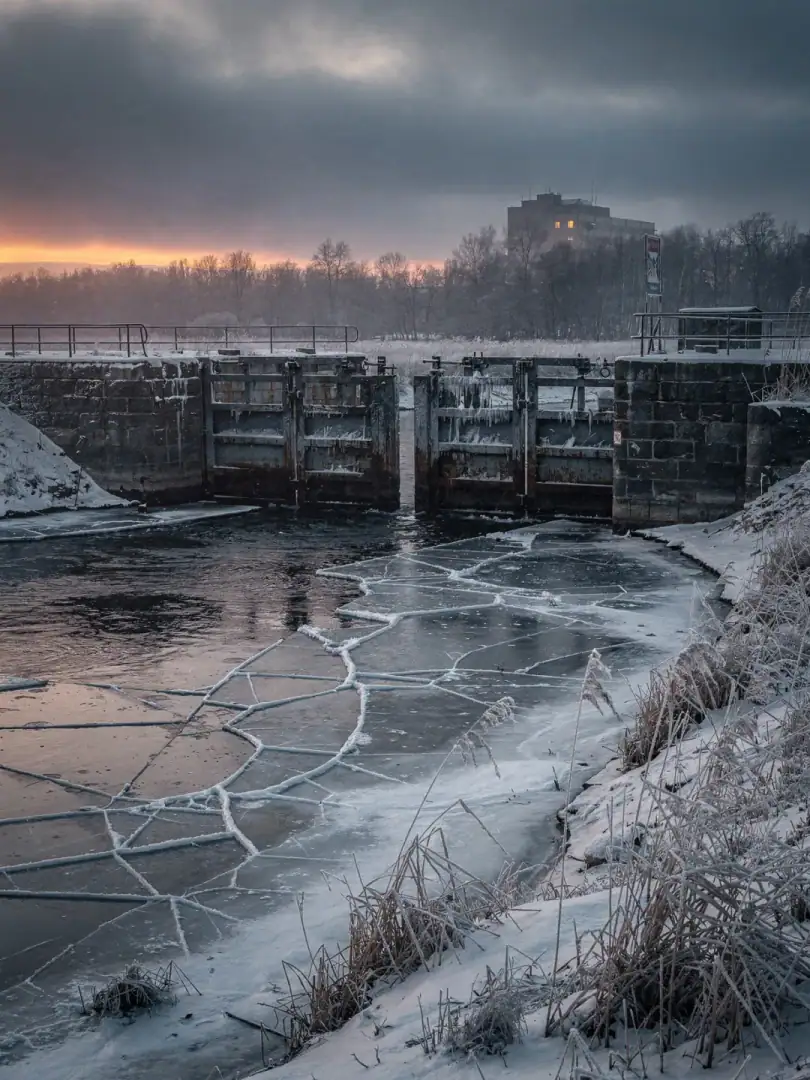
The solution came from afar: between 1932 and 1937, tens of thousands of workers built the Moscow Canal, which channels water from the Volga through several locks to Moscow. Ever since, the Volga has fed the city's drinking water supply while also raising the level of the Moskva.
Beneath the city lies a second reservoir: layers of Carboniferous limestone deep under Moscow. For a long time, distilleries drew water from such artesian wells, water already pre-filtered by the rock layers before it ever reached the mash. This Carboniferous water is still considered low in minerals and mild in taste today. Some of the historic well installations survive to this day, even if they're barely used in the daily life of the metropolis anymore.
Alongside the water comes the climate: Central Russia has long, harsh winters with temperatures well below freezing and short, warm summers. For agriculture, that means a short growing season; for drinking culture, it also means vodka has traditionally been served ice-cold here, simply because in winter there was hardly any other temperature available.
Water and climate together explain why Moscow became the vodka capital despite its small river. The city had to organize its water supply, through canals and wells, and that very organization, state-planned and state-controlled, fit the history of the monopoly, which was likewise steered from above.