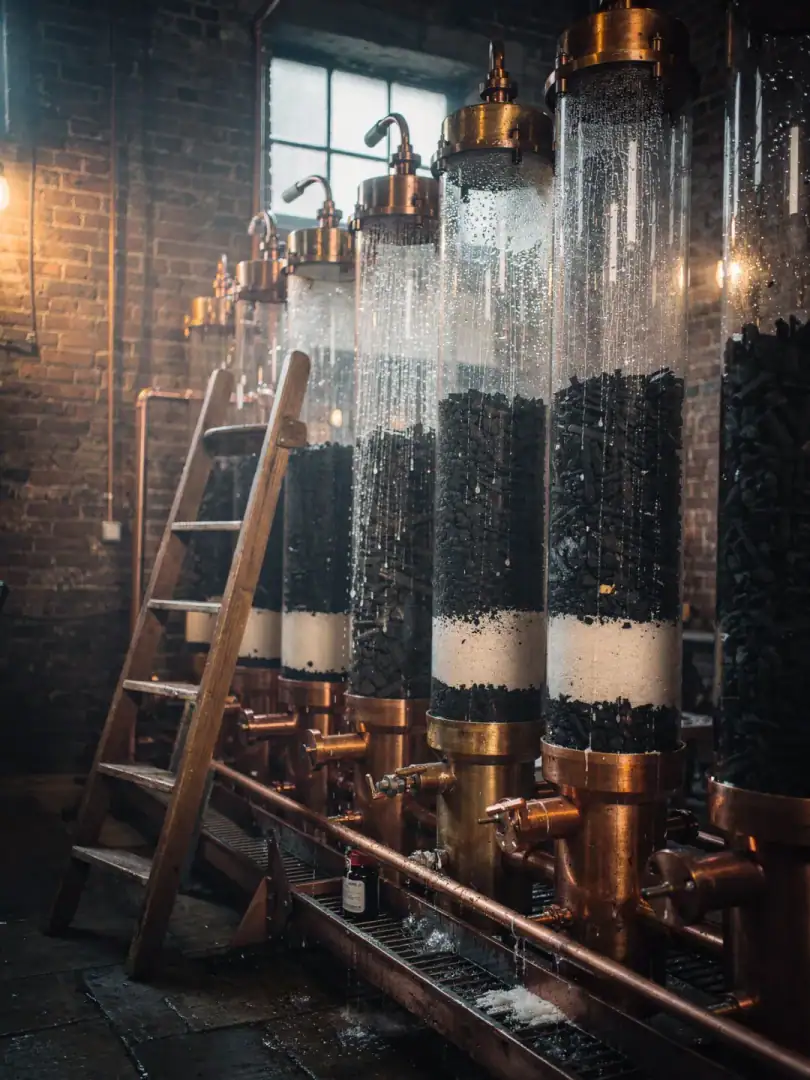
Charcoal, After Smirnov
Filtration
No single step gets marketed by Moscow brands as much as filtration. The reputation traces back to Pyotr Smirnov. In the 1870s, the Moscow distiller introduced large-scale filtration through birch charcoal. He turned it into a selling point that competitors spent years trying to copy. Other Moscow distillers had experimented with charcoal before Smirnov, but none marketed the process so relentlessly.
Technically, the diluted rectified spirit passes through columns of birch charcoal, sometimes supplemented with quartz sand or layers of cotton and felt. The charcoal binds part of the remaining fusel oils and flavor compounds still present even after the rectification column. This makes the vodka rounder and less harsh on the finish.
What charcoal cannot do is what advertising likes to claim for it. It doesn't turn cheap raw material into fine vodka, and it doesn't remove the health risks of alcohol itself. Base quality is decided earlier, in the grain, water, and degree of rectification. Filtration only fine-tunes the final polish.
In state distilleries, filtration became standard practice after nationalization. GOST regulations set out precise procedures and contact times with the charcoal. Kristall and other Moscow operations had to prove that their vodka had passed through certain filtration stages before it could even be bottled. Inspectors checked this by spot sampling.
For drinkers, what remains is mainly a difference in the mouth. Well-filtered rye vodka tastes smooth and slightly sweet, while poorly filtered spirit still bites even after the column. This was exactly the difference Smirnov set out to sell his customers, long before any state standards existed for it.