Tsar, State, Soviet
Region & History
Anyone asking about the history of vodka in Moscow almost always ends up at a single piece of legislation: in 1894, Finance Minister Sergei Witte laid the foundation for a new state monopoly, one that Tsar Alexander III had already been calling for. Witte promised the State Council that controlled sales would make the population more sober rather than more drunk. Regardless, the treasury filled up enormously; by 1914, nearly a third of state revenue came from vodka sales.
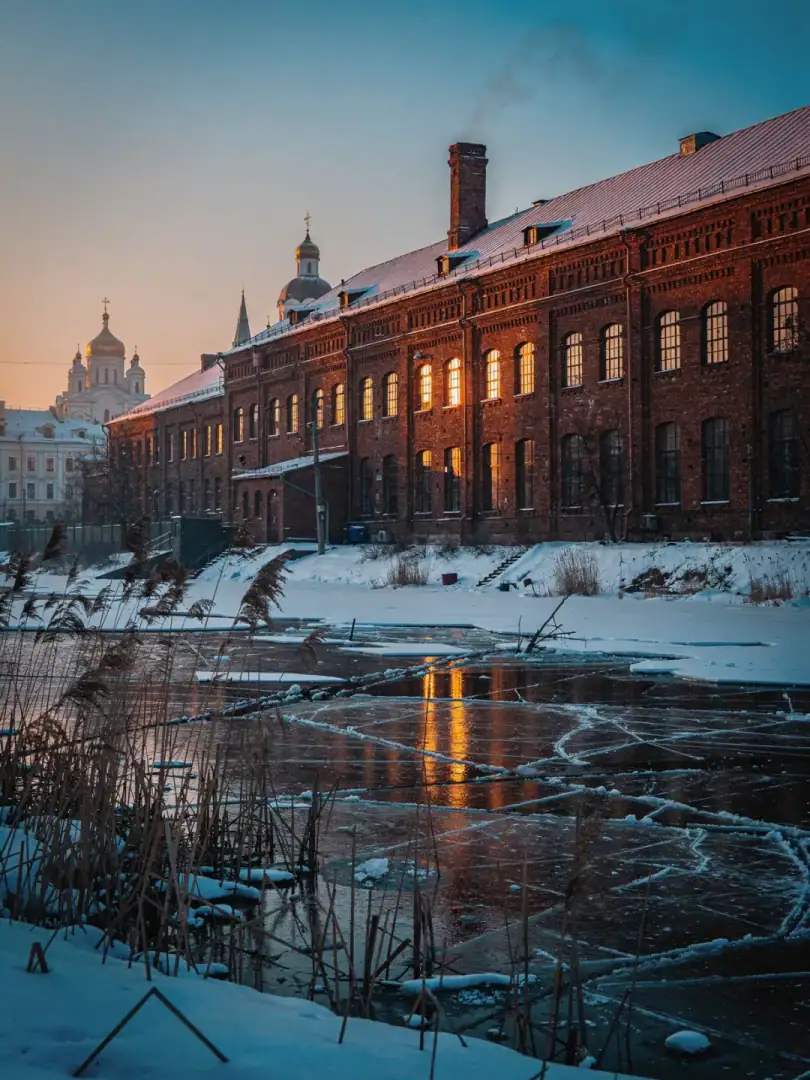
On June 24, 1901, State Wine Warehouse No. 1 opened on the Yauza, a tributary of the Moskva River. It was the forerunner of today's Kristall distillery and the largest facility in the country, required to deliver over two million buckets of vodka a year. Three styles came out of the stills at first: a basic one, an improved one, and the "Boyarskaya," named after the old Russian landed nobility.
Decades earlier, another Muscovite had already made waves. Pyotr Smirnov, born a serf, founded his distillery on Pyatnitskaya Street in the Zamoskvorechye district in 1864 and became official purveyor to the Tsar's court in the 1880s. Through newspaper advertising and charcoal filtration, he captured two-thirds of the Moscow market. After his death in 1898, his son Vladimir carried on the business until the state nationalized it in 1904.
The 1917 Revolution ended the family's story in Russia. Vladimir Smirnov fled via Constantinople to Paris and later sold the rights to the name to émigrés, who turned it abroad into the brand Smirnoff, spelled with a double f. In Moscow itself, production continued under a new name, and it was here, at the Kristall plant, that Stolichnaya was later created, its name meaning roughly "of the capital."
After 1991, the entrepreneur Yuri Shefler bought the naming rights to Stolichnaya, Moskovskaya, and other brands for around $300,000; since 2003, his company, the SPI Group, and the Russian state have been locked in a dispute over who truly owns the names. In 2018, a Dutch court awarded the rights for the Benelux countries to the Russian state. To this day, GOST standards, Soviet-era state technical regulations, determine what may officially be called vodka in Russia. Kristall keeps distilling right in the heart of Moscow, in the very city that invented the monopoly.