Rye & Podzol
Raw Material
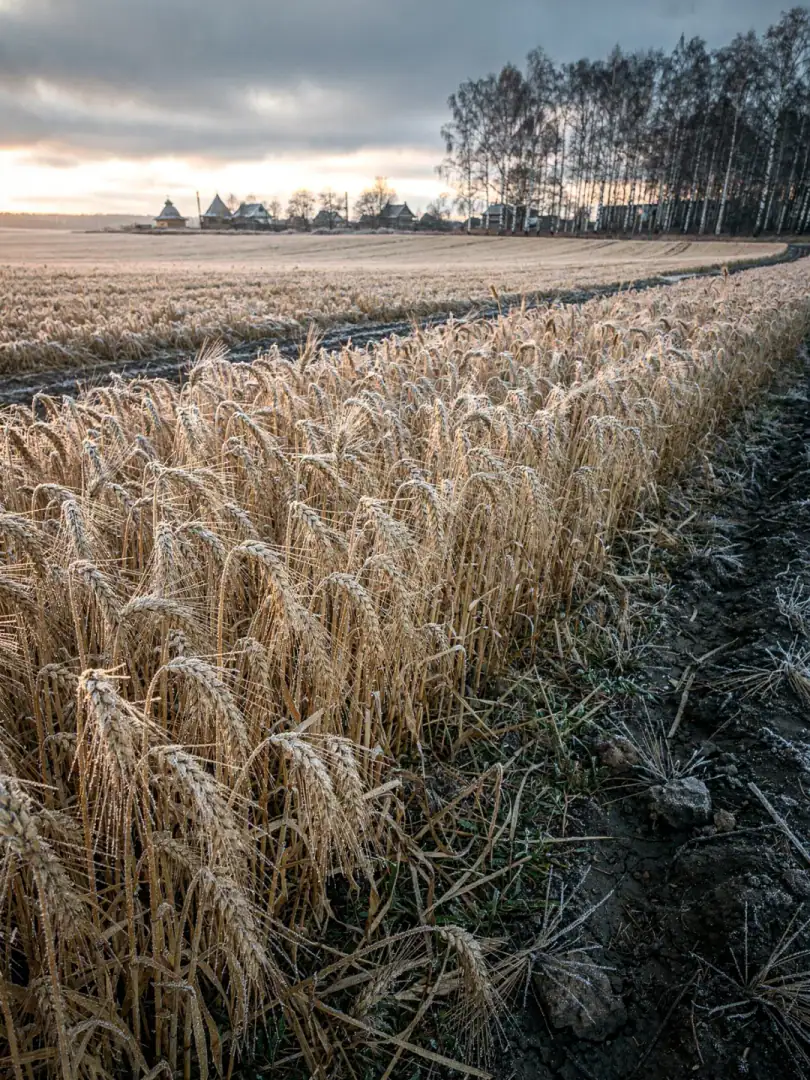
Rye shapes the cuisine of Central Russia long before it becomes vodka. Around Moscow begins the so-called non-black-earth zone: cool summers, a short growing season, and poor podzol soils. Wheat needs more warmth and better soil, so for centuries farmers here relied on rye, the region's toughest grain.
Only about 125 miles south of Moscow does the soil change noticeably. Around the Tula area, black earth begins, the famous dark, humus-rich soil where wheat thrives far more easily. North of it, around the capital, rye remains the safer bet, since it copes with scarce nutrients and short summers.
Dig into a rye field near Moscow and you'll find its structure in three layers. On top lies a thin, dark layer of humus from decomposing leaves and needles of the surrounding mixed forests. Beneath it comes a pale, acidic bleached layer, from which rainwater carries iron and nutrients further down. At the very bottom waits heavy clay full of glacial debris from the last ice age, which holds water well but hardly lets roots through.
For rye, that means it has to root shallowly and grow fast before the poor subsoil holds it back. This very constraint forces the plant to put its energy into the grain rather than deep roots, producing a robust, slightly earthy flour. Vodka made from this rye often tastes a touch rougher and spicier than vodka made from pure wheat.
Even after nationalization, rye remained the standard raw material for major Moscow distilleries like Kristall, since it was reliably available whenever wheat harvests failed in bad years. Only with improved seed stock and fertilization in the 20th century did wheat become a serious alternative around Moscow too, though it never fully displaced rye from the region.
thin, dark layer of decomposing leaves and needles from mixed forests
The root: supplies young rye with its first nutrients, but is quickly depleted