Toasts & Customs
Drinking Culture
At a Moscow table, every glass comes with a toast, however brief. Drinking without a few words beforehand is considered rude to the rest of the company. Even in Pyotr Smirnov's day, this short phrase before the glass was good manners. First comes the toast, then the drink, the glass ideally emptied in one go, down to the bottom.
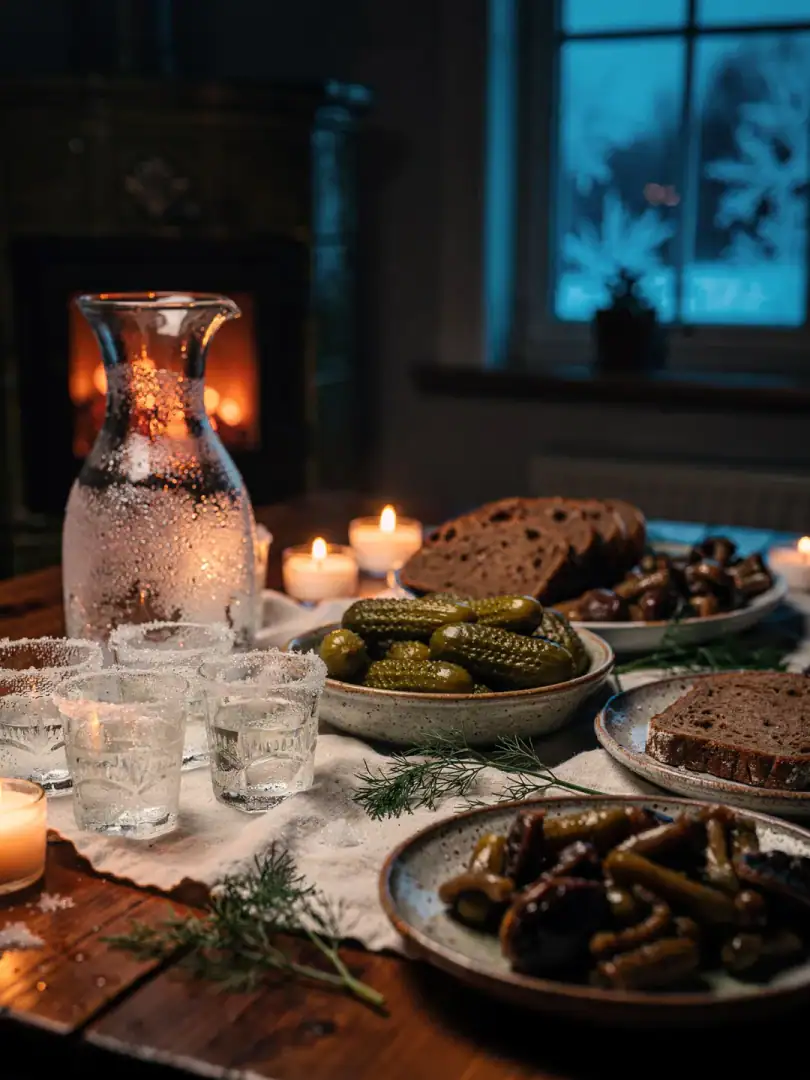
This custom of zastolye, the long table with many small courses, dates back to Tsarist times. It survived the Soviet Union too. Fixed rules go with it: vodka is served ice-cold, never with ice cubes in the glass. Between rounds, guests eat some of the zakuski, the cold snacks laid out on the table. Even guests with no prior knowledge of Russian customs are usually drawn into this sequence, gently but firmly.
The Soviet anti-alcohol campaign under Mikhail Gorbachev, launched in 1985, tried to curb exactly these habits. Distilleries like Kristall had to cut production, and shops had shorter hours for selling spirits. The campaign remained unpopular and was eased again after a few years, without really changing the drinking culture.
Anyone sitting at such a table in Moscow for the first time quickly notices: refusing a toast is considered ruder than an overly full glass. Hosts rarely push openly, but an empty glass gets refilled immediately. Anyone who wants to stop is best off saying so clearly, just once, rather than leaving the glass untouched.
For many, the order matters more than the amount. The first toast is often to health or to the occasion of the gathering; later ones grow more personal. Drinking alone, without an occasion, without zakuski, and without company, is seen in this tradition as a sign of trouble, not as ordinary daily life.