Columns & Cold
Distilling & Rectification
Before grain becomes vodka, it must first be turned into a mash. The milled or malted grain is mixed with water and heated. Yeast is then added, fermenting the sugar it contains into alcohol over the following days.
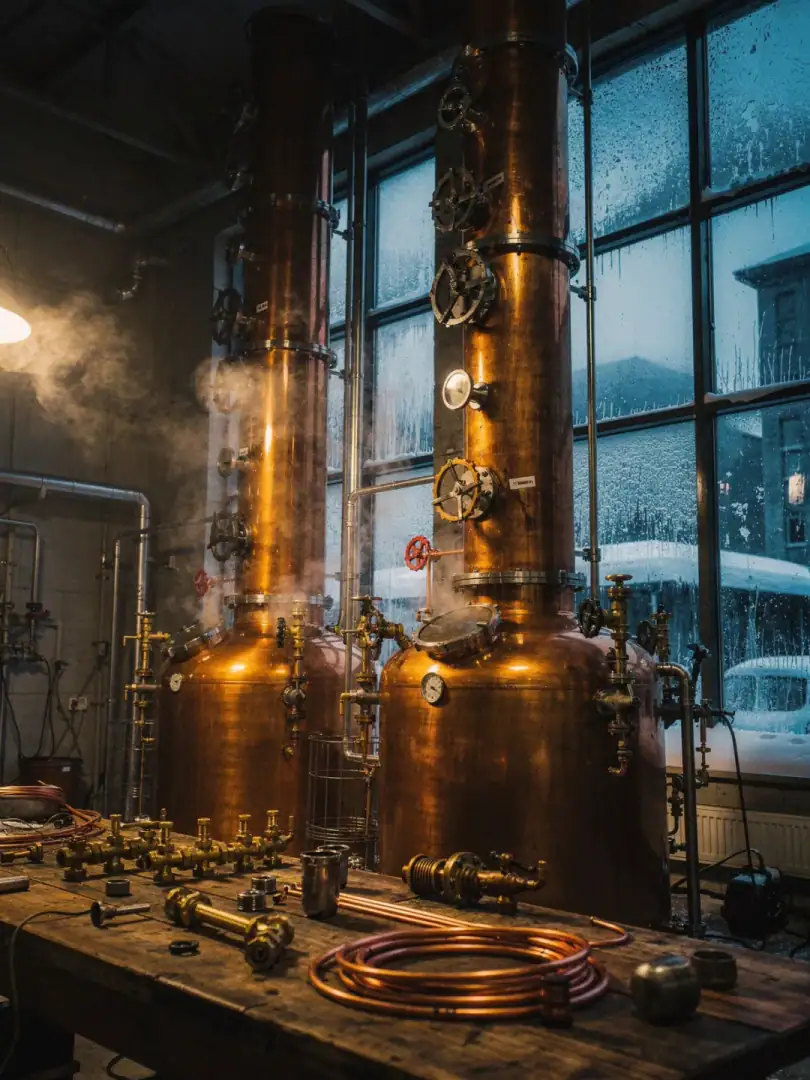
The resulting mash then goes into the column still. For Mamont Vodka from Siberia, the distillery states that the raw spirit passes through five columns in succession. Each one removes further unwanted compounds, leaving a very pure drinking spirit at the end.
This multiple rectification sets vodka apart from single-distilled spirits like whisky. Russian standards have classified rectified alcohol into different purity grades since Soviet times. What matters is the type of grain used and the number of passes through the columns.
After rectification, some Siberian brands add an extract. In Mamont's case, it's a small amount of spirit made from cedar nuts, meant to give the otherwise neutral vodka a slightly resinous note before filtration follows.
How much raw alcohol is produced on a given day in Siberia also depends on the weather. When winter temperatures drop sharply, fermentation slows down. That's why distilleries like the one in Mariinsk schedule part of their production for the warmer months.
In the end, most Siberian brands share the same number on the label. Beluga from Mariinsk is bottled at forty percent alcohol, the standard strength for vodka in Russia. That holds true regardless of how many columns and additions were involved along the way.