Wells & Lake Baikal
Water & Climate
The artesian well from which the Mariinsk distillery draws its water lies two hundred fifty meters deep. At that depth, the ground has long since filtered out impurities. The water reaches the surface cool and low in minerals before entering the mash.
Farther east, Lake Baikal supplies the water for a vodka brand of the same name. According to geologists, the lake is roughly twenty-five million years old. It holds more fresh water than any other lake on Earth. For this brand, water is drawn from a depth of around five hundred meters, where, according to the producer, microorganisms are practically absent.
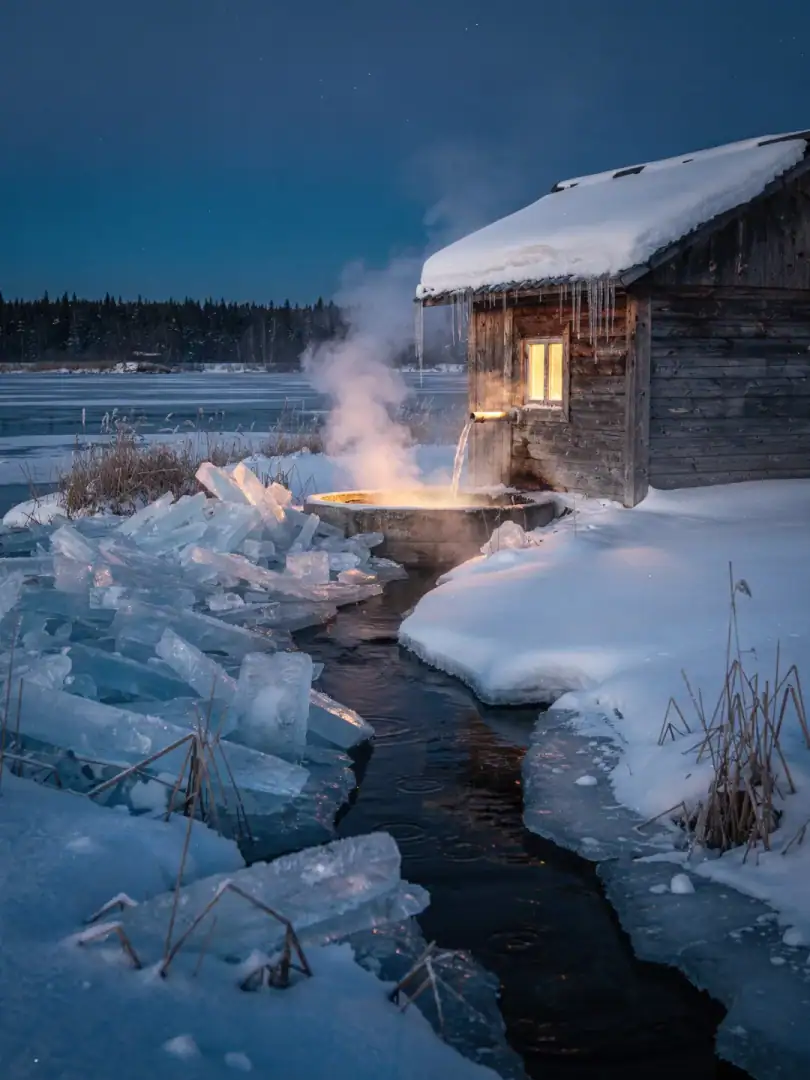
Siberia's climate knows almost no transitions. A short, often hot summer is followed by a long winter with days of continuous frost. Rivers and smaller lakes can freeze solid to the bottom. Distilleries have to stock up on water and raw materials before the cold season, since transport routes become unreliable in winter.
The Ob and its tributary, the Irtysh, on which Omsk also lies, flow through the grain belts in the south. Cossacks already used it as a waterway during the conquest of Siberia in the sixteenth century. Both rivers still supply water for agriculture and industry today, before flowing north through permafrost zones toward the Arctic.
In the south, where grain grows, the ground thaws completely in summer. Farther north and east, permafrost begins, ground that stays frozen. It never fully thaws even at the height of summer, posing unique technical challenges for construction projects like distilleries.
These contrasts between steppe in the south and permanent frost in the north explain why Siberian vodka draws on different water sources depending on where it's made, from deep wells to a lake thousands of years old.