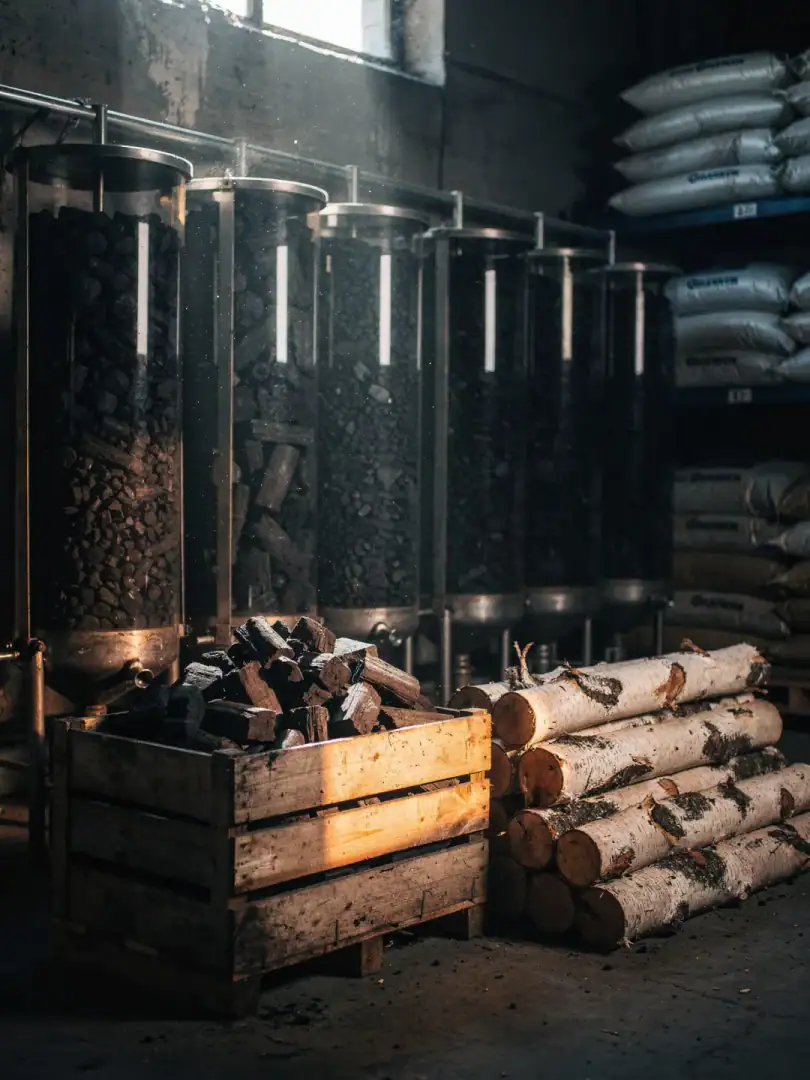
Birch & Quartz Sand
Filtration
In the chemical sense, the alcohol has already reached its goal after rectification. Even so, almost every Siberian brand sends it through a filter as well. The most common material is charcoal made from silver birch, a type of birch specially charred for this purpose. Birch trees grow abundantly in the forests around Mariinsk and Omsk anyway, making the raw material easy to source.
The charcoal sits in tall filter batteries, filled from the bottom up. This way, the alcohol contacts as much surface area as possible as it passes through. Once the charcoal is spent, it's cleaned with steam and reused rather than discarded.
Some distilleries also use quartz sand. Others cool the alcohol down sharply before filtering, a process known as cold filtration. This causes fine cloudy particles to clump together, making them easier to remove afterward.
What these steps actually achieve is more modest than marketing copy often suggests. They remove residual fusel oils and fine particles. They make the vodka clearer and more neutral in taste, but that alone doesn't make it softer or healthier.
For Mamont Vodka, the birch charcoal filtration reportedly happens only after the cedar nut flavoring has been added. That way, only unwanted byproducts are removed, while the aroma itself is preserved.
Beluga from Mariinsk and Sibirskaya from Omsk also go through a filtration stage before bottling, though the distilleries rarely disclose the details. At the end of this chain stands a drink that, under EU Spirit Drinks Regulation (EU) 2019/787, must contain at least 37.5 percent alcohol to be called vodka.