Frost & Rituals
Drinking Culture
In Siberian kitchens, cooking together can sometimes become an occasion for drinking in itself. There's an old custom when shaping Pelmeni, the small filled dumplings: for every hundredth dumpling finished, a round of glasses goes around the table, a kind of reward for the painstaking handwork.
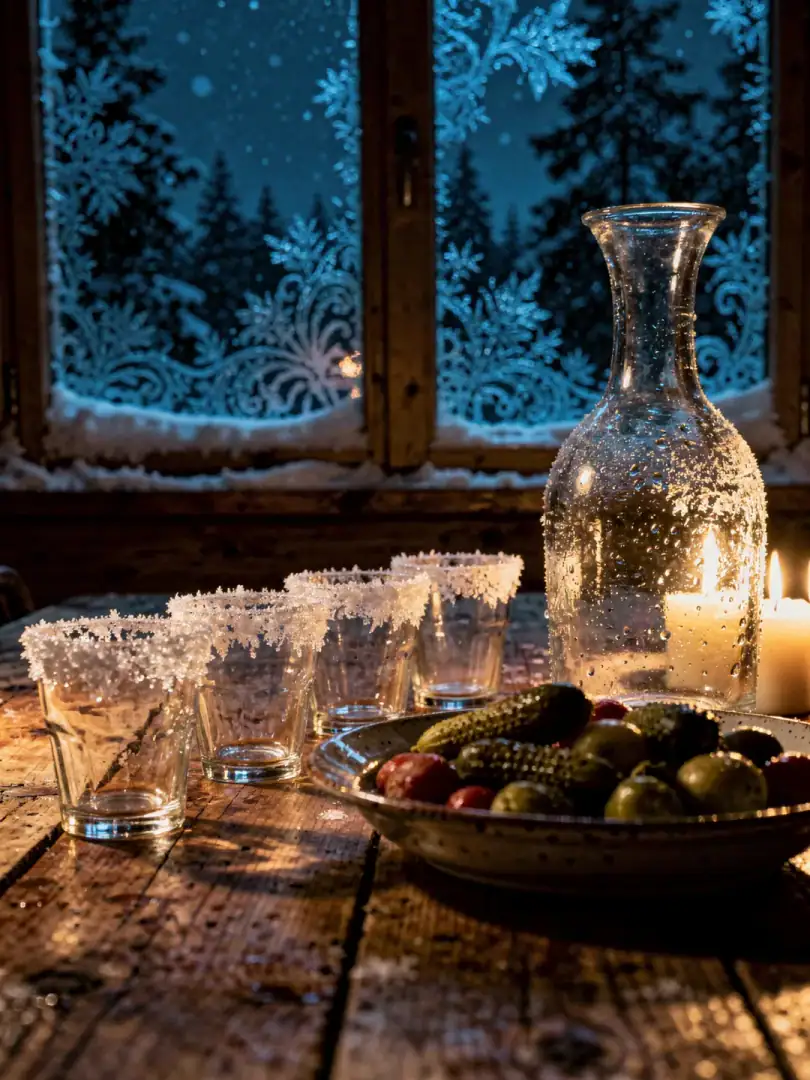
Vodka is almost always served ice-cold and neat. It comes to the table in small glasses meant to be emptied in one go. Before drinking, someone usually offers a short toast, often to a person in the group or to surviving another winter.
There's a widespread belief that a shot of vodka warms you from the inside against the Siberian cold. In fact, blood vessels near the skin dilate. This creates an initial feeling of warmth, even as the body as a whole cools down faster. Doctors have long described this effect.
On expeditions into the taiga, whether for hunters or geologists, a bottle has been part of the standard kit since Soviet times. It serves less to keep people warm than to foster conversation around the campfire, often the only social contact for days on end.
Winter celebrations in Siberia, such as those around New Year, often stretch over several days. The table is richly laid, with toasts to family and health. Almost always, another toast is raised to getting through the cold season.
Guests at such celebrations rarely turn down an offered glass. In Siberia, that would be considered rude, especially if the host is drinking along. An empty glass is usually refilled quickly, just before the next toast begins.