Copper, Steel, Neva
Distillation & Rectification
Two techniques separate three hundred years of distilling history on the Neva. When Ladoga launched the Tsarskaya brand in 2003, the distillery reportedly had its master distiller recreate a 17th-century distillation method. It was rounded out with an infusion of linden and honey, meant to soften the flavor at the finish.
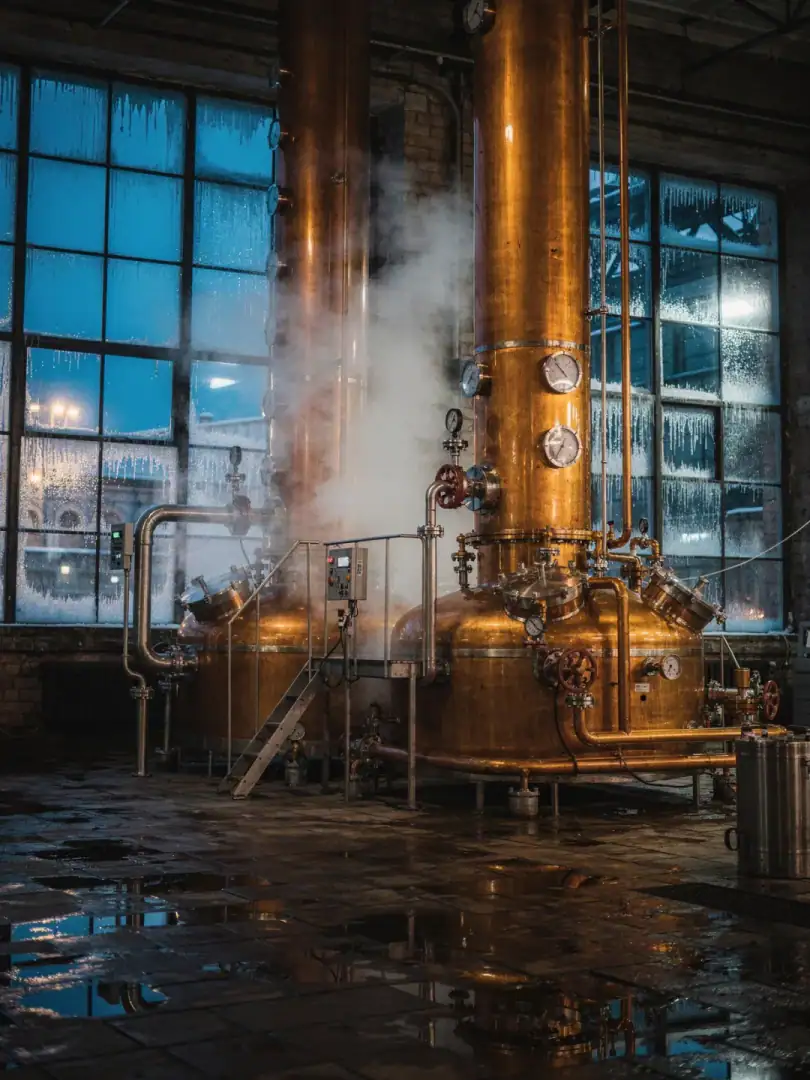
The industrial reality at both distilleries looks quite different today. Instead of a simple pot still, tall rectification columns of copper and steel now run mash continuously. In a single pass, they yield alcohol that is nearly pure and repeatedly refined, rather than being redistilled by hand multiple times as in the past.
Russian Standard states that its own facility on the banks of the Neva cost around 60 million US dollars to build. The company promotes it as one of the most technologically advanced spirits plants in the world. Ladoga, meanwhile, cites a capacity of around three million decaliters a year at its city site, spread across several brands.
At the end of every column stands the same legal benchmark: 40 percent alcohol by volume. The Russian state fixed this figure back in 1843, long before modern column stills even existed. Before then, home-distilled spirits varied widely in strength and purity. After that, every bottle had to meet the same standard, regardless of how old-fashioned or modern the equipment behind it was.
Rectification means more than simple distilling. The column separates alcohol, water, and unwanted byproducts such as fusel oils across many successive stages, until what remains is nearly pure drinking alcohol. Only afterward is it diluted to drinking strength with the soft Ladoga water. This process now shapes the vast majority of Russian vodkas, regardless of the story told on the label.