Toasts and Zakuski
Drinking Culture
At a Russian table, a convivial evening only truly begins with the first toast. A toast is more than a polite formality before drinking. It marks a pause in the conversation, in which someone says something honoring the moment, the hosts, or those present, before everyone drinks together.
Drinks are usually served in small glasses and downed in one go. Do dna, as it's said in Russian: to the bottom. Merely touching a glass to your lips, or leaving it half full, is quickly seen as impolite among hosts. It's just as impolite to drink vodka without something to accompany it.
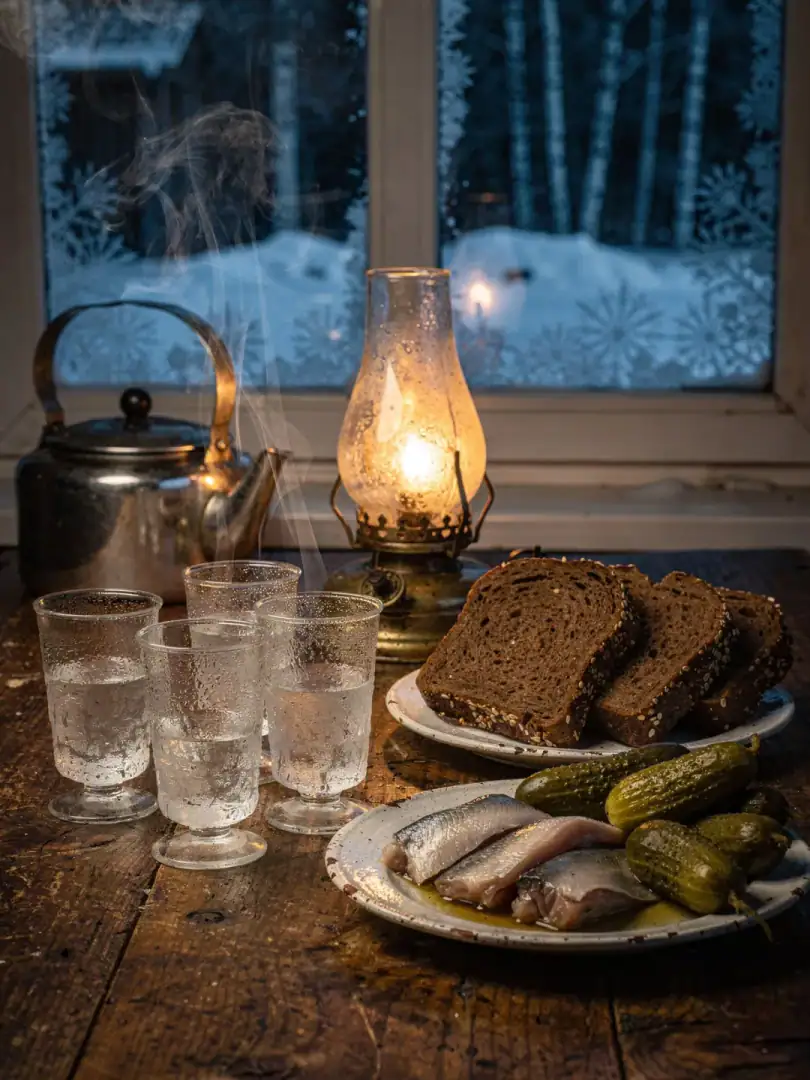
That accompaniment is called zakuski, small cold or warm bites served between toasts. These include pickled cucumbers, rye bread, herring, and sometimes mushrooms. The custom originates at the tsar's court of the 18th century, based in St. Petersburg since Peter the Great. Such bites were served to standing guests before the actual meal, often by servants, while the nobility were still waiting.
Over the course of the 19th century, this courtly reception ritual became a custom for everyone. What once bridged the waiting time at the tsar's court later kept guests entertained at the kitchen table while the host refilled the glasses. The toast remained the evening's stage direction, determining when to drink and when to pause.
A simple rule still holds true in Russia today: whoever drinks vodka also eats, right from the start. Along the banks of the Neva, this is followed just as it is everywhere else in the country. Those who drink without zakuski get drunk faster and are seen as careless. Those who eat mindfully and wait patiently between toasts can spend a long evening at a full table without the group getting out of hand.