Toasts & Abstinence
Drinking Culture
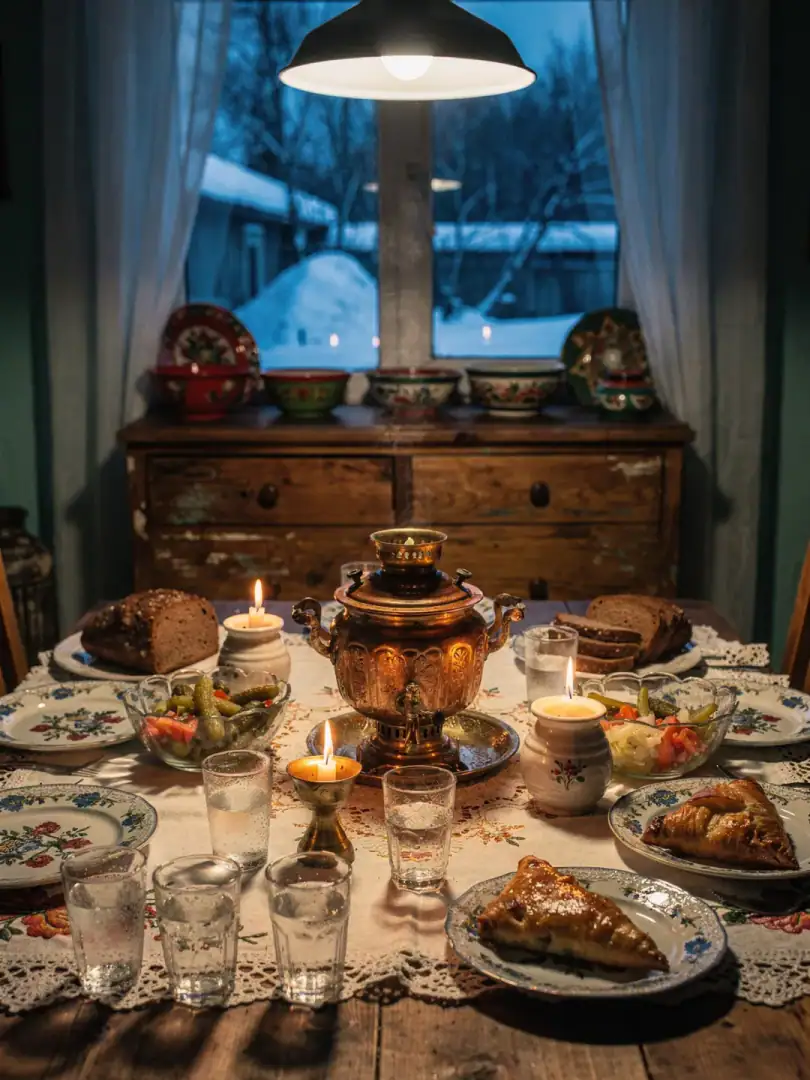
At a table in Kazan, two drinking cultures often sit side by side. Ever since the Volga Bulgars adopted Islam in 922, alcohol has been religiously avoided by many Tatars and Bashkirs. Russian, Chuvash, and Mordovian neighbors in the same region, meanwhile, uphold the Orthodox tradition of the table toast.
This tradition follows set rules. A tamada, or toastmaster, opens the table and sets the order of toasts, beginning with the first toast to the gathering and ending with the last to the hosts. Those departing often drink one final small measure, the "possoshok", a last sip for the road. The word comes from the Russian for walking stick.
Wrestling, foot races, and a shared meal define Sabantuy, the festival of the plowmen, held among Tatars and Bashkirs after the spring sowing and uniting the whole region. Alcohol was never part of the original, Muslim-rooted festival tradition.
Both traditions have run side by side for centuries without fully blending. Travelers passing through the region often only notice this at the table. In Tatar and Bashkir households, celebrations without alcohol are simply the norm. In Russian-influenced households, by contrast, vodka remains a fixed part of the table.
One unwritten rule still holds at Russian-style tables today: an opened bottle never leaves with a guest, it stays until it's empty. The same quiet agreement applies in Ufa as in Kazan. Whether, and how much, anyone actually drinks remains entirely up to the individual.