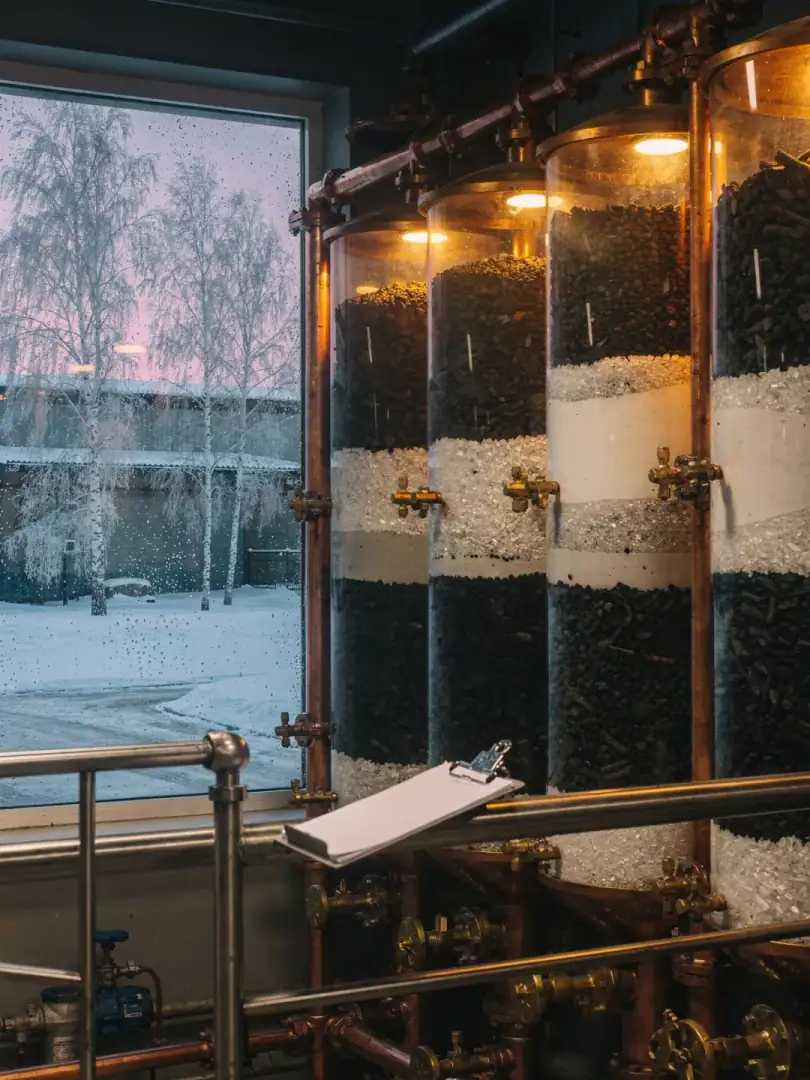
Birch & Quartz Sand
Filtration
After dilution comes filtration, traditionally through birch charcoal in Russia. The legally mandated grade is called BAU-A, activated charcoal made from birch wood, named after a Soviet-era industrial standard still used in virtually every Russian vodka plant today, including those of Tatspirtprom and Bashspirt.
This wasn't always the case. As mentioned, 19th-century Kazan Pennik was filtered through linden charcoal, a regional method that vanished with the Soviet standardization of production. Birch wood, abundant in the region's forests, was simply easier to supply in bulk.
The chemistry behind the charcoal's effect is well understood: its porous surface binds fusel oils and other fermentation byproducts, making the spirit less pungent and smoother on the finish. Before reaching the charcoal, the liquid usually passes through a layer of quartz sand, which catches coarse sediment before true filtration begins. Only after this does the spirit reach the purity a bottle demands.
Some labels also tout silver filtration. There's no solid evidence in the relevant scientific literature that silver measurably changes flavor; the effect remains largely a matter of marketing. What actually counts is contact time with the activated charcoal and how many times the spirit passes through the filter beds.
Bashspirt describes its own process in similar terms: multi-stage charcoal filtration before bottling at the republic's four liquor-vodka plants. The company does not publicly release independently verified details on the number of stages or contact time. Exactly how the two holdings' methods differ in practice therefore remains unclear.