Continuous Distillation
Distilling & Rectification
Winter wheat first becomes a mash, a thin slurry of ground grain and water, to which enzymes and yeast are added. Over several days, the yeast converts the starch into alcohol, and what results is a weakly alcoholic liquid that barely tastes like vodka, more like fermented bread. Only the distillation that follows turns it into something that tastes like vodka.
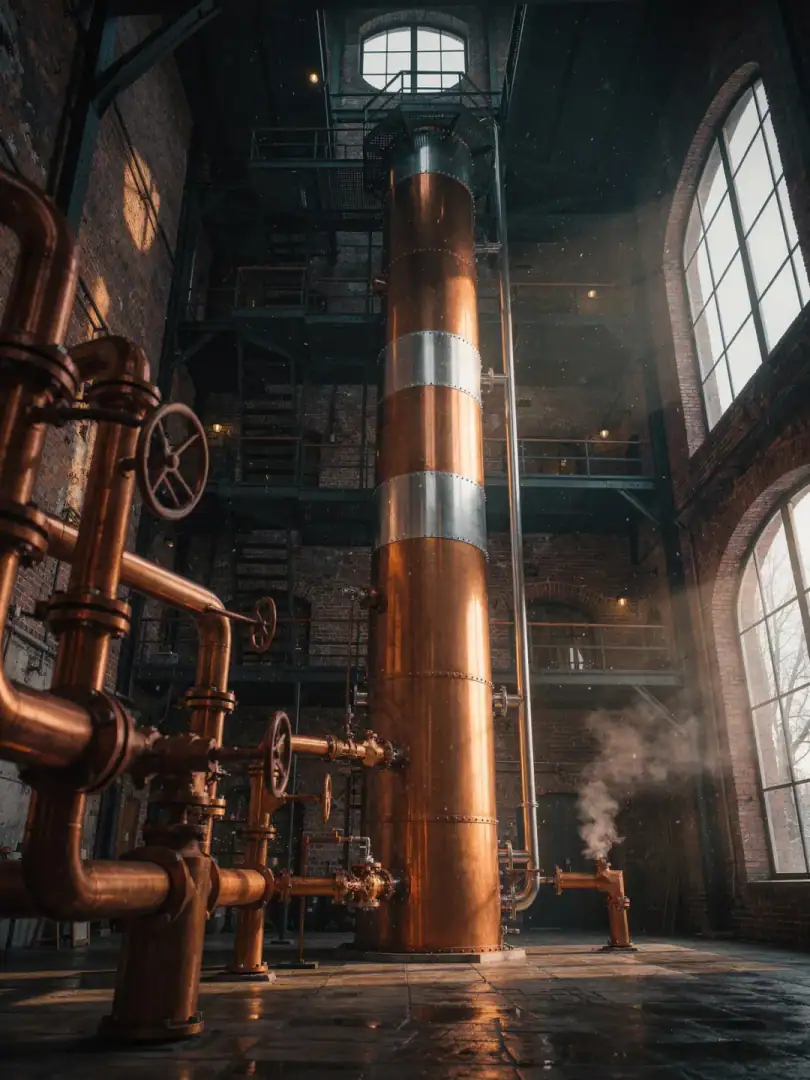
This mash then moves into the column, the heart of the distillery since L.O. Smith's time. Instead of distilling the liquid in individual batches multiple times as in the past, it runs continuously through several plates stacked on top of each other; steam rises, alcohol evaporates more easily than water and is drawn off at the top. That's exactly what Smith meant by continuous distillation back in 1879. This produces a noticeably purer alcohol in a single pass than classic pot-still distillation ever could.
At the end of this process stands a high-proof, almost flavor-neutral alcohol, well above ninety percent by volume. This rectification removes fusel oils and other fermentation byproducts almost completely, leaving pure drinking alcohol made from grain. Only afterward is it diluted to drinking strength with the well water from Åhus. This purity is really the core of what still sets the distillery apart from many other vodkas today.
The EU requires a minimum of 37.5 percent alcohol by volume for vodka; the brand from Åhus is traditionally sold at forty percent. Between the high-proof raw spirit and the finished bottle lies mainly one thing: carefully measured water from the distillery's own wells, nothing else changes the strength. How much water is needed for that depends on the exact alcohol content of the raw spirit on any given day.