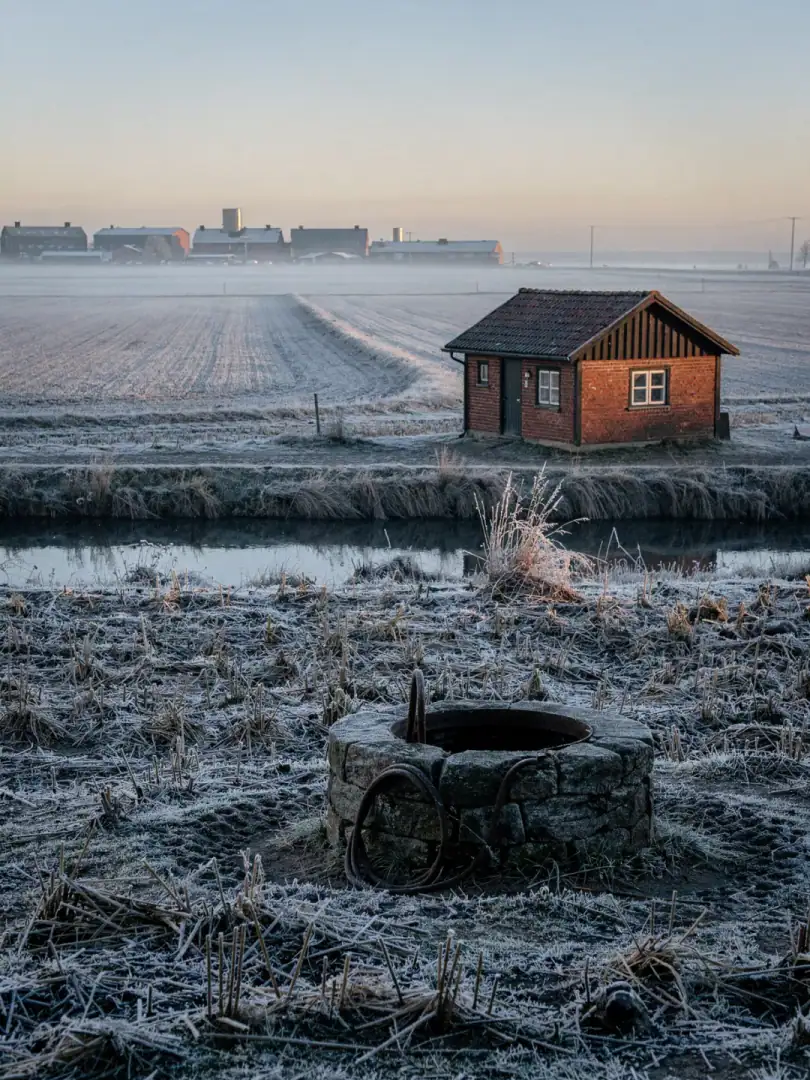
A Private Well
Water & Climate
Right next to the distillery in Åhus stand its own wells, drilled more than a hundred and forty meters deep. The water takes millennia to seep through sand and rock, arriving at the surface filtered and with a consistent composition. For a vodka that's meant to taste the same in every bottle, that's no minor detail, it's half the battle. Without this one reliable water source, every batch would have to be recalibrated from scratch.
The distillery calls this its One-Source idea, water, wheat, and distillation all come from the same area around Åhus and Kristianstad. No ingredient travels from far away, which sets the brand apart from competitors that bring together alcohol and water from different countries. It also makes the origin verifiable, every batch can be traced back to the well and the field. Knowing the origin of every ingredient also means being able to react faster if something ever goes wrong.
On the coast near Åhus, the climate turns out milder than you might expect in southern Sweden, since the Baltic Sea evens out temperatures. Winters here are rarely extremely cold, and summers rarely oppressively hot. For the wheat, that means a long, calm ripening period without heat stress; for the distillery, it means groundwater that holds a similar temperature year-round. It's exactly this calm weather that sets Åhus apart from the colder, more continental grain belts of Eastern Europe.
Sandy soils like those around Åhus let rainwater quickly seep in rather than run off, steadily replenishing the deeper water layers. It's from these that the distillery's wells draw, even though you wouldn't guess it just by looking at the fields. The water works away out of sight, long before it ends up as vodka in the bottle. That's why the well stays reliable even in dry summers, when rivers elsewhere are already running low.